
Bank of America warns stablecoin yield could drain bank deposits
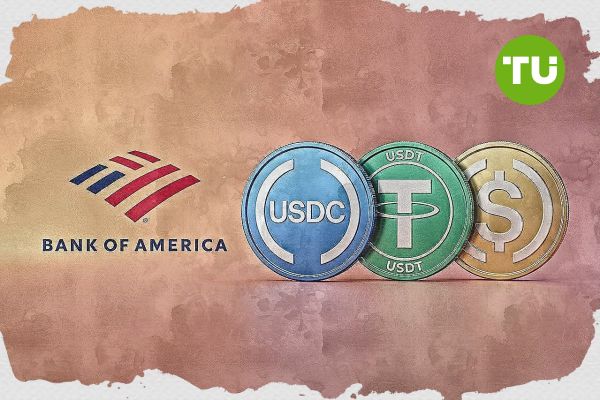
Bank of America CEO Brian Moynihan is urging U.S. lawmakers to limit stablecoin interest payments, warning that allowing issuers to offer yield could pull trillions of dollars out of the traditional banking system.
Speaking as the Senate Banking Committee floated new restrictions on stablecoin yields in its market structure bill, Moynihan said banks would adapt no matter what happens, but the broader system could face a “liquidity crunch”, reports Cryptopolitan.
He pointed to U.S. Treasury-commissioned research suggesting up to $6 trillion in deposits could migrate into stablecoin vehicles if consumers shift cash to higher-yield alternatives. That kind of outflow would weaken banks’ core funding base, squeezing their ability to extend credit. Moynihan framed the issue less as a fight for survival and more as a structural risk to lending capacity across the economy. In his view, stablecoins that behave like money-market products could redirect household savings away from deposit-based lending.
Senate bill targets “passive yield” on stablecoins
The debate is tied to the Senate’s latest market structure draft, which includes explicit limits on rewarding users simply for holding stablecoins. The bill bars companies from paying interest on stablecoin balances as a default feature, while allowing “rewards” only when linked to activity such as transactions, staking, liquidity provision, collateral posting, or governance participation. Moynihan argued this framework is meant to ensure stablecoins function more like cash instruments rather than credit intermediaries, with reserves restricted to deposits, central bank accounts, or short-term Treasuries. But that structure comes with a trade-off: stablecoin reserves generally can’t be used to fund lending the way banks use deposits.
Moynihan warned that if deposits flow out, banks would be forced to rely on wholesale funding markets, which are more expensive and less stable than retail deposits. That shift could raise borrowing costs, particularly for credit-dependent parts of the economy. The CEO emphasized the downside would be most acute for small and mid-sized businesses, which depend far more on bank loans than capital markets.
A fight over margins, consumers, and who captures yield
Moynihan’s message highlights a deeper tension: stablecoins could disrupt the spread banks earn between what they pay depositors and what they earn on safe assets like Treasuries. FDIC averages show U.S. banks were paying roughly 0.39% on savings and 0.07% on checking, while Treasury yields sat near 3.89%, creating a wide profitability gap that traditional lenders are reluctant to surrender. Critics argue banks want to preserve that margin by blocking consumers from earning better returns on cash-like holdings through stablecoins.
On social media, opponents of the banking lobby accused lenders of “stealing the yield” depositors generate while charging fees on top, framing stablecoin yield as a consumer-friendly correction. Meanwhile, legislative progress remains uncertain, with the Senate Agriculture Committee delaying a planned markup to late January as lawmakers negotiate unresolved issues. The fight now looks less like a technical debate over financial plumbing and more like a political showdown over whether tokenized dollars will behave like deposits—or compete directly with them.
Recently we wrote that Visa has selected UK-based stablecoin infrastructure provider BVNK to power new Visa Direct pilots that let some business customers pre-fund cross-border payouts in stablecoins and send digital US dollars directly to recipients’ wallets in select markets.















-
 Afghanistan
-
 Albania
-
 Algeria
-
 Angola
-
 Argentina
-
 Armenia
-
 Australia
-
 Austria
-
 Azerbaijan
-
 Bahamas
-
 Bahrain
-
 Bangladesh
-
 Belarus
-
 Belgium
-
 Bolivia
-
 Botswana
-
 Brazil
-
 Brunei
-
 Bulgaria
-
 Cambodia
-
 Cameroon
-
 Canada
-
 Chile
Chile
-
 China
China
-
 Colombia
-
 Congo
Congo
-
 Costa Rica
-
 Cote d'Ivoire
-
 Croatia
-
 Cuba
Cuba
-
 Cyprus
-
 Czechia
-
 DR Congo
-
 Denmark
-
 Dominican Republic
-
 Ecuador
-
 Egypt
Egypt
-
 El Salvador
-
 Estonia
-
 Eswatini
-
 Ethiopia
-
 Finland
-
 France
-
 Georgia
-
 Germany
-
 Ghana
Ghana
-
 Greece
-
 Haiti
Haiti
-
 Hong Kong
-
 Hungary
-
 India
India
-
 Indonesia
-
 Iran, Islamic republic
-
 Iraq
Iraq
-
 Ireland
-
 Israel
-
 Italy
Italy
-
 Jamaica
-
 Japan
Japan
-
 Jordan
-
 Kazakhstan
-
 Kenya
Kenya
-
 Korea
Korea
-
 Kuwait
-
 Kyrgyzstan
-
 Laos
Laos
-
 Latvia
-
 Lebanon
-
 Lesotho
-
 Libya
Libya
-
 Lithuania
-
 Luxembourg
-
 Madagascar
-
 Malaysia
-
 Malta
Malta
-
 Mauritius
-
 Mexico
-
 Moldova
-
 Mongolia
-
 Montenegro
-
 Morocco
-
 Mozambique
-
 Myanmar
-
 Namibia
-
 Nepal
Nepal
-
 Netherlands
-
 New Zealand
-
 Nigeria
-
 North Macedonia
-
 Norway
-
 Oman
Oman
-
 Pakistan
-
 Palestine
-
 Panama
-
 Papua New Guinea
-
 Paraguay
-
 Peru
Peru
-
 Philippines
-
 Poland
-
 Portugal
-
 Puerto Rico
-
 Qatar
Qatar
-
 Reunion
-
 Romania
-
 Rwanda
-
 Saudi Arabia
-
 Serbia
-
 Singapore
-
 Slovakia
-
 Slovenia
-
 Somalia
-
 South Africa
-
 Spain
Spain
-
 Sri Lanka
-
 Sweden
-
 Switzerland
-
 Syria
Syria
-
 Taiwan
-
 Tajikistan
-
 Tanzania
-
 Thailand
-
 Trinidad and Tobago
-
 Tunisia
-
 Turkey
-
 UAE
UAE
-
 Uganda
-
 Ukraine
-
 United Kingdom
-
United States
-
 Uruguay
-
 Uzbekistan
-
 Venezuela
-
 Vietnam
-
 Yemen
Yemen
-
 Zambia
-
 Zimbabwe
- Forex
- Crypto











