
TON blockchain speed surges, boosting staking rewards

The layer-1 blockchain The Open Network (TON), integrated with the Telegram messaging app, said that following the rollout of its Catchain 2.0 consensus upgrade, block times have been reduced to 400 milliseconds. Payment transactions now settle in about one second, trades are executed almost instantly, and decentralized applications can operate at speeds comparable to traditional services.
According to TON’s official announcement, faster block times also impact validator rewards: the more blocks are produced, the more rewards validators receive. As a result, TON’s annual inflation is projected to increase roughly sixfold — from 0.6% to 3.6%. In this context, inflation refers to the net issuance of new Toncoin.
TON noted that a higher number of blocks leads to increased validator rewards, strengthening staking incentives and attracting more TON into the ecosystem.
The upgrade is part of the ongoing development of the Catchain consensus algorithm, first proposed in 2020. With this update, the network — integrated into an application with over 1 billion users worldwide — now offers near-instant transaction finality.
As of Thursday, TON was up 2.3% at $1.28, according to CoinMarketCap. Trading volume reached $130 million, up more than 35%, while the token’s market capitalization stood at $3.17 billion.
Following the release of Catchain 2.0, the TON network also saw a spike in its transactions per second (TPS) metric.
Why TON and Telegram matter
Telegram remains a key platform for communication and crypto transfers worldwide. Its co-founder Pavel Durov said that despite government restrictions in some countries, including Iran, the app continues to be widely used there.
According to Durov, attempts to ban Telegram have backfired: instead of switching to state-controlled messaging apps, users have turned to VPNs to bypass online restrictions and censorship.
“The government hoped for mass adoption of its surveillance messaging apps, but got mass adoption of VPNs instead,” Durov said.
The integration of TON with Telegram allows users to send crypto directly within the messaging app to other users and businesses.
In February, Telegram’s in-app crypto wallet introduced self-custodial vaults, enabling users to earn yield on Bitcoin, Tether’s USDt stablecoin, and Ether.
Earlier this month, the wallet also added support for perpetual futures trading directly within Telegram.
How TON emerged
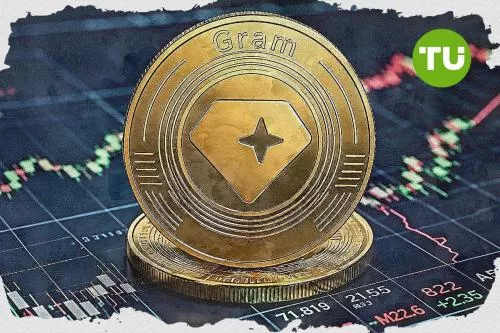
The history of TON began not with today’s Toncoin, but with the Telegram Open Network project and its original token, Gram, which Pavel Durov and his team planned to launch in 2019–2020. However, the rollout ended in controversy when the U.S. Securities and Exchange Commission (SEC) accused Telegram of conducting an unregistered securities offering and effectively blocked the token’s release through court action. As a result, Telegram abandoned the project, and Durov announced the company would no longer pursue the blockchain initiative.
However, the idea of TON did not disappear. After Telegram stepped away, an independent community of developers continued building the network based on its open-source code. This led to the creation of the current The Open Network with its native Toncoin. In other words, while Durov was prevented from launching the original Gram token, the TON known today was launched and developed by a separate community, albeit based on Telegram’s original groundwork.
Earlier this year, the Open Network Foundation launched TON Pay, a new SDK designed to integrate crypto payments seamlessly into the Telegram ecosystem.






-
 Afghanistan
-
 Albania
-
 Algeria
-
 Angola
-
 Argentina
-
 Armenia
-
 Australia
-
 Austria
-
 Azerbaijan
-
 Bahamas
-
 Bahrain
-
 Bangladesh
-
 Belarus
-
 Belgium
-
 Bolivia
-
 Botswana
-
 Brazil
-
 Brunei
-
 Bulgaria
-
 Cambodia
-
 Cameroon
-
 Canada
-
 Chile
Chile
-
 China
China
-
 Colombia
-
 Congo
Congo
-
 Costa Rica
-
 Cote d'Ivoire
-
 Croatia
-
 Cuba
Cuba
-
 Cyprus
-
 Czechia
-
 DR Congo
-
 Denmark
-
 Dominican Republic
-
 Ecuador
-
 Egypt
Egypt
-
 El Salvador
-
 Estonia
-
 Eswatini
-
 Ethiopia
-
 Finland
-
 France
-
 Georgia
-
 Germany
-
 Ghana
Ghana
-
 Greece
-
 Haiti
Haiti
-
 Hong Kong
-
 Hungary
-
 India
India
-
 Indonesia
-
 Iran, Islamic republic
-
 Iraq
Iraq
-
 Ireland
-
 Israel
-
 Italy
Italy
-
 Jamaica
-
 Japan
Japan
-
 Jordan
-
 Kazakhstan
-
 Kenya
Kenya
-
 Korea
Korea
-
 Kuwait
-
 Kyrgyzstan
-
 Laos
Laos
-
 Latvia
-
 Lebanon
-
 Lesotho
-
 Libya
Libya
-
 Lithuania
-
 Luxembourg
-
 Madagascar
-
 Malaysia
-
 Malta
Malta
-
 Mauritius
-
 Mexico
-
 Moldova
-
 Mongolia
-
 Montenegro
-
 Morocco
-
 Mozambique
-
 Myanmar
-
 Namibia
-
 Nepal
Nepal
-
 Netherlands
-
 New Zealand
-
 Nigeria
-
 North Macedonia
-
 Norway
-
 Oman
Oman
-
 Pakistan
-
 Palestine
-
 Panama
-
 Papua New Guinea
-
 Paraguay
-
 Peru
Peru
-
 Philippines
-
 Poland
-
 Portugal
-
 Puerto Rico
-
 Qatar
Qatar
-
 Reunion
-
 Romania
-
 Rwanda
-
 Saudi Arabia
-
 Serbia
-
 Singapore
-
 Slovakia
-
 Slovenia
-
 Somalia
-
 South Africa
-
 Spain
Spain
-
 Sri Lanka
-
 Sweden
-
 Switzerland
-
 Syria
Syria
-
 Taiwan
-
 Tajikistan
-
 Tanzania
-
 Thailand
-
 Trinidad and Tobago
-
 Tunisia
-
 Turkey
-
 UAE
UAE
-
 Uganda
-
 Ukraine
-
 United Kingdom
-
United States
-
 Uruguay
-
 Uzbekistan
-
 Venezuela
-
 Vietnam
-
 Yemen
Yemen
-
 Zambia
-
 Zimbabwe
- Forex
- Crypto












