
The tweet was deleted by the author.
But we saved everything 🙂.
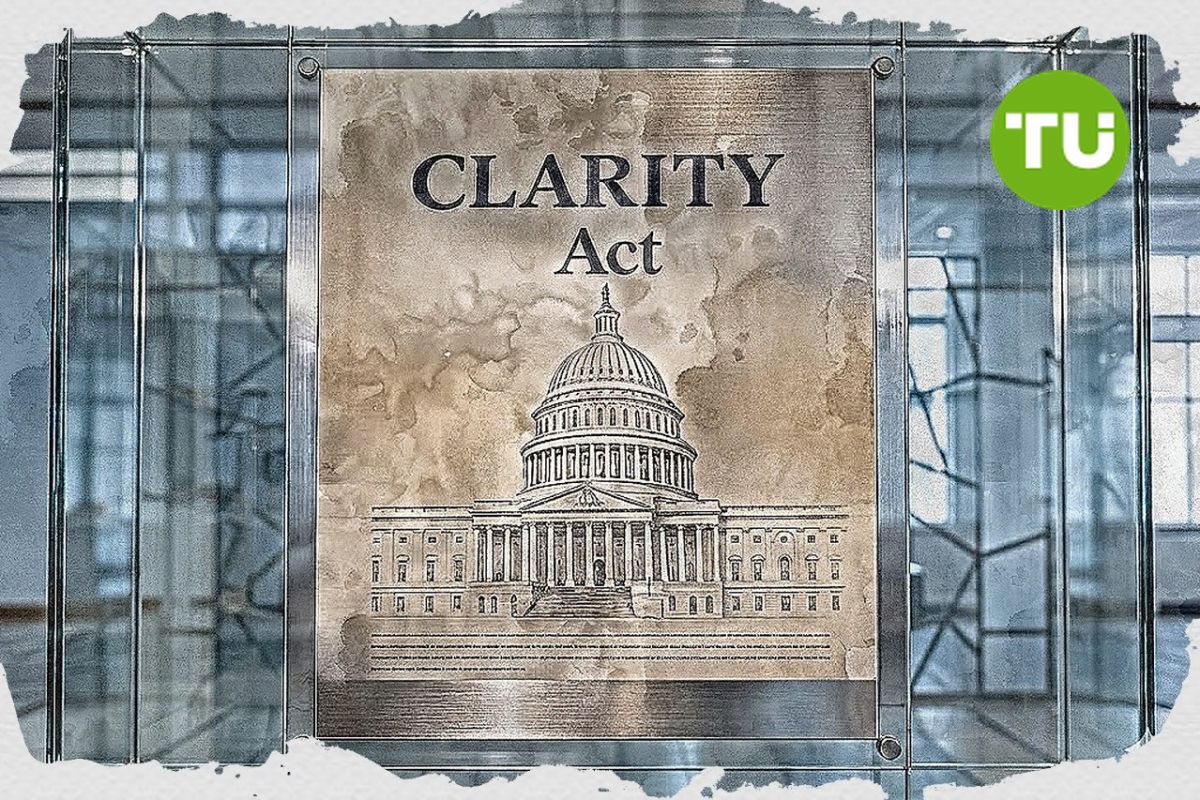
The United States may soon pass the CLARITY Act, the most significant crypto regulatory bill recently. The legislation not only draws a clear line between the authority of the SEC and the CFTC but also defines how digital assets will be integrated into the traditional financial system. The real question is who stands to benefit from the new rules and who may lose part of their control over the market.
There is renewed discussion in Washington about fast-tracking the CLARITY Act, a bill designed to establish clear rules for digital assets. Senator Bernie Moreno has said the legislation could pass Congress as early as April.
Interest in the bill is easy to understand. This is not just another technical amendment. It is an attempt to build a full regulatory architecture for the U.S. crypto market. At its core, the debate is about redistributing influence among the crypto industry, the banking sector, and federal regulators.
That is why JPMorgan analysts believe its passage could act as a catalyst for the market in the second half of 2026.
The central goal of the bill is to clearly divide authority between the Securities and Exchange Commission and the Commodity Futures Trading Commission and to move away from the recent pattern of regulation through enforcement, which has created legal uncertainty.
First, the legislation introduces a formal classification of digital assets. Some tokens would be defined as digital commodities under CFTC oversight, while others would be treated as digital securities under SEC jurisdiction. This reduces the risk that the same asset could be interpreted differently depending on which regulator is involved.
Second, the bill provides a safe harbor for new projects. Startups would be able to raise up to $75 million per year without full SEC registration, provided they are working toward decentralization. The idea is to keep innovation within the United States rather than pushing it to more permissive jurisdictions.
Third, the act creates a pathway for a token that was initially issued as a security to transition into a commodity once it reaches sufficient decentralization. If the issuer no longer controls the network and it becomes self-sustaining, the asset could shift to a different regulatory regime. This is critical for large blockchain projects and could expand their access to broader trading activity.
Fourth, the legislation establishes clearer rules for intermediaries, including exchanges, brokers, and custodians. For major banking institutions, this would mean the ability to offer digital asset custody services with greater regulatory certainty.
The CLARITY Act also supports the tokenization of traditional securities and real-world assets. It clarifies that tokenized instruments remain subject to existing securities laws. This is an important signal for infrastructure firms that are already building tokenized markets.
Miners, validators, and software developers would be exempt from broker-style reporting requirements as long as they do not engage in custodial activities. This reduces regulatory pressure on the core infrastructure of blockchain networks.
The bill also introduces tax relief for small everyday crypto payments and clarifies the tax treatment of staking. The goal is to make crypto more practical for regular transactions.
Finally, and most controversially, the provisions on stablecoins could reshape their role in the financial system. If yield on stablecoins is restricted, they would effectively be treated as digital payment instruments rather than investment products. That could tilt the balance in favor of tokenized bank deposits.
The issue of stablecoin yield has been one of the main obstacles to the bill’s progress. Banks are concerned that allowing users to earn returns on digital dollars could lead to deposit outflows and threaten traditional funding models. Crypto companies argue that without yield, stablecoins would be placed at a competitive disadvantage.
Coinbase withdrew its support for the bill earlier this year over these provisions and over the expanded role of the SEC as a primary regulator. According to company leadership, however, a compromise is now possible, suggesting that the balance of interests is still evolving.
If the bill is passed in its current form, the primary beneficiaries would be large players with established compliance infrastructure. Centralized exchanges, custodian banks, institutional investors, and companies building tokenization platforms would gain a stable legal framework to scale their operations. The CFTC would strengthen its position in overseeing digital commodities, while the SEC could see its room to broadly classify crypto assets as securities narrowed.
Not everyone would come out ahead. Projects that operated in a gray area would need to adjust to clearer regulatory standards. Yield-bearing stablecoins could face limitations if the final compromise favors the banking sector. At the same time, if interest-bearing stablecoins are allowed, traditional banks would face a new competitor for liquidity.
In that sense, the CLARITY Act is not simply about providing clarity. It is about redistributing influence in a system where the control of U.S. crypto infrastructure is at stake. That is why the political and industry debate around it has become so intense.

 Afghanistan
 Albania
 Algeria
 Angola
 Argentina
 Armenia
 Australia
 Austria
 Azerbaijan
 Bahamas
 Bahrain
 Bangladesh
 Belarus
 Belgium
 Bolivia
 Botswana
 Brazil
 Brunei
 Bulgaria
 Cambodia
 Cameroon
 Canada
 Chile
Chile
 China
China
 Colombia
 Congo
Congo
 Costa Rica
 Cote d'Ivoire
 Croatia
 Cuba
Cuba
 Cyprus
 Czechia
 DR Congo
 Denmark
 Dominican Republic
 Ecuador
 Egypt
Egypt
 El Salvador
 Estonia
 Eswatini
 Ethiopia
 Finland
 France
 Georgia
 Germany
 Ghana
Ghana
 Greece
 Haiti
Haiti
 Hong Kong
 Hungary
 India
India
 Indonesia
 Iran, Islamic republic
 Iraq
Iraq
 Ireland
 Israel
 Italy
Italy
 Jamaica
 Japan
Japan
 Jordan
 Kazakhstan
 Kenya
Kenya
 Korea
Korea
 Kuwait
 Kyrgyzstan
 Laos
Laos
 Latvia
 Lebanon
 Lesotho
 Libya
Libya
 Lithuania
 Luxembourg
 Madagascar
 Malaysia
 Malta
Malta
 Mauritius
 Mexico
 Moldova
 Mongolia
 Montenegro
 Morocco
 Mozambique
 Myanmar
 Namibia
 Nepal
Nepal
 Netherlands
 New Zealand
 Nigeria
 North Macedonia
 Norway
 Oman
Oman
 Pakistan
 Palestine
 Panama
 Papua New Guinea
 Paraguay
 Peru
Peru
 Philippines
 Poland
 Portugal
 Puerto Rico
 Qatar
Qatar
 Reunion
 Romania
 Rwanda
 Saudi Arabia
 Serbia
 Singapore
 Slovakia
 Slovenia
 Somalia
 South Africa
 Spain
Spain
 Sri Lanka
 Sweden
 Switzerland
 Syria
Syria
 Taiwan
 Tajikistan
 Tanzania
 Thailand
 Trinidad and Tobago
 Tunisia
 Turkey
 UAE
UAE
 Uganda
 Ukraine
 United Kingdom
United States
United Kingdom
United States
 Uruguay
 Uzbekistan
 Venezuela
 Vietnam
 Yemen
Yemen
 Zambia
 Zimbabwe