The tweet was deleted by the author.
But we saved everything 🙂.
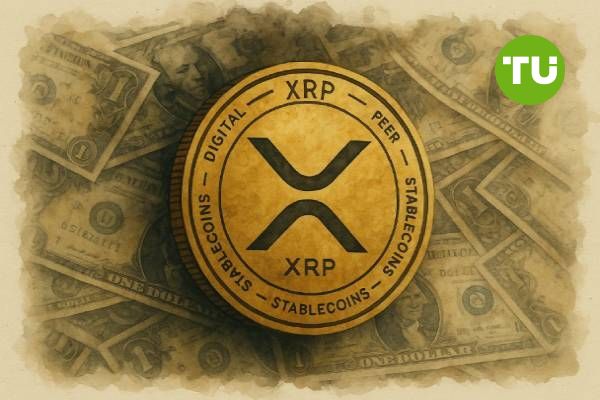
Ripple’s potential acquisition of USDC issuer Circle feels like another gripping chapter in the ongoing saga titled “The Battle for Global Finance.” Initially, Ripple reportedly offered $5 billion for the deal, which Circle turned down. Later, rumors surfaced that the offer had increased to $20 billion. While neither company has confirmed the figures, the very discussion surrounding this deal reveals a lot about Ripple’s ambitions and the future of XRP.
At first glance, it might seem like Ripple is simply looking to strengthen its own stablecoin, RLUSD, by taking out a competitor. But in reality, the story is much more complex. Ripple recently acquired the brokerage firm Hidden Road — a move that experts see as just the beginning. The next target? Gaining control over stablecoin liquidity. That’s why Circle, the issuer of the second-largest stablecoin by market cap, USDC, has caught Ripple’s attention.
Acquiring Circle would not just solidify Ripple’s position. It would mark a strategic bet on controlling liquidity, institutional partnerships, and potentially the core infrastructure of digital value transfer.Circle is behind USDC, which has a market capitalization of over $61 billion. While these assets are held in reserve and not directly owned by Circle, the company earns interest income from managing the underlying funds. According to Dominic Kwok, co-founder of EasyA, this revenue stream forms the foundation of Circle’s valuation — estimated at around $5 billion.
So, if Ripple is truly prepared to offer $20 billion, it’s either a miscalculation — or a bold wager on a future where XRP is not just a bridge asset for cross-border payments, but a central pillar of global digital finance.
One of the most prominent voices in the XRP community, known as All Things XRP, claims that if the Ripple–Circle deal goes through, XRP could act as a bridge between RLUSD and USDC, effectively connecting the two largest stablecoins outside of Tether’s ecosystem. This would position XRP not just as a transactional link, but as the central hub for interoperability between digital assets.
Moreover, Ripple could inherit Circle’s regulatory credibility and institutional partnerships — a potential gateway to Wall Street. Amid ongoing SEC pressure, such a move could reposition Ripple as a “trusted” player in the market. For XRP, this could mark the beginning of a renewed institutional narrative with a fresh strategic focus.
The market has long been waiting for a catalyst to ignite XRP’s momentum. If the acquisition goes through, it could be the spark investors have been anticipating. Still, Ripple isn’t aiming for a short-term pump — its strategy focuses on infrastructure, liquidity control, and the power to set market standards.
Even if the deal doesn’t materialize, the negotiations alone reveal Ripple’s direction. The company isn’t just enhancing RippleNet — it’s building its own version of SWIFT, powered by blockchain.Popular XRP community figure Crypto Eri recently posted that XRP’s use case has evolved beyond simple cross-border payments. According to her, both stablecoins and Ethereum Virtual Machine (EVM) compatibility now shape XRP’s value.
Here’s how XRP’s role is changing, according to Eri:
– Gas fees on EVM sidechains: Wrapped XRP (wXRP) can now serve as a gas token, similar to ETH on Ethereum, giving XRP a functional role within the broader EVM ecosystem.
– RLUSD’s institutional push: Ripple’s native stablecoin RLUSD makes XRP more appealing to institutional players. As more firms adopt RLUSD, the use of XRP for transaction fees naturally increases.
– On-chain yield generation: The upcoming MoreMarkets DeFi protocol will allow users to earn yield on XRP without leaving the XRPL network — unlocking new utility for long-term holders.
Overall, Eri believes XRP is evolving into a multidimensional asset — no longer just a token for fast and low-cost settlements, but one empowered by stablecoins, innovative tech, and gas token functionality across EVM-compatible chains.
As Circle prepares for its IPO, agreeing to an acquisition by Ripple would mean giving up its independence in exchange for a bold and ambitious partner. While the $20 billion figure sounds impressive, even seasoned analysts question how realistic that valuation is. In typical M&A deals, the acquisition premium ranges between 20% and 30% — which puts Circle’s fair price closer to $6–6.5 billion.
Factor in regulatory scrutiny from U.S. and EU authorities — already looming over both firms — and the path becomes even more complex. Circle may simply choose to remain independent, especially if it expects a revaluation after its public listing.
Ripple is vying for control over the future of the digital economy. And while Circle hasn’t accepted the offer, the mere fact that Ripple is aiming so high signals a new phase in the race — for stability, legitimacy, and institutional dominance. XRP is no longer just a cross-border remittance token. It’s shaping up to become the connective tissue of the financial Internet. If the deal happens, we may witness one of the boldest strategic moves in crypto history.



 Afghanistan
 Albania
 Algeria
 Angola
 Argentina
 Armenia
 Australia
 Austria
 Azerbaijan
 Bahamas
 Bahrain
 Bangladesh
 Belarus
 Belgium
 Bolivia
 Botswana
 Brazil
 Brunei
 Bulgaria
 Cambodia
 Cameroon
 Canada
 Chile
Chile
 China
China
 Colombia
 Congo
Congo
 Costa Rica
 Cote d'Ivoire
 Croatia
 Cuba
Cuba
 Cyprus
 Czechia
 DR Congo
 Denmark
 Dominican Republic
 Ecuador
 Egypt
Egypt
 El Salvador
 Estonia
 Eswatini
 Ethiopia
 Finland
 France
 Georgia
 Germany
 Ghana
Ghana
 Greece
 Haiti
Haiti
 Hong Kong
 Hungary
 India
India
 Indonesia
 Iran, Islamic republic
 Iraq
Iraq
 Ireland
 Israel
 Italy
Italy
 Jamaica
 Japan
Japan
 Jordan
 Kazakhstan
 Kenya
Kenya
 Korea
Korea
 Kuwait
 Kyrgyzstan
 Laos
Laos
 Latvia
 Lebanon
 Lesotho
 Libya
Libya
 Lithuania
 Luxembourg
 Madagascar
 Malaysia
 Malta
Malta
 Mauritius
 Mexico
 Moldova
 Mongolia
 Montenegro
 Morocco
 Mozambique
 Myanmar
 Namibia
 Nepal
Nepal
 Netherlands
 New Zealand
 Nigeria
 North Macedonia
 Norway
 Oman
Oman
 Pakistan
 Palestine
 Panama
 Papua New Guinea
 Paraguay
 Peru
Peru
 Philippines
 Poland
 Portugal
 Puerto Rico
 Qatar
Qatar
 Reunion
 Romania
 Rwanda
 Saudi Arabia
 Serbia
 Singapore
 Slovakia
 Slovenia
 Somalia
 South Africa
 Spain
Spain
 Sri Lanka
 Sweden
 Switzerland
 Syria
Syria
 Taiwan
 Tajikistan
 Tanzania
 Thailand
 Trinidad and Tobago
 Tunisia
 Turkey
 UAE
UAE
 Uganda
 Ukraine
 United Kingdom
United States
United Kingdom
United States
 Uruguay
 Uzbekistan
 Venezuela
 Vietnam
 Yemen
Yemen
 Zambia
 Zimbabwe