The tweet was deleted by the author.
But we saved everything 🙂.
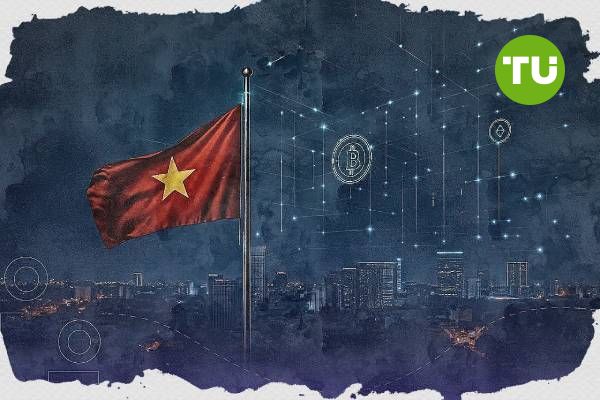
Just a few years ago, Vietnam was considered one of the harshest countries when it came to cryptocurrencies. In 2017, the government restricted their use as a means of payment and explicitly prohibited banks from handling transactions in Bitcoin or Ethereum. Yet, despite these restrictions, cryptocurrencies quietly penetrated the financial life of the Vietnamese. For the younger generation, it became a new way to earn money; for entrepreneurs, an opportunity to enter the global market; and for small investors, a chance to protect savings from inflation.
And by 2025, Vietnam unexpectedly emerged as one of the global leaders in crypto adoption, ranking fourth in the Chainalysis index. A country that had never officially recognized cryptocurrencies was, in fact, living by them. This paradox forced the government to rethink its policy.
The first real signal came in the early 2020s, when the prime minister instructed the creation of a working group to study digital assets. It was not yet a green light, but it showed that the government would not keep its eyes closed forever. Gradually, policymakers began to realize: it is better to give the market clear rules than to let it develop in the shadows.
The real breakthrough came in 2025. In June, the national assembly passed the digital industry law, which for the first time recognized crypto assets as a distinct class. It will come into effect on January 1, 2026, laying the legal foundation for exchanges, investment funds, and startups. For the first time, Vietnamese legislation introduced the concepts of digital assets, licensed trading, and operator accountability.
Less than three months later, the government launched a five-year pilot program for crypto trading. Its conditions showed just how determined the state was to control the process. Organizations wishing to run exchanges must meet extremely strict requirements. The minimum charter capital is 10 trillion dong (≈ $379 million). At least 65% of that must come from organizations, and more than 35% must be held by at least two institutions — banks, brokerage firms, insurance companies, or tech firms. Foreign ownership is capped at 49%.
The requirements apply not only to money, but also to people. The general director must have at least two years of relevant experience, while the chief technology officer is required to have five. Each company must employ at least 10 staff in technology roles with certified cybersecurity training and another 10 with securities practice certificates. Before launch, the IT system itself must meet level 4 information security standards.
Token issuance is just as tightly regulated. Tokens must be backed by real assets — such as real estate or commodities, but not fiat currency or securities — and offerings can be directed only to foreign investors. At least 15 days before the launch, issuers are required to publish a roadmap and all supporting documents.
Licensed providers are permitted to organize trading markets, offer custody services, issue tokens, and even trade on their own account. Yet all of this must operate within strict risk management procedures: oversight of deposits and assets, transparent payment processes, AML and CFT checks, and monitoring for potential financing of weapons of mass destruction. The resolution also requires internal audits, transaction monitoring, systems for handling conflicts of interest and customer complaints, as well as compensation procedures.
As for the domestic market, citizens will be allowed to open accounts with licensed platforms to legally buy and sell crypto assets. But six months after the first licensed provider begins operations, any trading outside official channels will be treated as a violation — punished with administrative fines or even criminal prosecution, depending on the severity.
These strict rules serve a clear purpose. The authorities want to avoid a “wild west” scenario where exchanges pop up without guarantees and investors are left unprotected. For Vietnam, a country that has already seen its share of scams in the past, this is a matter of political trust.
At the same time, such conditions risk suffocating innovation. Businesses note that the 10 trillion dong capital requirement excludes nearly all local entrepreneurs, leaving the field only for big financial players. And the 49% cap on foreign ownership could discourage international capital inflows. The result is a paradox: Vietnam wants to become a crypto hub, but it is building an entry wall that may be too high.
This mass demand pushed the government to change its rhetoric. Instead of banning, the state decided it is better to manage the process than lose to it. In fact, it was ordinary Vietnamese citizens, not officials, who became the real driving force behind legalization.
The new law officially recognizing crypto assets, combined with the five-year crypto trading pilot, marks the beginning of a new era for the country. Will Vietnam become a new Web3 hub in Southeast Asia, or will it get bogged down in its own bureaucracy? One thing is already clear: the “gray zone” is over.Vietnam, which once ignored cryptocurrency, is now betting on it. And if the balance between control and innovation is found, the country has a real chance to become a model for the entire region.



 Afghanistan
 Albania
 Algeria
 Angola
 Argentina
 Armenia
 Australia
 Austria
 Azerbaijan
 Bahamas
 Bahrain
 Bangladesh
 Belarus
 Belgium
 Bolivia
 Botswana
 Brazil
 Brunei
 Bulgaria
 Cambodia
 Cameroon
 Canada
 Chile
Chile
 China
China
 Colombia
 Congo
Congo
 Costa Rica
 Cote d'Ivoire
 Croatia
 Cuba
Cuba
 Cyprus
 Czechia
 DR Congo
 Denmark
 Dominican Republic
 Ecuador
 Egypt
Egypt
 El Salvador
 Estonia
 Eswatini
 Ethiopia
 Finland
 France
 Georgia
 Germany
 Ghana
Ghana
 Greece
 Haiti
Haiti
 Hong Kong
 Hungary
 India
India
 Indonesia
 Iran, Islamic republic
 Iraq
Iraq
 Ireland
 Israel
 Italy
Italy
 Jamaica
 Japan
Japan
 Jordan
 Kazakhstan
 Kenya
Kenya
 Korea
Korea
 Kuwait
 Kyrgyzstan
 Laos
Laos
 Latvia
 Lebanon
 Lesotho
 Libya
Libya
 Lithuania
 Luxembourg
 Madagascar
 Malaysia
 Malta
Malta
 Mauritius
 Mexico
 Moldova
 Mongolia
 Montenegro
 Morocco
 Mozambique
 Myanmar
 Namibia
 Nepal
Nepal
 Netherlands
 New Zealand
 Nigeria
 North Macedonia
 Norway
 Oman
Oman
 Pakistan
 Palestine
 Panama
 Papua New Guinea
 Paraguay
 Peru
Peru
 Philippines
 Poland
 Portugal
 Puerto Rico
 Qatar
Qatar
 Reunion
 Romania
 Rwanda
 Saudi Arabia
 Serbia
 Singapore
 Slovakia
 Slovenia
 Somalia
 South Africa
 Spain
Spain
 Sri Lanka
 Sweden
 Switzerland
 Syria
Syria
 Taiwan
 Tajikistan
 Tanzania
 Thailand
 Trinidad and Tobago
 Tunisia
 Turkey
 UAE
UAE
 Uganda
 Ukraine
 United Kingdom
United States
United Kingdom
United States
 Uruguay
 Uzbekistan
 Venezuela
 Vietnam
 Yemen
Yemen
 Zambia
 Zimbabwe