The tweet was deleted by the author.
But we saved everything 🙂.
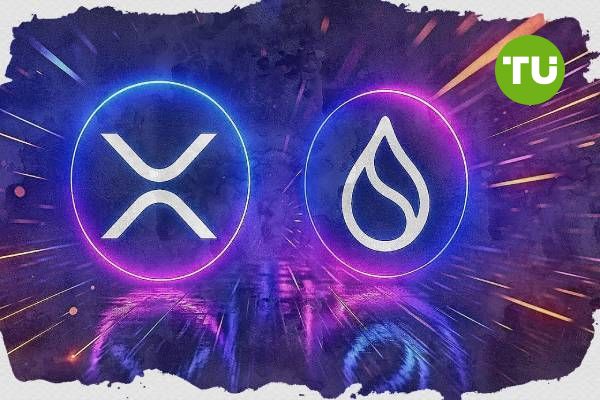
The crypto market always lives on drama. One cryptocurrency rises, another falls, new stars appear, and old ones fight for survival. But some stories are much more intriguing: when two completely different blockchains from different eras suddenly find themselves side by side. That is exactly what happened with XRP and SUI.
At first glance, they have little in common. XRP appeared in 2012 to accelerate international payments. SUI — in 2023, to open the door to a new era of Web3 applications. Yet today, their tokens are traded almost at the same level: about $3.01 for XRP and $3.5 for SUI. And this creates a special intrigue — the veteran costs less than the newcomer.
In 2012 a money transfer from New York to Mexico could take several days and cost half the amount. Ripple Labs launched XRP to show that transactions could work as quickly as email.
Its blockchain, the XRP Ledger, abandoned mining and chose a consensus model with validators. This made it possible to make transfers within seconds and almost without fees. Financial companies began to use XRP to move money between different national currencies. For example, if a bank wanted to send US dollars to someone who should receive Mexican pesos, XRP could be used as a fast “intermediate step.”
In the following years, RippleNet united hundreds of financial institutions worldwide. Among the partners were Santander, American Express, and SBI Holdings. It was no longer a “cryptocurrency for enthusiasts” but an infrastructure for global finance.
But there was also a dark side: a long lawsuit with the SEC. In 2020, the regulator accused Ripple of illegally selling securities. The court case dragged on for almost three years and heavily pressured the market. Only in 2023 did the company get its first victories — the court ruled that the token is not a security in secondary sales. This was a turning point that removed the main “toxic” label from the asset.
Regulatory clarity regarding XRP has improved, making it a more stable choice for institutions. Many see Ripple’s continued partnerships as a sign that the XRP ecosystem is growing in real financial sectors.
We move to 2023. In the world of cryptocurrencies, DeFi and NFTs are no longer a surprise, but users expect more — blockchains capable of handling millions of transactions at incredible speed. At this moment, Sui appeared, created by Mysten Labs — a team of former Meta engineers who had worked on the Libra project.
Sui is built on the Move programming language, which was originally created for the secure handling of digital assets. Here, smart contracts are not an additional option but the foundation itself. This makes it possible to create complex applications, from games with thousands of simultaneous players to financial services that work in real time.
Already in its first year after launch, the SUI ecosystem took off. DeFi platforms, NFT marketplaces, and Web3 gaming services began to appear. In 2024, the number of active developers in the network tripled. Among the projects are Bluefin (a decentralized exchange), Scallop (a DeFi lending platform), and Suins (a decentralized domain service). This is no longer a “new blockchain” but a full-fledged ecosystem.
Another reason why SUI stands out is its ambition to become the first blockchain with post-quantum security. Recently, the network announced the development of algorithms capable of withstanding attacks from future quantum computers. Today’s cryptographic systems could be vulnerable to such threats, which would call into question the integrity of data across many blockchains. Sui Network is trying to get ahead of time, laying a “futuristic shield” to protect its users. This ambitious step sets a new benchmark for the industry.
Institutions have also paid attention to the project. According to analytical firms, in 2025 SUI shows more inflow of institutional investments than some older cryptocurrencies. This indicates confidence in the technology and belief in its future.
It all comes down to the combination of price and philosophy. The value of the tokens is close, but behind them stand completely different worlds. XRP operates in the banking market and offers proven solutions for global payments. SUI is an innovative space where new services are born.
Smart contracts are an important symbol here. XRP received them late and only partially. SUI placed them at the center of its architecture from the very beginning. For banks, this is not critical: they need speed and reliability. But for developers and startups, it is a decisive factor.
Therefore, comparing XRP and SUI is not about similarity, but about choosing between two approaches. One says: “Blockchain can improve the old system.” The other: “Blockchain can create a new one.”
Today, XRP attracts those who value predictability. It has a global user base, corporate partners, and a clear place in finance. It suits conservative investors who need stability and gradual growth.
SUI is chosen by those who want to take risks. A young and active community, Web3 enthusiasts, and institutions looking for new opportunities are drawn to it. It brings high volatility, but also the chance of explosive growth. Its price has already surpassed XRP, and the market is willing to pay more for potential than for the past.
In 2025, XRP and SUI are competitors, not brothers. One strives to be the support for banks and global payments, the other — the platform for new digital worlds. One offers stability and low risks, the other — ambition and high potential.Their opposition shows that the future of cryptocurrencies will not be uniform. Some will bet on proven solutions, others on experiments. And it is in the contrast between XRP and SUI that we see most clearly that the crypto market is not just an industry of tokens but a struggle of ideas, generations, and visions of the future.

 Afghanistan
 Albania
 Algeria
 Angola
 Argentina
 Armenia
 Australia
 Austria
 Azerbaijan
 Bahamas
 Bahrain
 Bangladesh
 Belarus
 Belgium
 Bolivia
 Botswana
 Brazil
 Brunei
 Bulgaria
 Cambodia
 Cameroon
 Canada
 Chile
Chile
 China
China
 Colombia
 Congo
Congo
 Costa Rica
 Cote d'Ivoire
 Croatia
 Cuba
Cuba
 Cyprus
 Czechia
 DR Congo
 Denmark
 Dominican Republic
 Ecuador
 Egypt
Egypt
 El Salvador
 Estonia
 Eswatini
 Ethiopia
 Finland
 France
 Georgia
 Germany
 Ghana
Ghana
 Greece
 Haiti
Haiti
 Hong Kong
 Hungary
 India
India
 Indonesia
 Iran, Islamic republic
 Iraq
Iraq
 Ireland
 Israel
 Italy
Italy
 Jamaica
 Japan
Japan
 Jordan
 Kazakhstan
 Kenya
Kenya
 Korea
Korea
 Kuwait
 Kyrgyzstan
 Laos
Laos
 Latvia
 Lebanon
 Lesotho
 Libya
Libya
 Lithuania
 Luxembourg
 Madagascar
 Malaysia
 Malta
Malta
 Mauritius
 Mexico
 Moldova
 Mongolia
 Montenegro
 Morocco
 Mozambique
 Myanmar
 Namibia
 Nepal
Nepal
 Netherlands
 New Zealand
 Nigeria
 North Macedonia
 Norway
 Oman
Oman
 Pakistan
 Palestine
 Panama
 Papua New Guinea
 Paraguay
 Peru
Peru
 Philippines
 Poland
 Portugal
 Puerto Rico
 Qatar
Qatar
 Reunion
 Romania
 Rwanda
 Saudi Arabia
 Serbia
 Singapore
 Slovakia
 Slovenia
 Somalia
 South Africa
 Spain
Spain
 Sri Lanka
 Sweden
 Switzerland
 Syria
Syria
 Taiwan
 Tajikistan
 Tanzania
 Thailand
 Trinidad and Tobago
 Tunisia
 Turkey
 UAE
UAE
 Uganda
 Ukraine
 United Kingdom
United States
United Kingdom
United States
 Uruguay
 Uzbekistan
 Venezuela
 Vietnam
 Yemen
Yemen
 Zambia
 Zimbabwe