The tweet was deleted by the author.
But we saved everything 🙂.

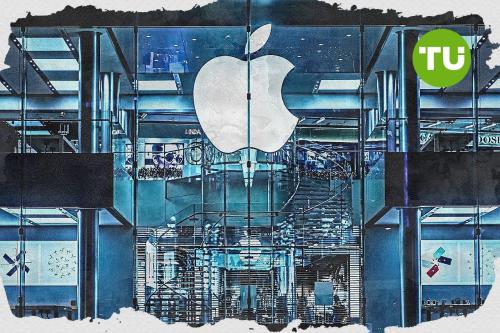
Apple has once again demonstrated its ability to deliver a near-perfect quarter. Nearly $144 billion in revenue and record iPhone sales should, in theory, have fueled a strong rally. Instead, the market barely reacted, and the company’s shares posted only modest gains. Why didn’t a stellar earnings report translate into momentum, and what risks and uncertainties are holding investors back?
Apple once again surprised Wall Street with its results for the first fiscal quarter of 2026. Revenue reached a record $143.8 billion, up 16% year over year, while net income totaled $42.1 billion. Diluted earnings per share came in at $2.84, marking a 19% increase from a year earlier.
The primary growth driver was, once again, the iPhone. The company reported “unprecedented demand,” with smartphone sales up 23% year over year and records set across all regions. Services also delivered steady growth, with revenue reaching $30 billion, up 14% year over year. The number of active devices in Apple’s ecosystem surpassed 2.5 billion, an all-time high that underscores strong customer loyalty.
Against this backdrop, the market’s reaction appeared unexpectedly muted. Following the earnings release, Apple shares gained less than 1% and settled near $258, before slipping into a modest pullback in the next session. The initial after-hours surge, when the stock briefly climbed 3–3.5%, quickly faded. The restrained price action looks paradoxical: Apple is reporting record profits, yet its stock is barely moving higher.
One of the key reasons behind the lackluster market response is that a strong quarter from Apple had largely been priced in ahead of the report. Investors were already bracing for a record season amid signs of robust demand for the iPhone 17, leaving little room for a true positive surprise.
Apple did beat consensus expectations: revenue came in at $143.8 billion versus forecasts of roughly $138.4–138.5 billion, while EPS reached $2.84 compared with estimates of $2.67–2.68. However, for the market, this looked more like confirmation of an existing narrative rather than a new story capable of resetting the company’s valuation.
Another factor is the “price of quality.” Apple remains one of the most expensive companies in the world, and its valuation multiples already imply near-flawless execution: sustained iPhone growth, strong services margins, and no major missteps. In that context, record results do not act as fuel for a rally but rather as proof that the business fortress remains intact — which, for the market, is no longer enough. For Apple’s stock to move meaningfully higher, investors need more than a strong quarter; they need a new catalyst that changes the trajectory of expectations.
The market is also exercising caution due to a number of strategic challenges facing Apple. Despite impressive sales figures, investors are closely watching whether the company can sustain its current pace — and what will drive growth going forward.
One of the biggest concerns is Apple’s position in artificial intelligence. While competitors, particularly Google and Microsoft, have aggressively ramped up investment and rapidly rolled out AI products, Apple has maintained a more measured approach. The company raised expectations itself with the 2024 launch of Apple Intelligence, yet investors still lack clear visibility into how AI will translate into a measurable growth driver.
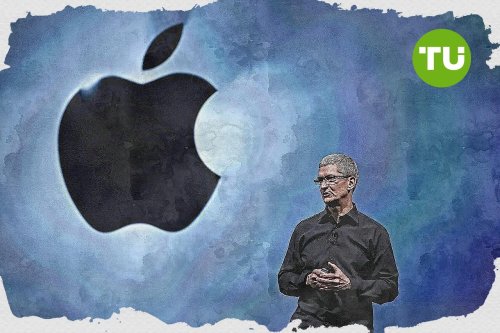
This issue was especially prominent during the latest earnings call. Analysts pressed management on Apple’s collaboration with Google in the context of Siri’s development and on how the company plans to monetize AI features. The responses were largely broad and non-specific. CEO Tim Cook emphasized that users are actively engaging with Apple Intelligence, but offered little detail on new features, timelines, or monetization strategies. For the market, that was not enough. As Gene Munster of Deepwater Asset Management noted, the muted stock reaction after a strong report reflects investor uncertainty about how AI will have a tangible impact on Apple’s business.
Another overhang is supply-chain risk and manufacturing capacity. Apple has warned that in coming quarters it may face constraints that could affect shipments of iPhones, Macs, iPads, and other products, even if demand remains strong.
Apple’s in-house A- and M-series processors are produced using TSMC’s 3-nanometer process, and capacity for this advanced node is currently tight. Demand for 3-nanometer chips has surged amid the AI boom, leaving fabs running at full utilization. Against this backdrop, Tim Cook acknowledged ongoing supply constraints and refrained from offering guidance on when supply and demand might fully rebalance.
Memory markets add another layer of pressure. A shortage of DRAM is pushing prices higher, gradually increasing costs. Apple cautioned that in the next quarter, this factor is likely to weigh more heavily on gross margin than before.
As a result, even the company’s optimistic outlook for 13–16% revenue growth in the coming quarter has been met without excessive enthusiasm. Demand remains solid, but investors see clear risks that could affect shipment volumes and profitability.
Although Apple is developing new categories, including Vision Pro, and pursuing long-term initiatives beyond its core lineup, none of them is currently perceived as a meaningful growth engine in the short to medium term.
This uncertainty explains the restrained response to a record-breaking quarter. The business is strong, but the valuation already assumes high growth and near-perfect execution. For a sustained rally, the market needs more than another impressive earnings report — it needs a clear signal of how Apple plans to accelerate growth going forward, whether through products, technology, or monetization of new capabilities. The market’s verdict is clear: Apple has set another record, but to truly impress investors, it needs not just records — it needs a new vision of the future.



 Afghanistan
 Albania
 Algeria
 Angola
 Argentina
 Armenia
 Australia
 Austria
 Azerbaijan
 Bahamas
 Bahrain
 Bangladesh
 Belarus
 Belgium
 Bolivia
 Botswana
 Brazil
 Brunei
 Bulgaria
 Cambodia
 Cameroon
 Canada
 Chile
Chile
 China
China
 Colombia
 Congo
Congo
 Costa Rica
 Cote d'Ivoire
 Croatia
 Cuba
Cuba
 Cyprus
 Czechia
 DR Congo
 Denmark
 Dominican Republic
 Ecuador
 Egypt
Egypt
 El Salvador
 Estonia
 Eswatini
 Ethiopia
 Finland
 France
 Georgia
 Germany
 Ghana
Ghana
 Greece
 Haiti
Haiti
 Hong Kong
 Hungary
 India
India
 Indonesia
 Iran, Islamic republic
 Iraq
Iraq
 Ireland
 Israel
 Italy
Italy
 Jamaica
 Japan
Japan
 Jordan
 Kazakhstan
 Kenya
Kenya
 Korea
Korea
 Kuwait
 Kyrgyzstan
 Laos
Laos
 Latvia
 Lebanon
 Lesotho
 Libya
Libya
 Lithuania
 Luxembourg
 Madagascar
 Malaysia
 Malta
Malta
 Mauritius
 Mexico
 Moldova
 Mongolia
 Montenegro
 Morocco
 Mozambique
 Myanmar
 Namibia
 Nepal
Nepal
 Netherlands
 New Zealand
 Nigeria
 North Macedonia
 Norway
 Oman
Oman
 Pakistan
 Palestine
 Panama
 Papua New Guinea
 Paraguay
 Peru
Peru
 Philippines
 Poland
 Portugal
 Puerto Rico
 Qatar
Qatar
 Reunion
 Romania
 Rwanda
 Saudi Arabia
 Serbia
 Singapore
 Slovakia
 Slovenia
 Somalia
 South Africa
 Spain
Spain
 Sri Lanka
 Sweden
 Switzerland
 Syria
Syria
 Taiwan
 Tajikistan
 Tanzania
 Thailand
 Trinidad and Tobago
 Tunisia
 Turkey
 UAE
UAE
 Uganda
 Ukraine
 United Kingdom
United States
United Kingdom
United States
 Uruguay
 Uzbekistan
 Venezuela
 Vietnam
 Yemen
Yemen
 Zambia
 Zimbabwe