
Selling pressure pushes Intel stock lower in today's trading
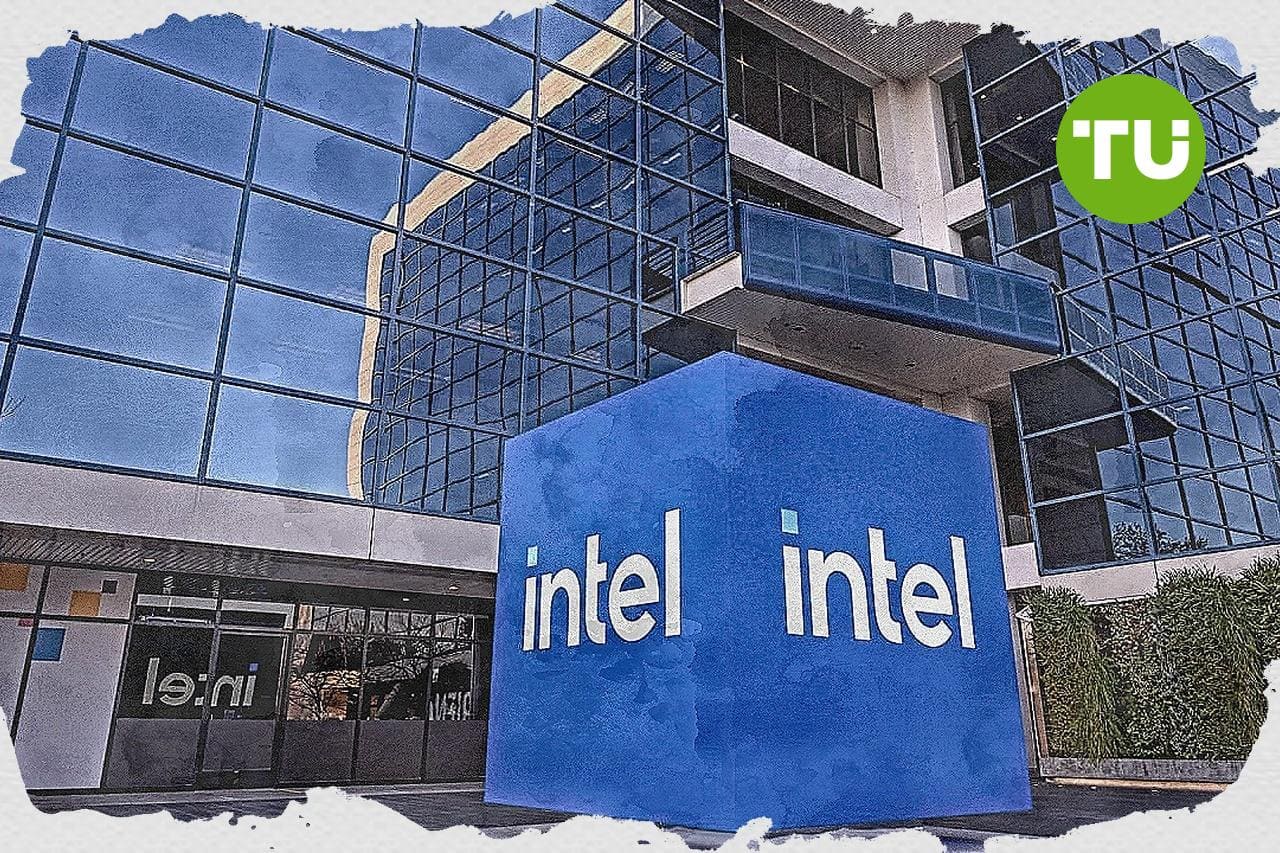
Intel Corporation (INTC) is trading at $44.45, down 3.26% for the day. The price remains below both the MA-20 ($46.30) and MA-50 ($44.90), but stands well above the MA-200 ($32.81), indicating short-term selling pressure while maintaining a generally bullish longer-term structure.
 128.40
130.65
128.40
130.65
Highlights
- Intel forecasts Q1 2026 revenue of $11.7–$12.7 billion amid supply constraints and robust AI server chip demand.
- EMIB-T interconnect technology and ongoing evaluation of 18A process are flagged as near-term catalysts, but share price faces litigation and suspended dividend overhangs.
- Intel trades under short-term selling pressure, but technicals predict a likely rebound to the $46.35–$47.64 range in coming sessions.
AI server chip demand and strategy review drive sentiment amid selling
Intel reported fourth-quarter earnings and issued guidance for the first quarter of 2026, anticipating revenue between $11.7 billion and $12.7 billion. The company faced ongoing supply shortages and factory capacity constraints, with continued strong demand for its AI-driven server processors and a review of its 18A process. Its Enhanced Multi-Die Interconnect Bridge-Technology (EMIB-T) was highlighted as a potential growth catalyst, alongside ongoing monitoring of its product strategy execution, recent buybacks, suspended dividends, litigation risks, and R&D prioritization, though price action has remained under broader selling pressure.
Intraday downside dominates as mixed signals highlight weak momentum
Momentum on the daily chart is weak, with MACD pointing to selling pressure and a low ADX value of 12.15 indicating a lack of trend clarity. Overbought signals appear on Stoch RSI and BBP, while RSI is neutral and CCI shows no strong bias. Sellers dominate intraday momentum, as reflected in BBP and supporting oscillators. The stock opened with a gap down from $45.95 to $44.28 and trades near the lower end of today’s $44.22 – $45.16 range, with downside pressure persisting. Divergence among oscillators and momentum signals suggests caution, as the downside move aligns with momentum but not all indicators.
Previously it was reported that Intel is trading below its short- and medium-term moving averages with pronounced selling pressure and heightened volatility, though it remains well above its long-term average, indicating the broader trend still has upward bias. Momentum indicators such as MACD and ADX are neutral to weak, while oscillators like RSI and Stoch RSI reflect mild oversold conditions, with key support near the Ichimoku Kijun and resistance around the MA-50.














-
 Afghanistan
-
 Albania
-
 Algeria
-
 Angola
-
 Argentina
-
 Armenia
-
 Australia
-
 Austria
-
 Azerbaijan
-
 Bahamas
-
 Bahrain
-
 Bangladesh
-
 Belarus
-
 Belgium
-
 Bolivia
-
 Botswana
-
 Brazil
-
 Brunei
-
 Bulgaria
-
 Cambodia
-
 Cameroon
-
 Canada
-
 Chile
Chile
-
 China
China
-
 Colombia
-
 Congo
Congo
-
 Costa Rica
-
 Cote d'Ivoire
-
 Croatia
-
 Cuba
Cuba
-
 Cyprus
-
 Czechia
-
 DR Congo
-
 Denmark
-
 Dominican Republic
-
 Ecuador
-
 Egypt
Egypt
-
 El Salvador
-
 Estonia
-
 Eswatini
-
 Ethiopia
-
 Finland
-
 France
-
 Georgia
-
 Germany
-
 Ghana
Ghana
-
 Greece
-
 Haiti
Haiti
-
 Hong Kong
-
 Hungary
-
 India
India
-
 Indonesia
-
 Iran, Islamic republic
-
 Iraq
Iraq
-
 Ireland
-
 Israel
-
 Italy
Italy
-
 Jamaica
-
 Japan
Japan
-
 Jordan
-
 Kazakhstan
-
 Kenya
Kenya
-
 Korea
Korea
-
 Kuwait
-
 Kyrgyzstan
-
 Laos
Laos
-
 Latvia
-
 Lebanon
-
 Lesotho
-
 Libya
Libya
-
 Lithuania
-
 Luxembourg
-
 Madagascar
-
 Malaysia
-
 Malta
Malta
-
 Mauritius
-
 Mexico
-
 Moldova
-
 Mongolia
-
 Montenegro
-
 Morocco
-
 Mozambique
-
 Myanmar
-
 Namibia
-
 Nepal
Nepal
-
 Netherlands
-
 New Zealand
-
 Nigeria
-
 North Macedonia
-
 Norway
-
 Oman
Oman
-
 Pakistan
-
 Palestine
-
 Panama
-
 Papua New Guinea
-
 Paraguay
-
 Peru
Peru
-
 Philippines
-
 Poland
-
 Portugal
-
 Puerto Rico
-
 Qatar
Qatar
-
 Reunion
-
 Romania
-
 Rwanda
-
 Saudi Arabia
-
 Serbia
-
 Singapore
-
 Slovakia
-
 Slovenia
-
 Somalia
-
 South Africa
-
 Spain
Spain
-
 Sri Lanka
-
 Sweden
-
 Switzerland
-
 Syria
Syria
-
 Taiwan
-
 Tajikistan
-
 Tanzania
-
 Thailand
-
 Trinidad and Tobago
-
 Tunisia
-
 Turkey
-
 UAE
UAE
-
 Uganda
-
 Ukraine
-
 United Kingdom
-
United States
-
 Uruguay
-
 Uzbekistan
-
 Venezuela
-
 Vietnam
-
 Yemen
Yemen
-
 Zambia
-
 Zimbabwe
- Forex
- Crypto












