
Tesla stock drops 2% as Daniel Ives underscores AI upside
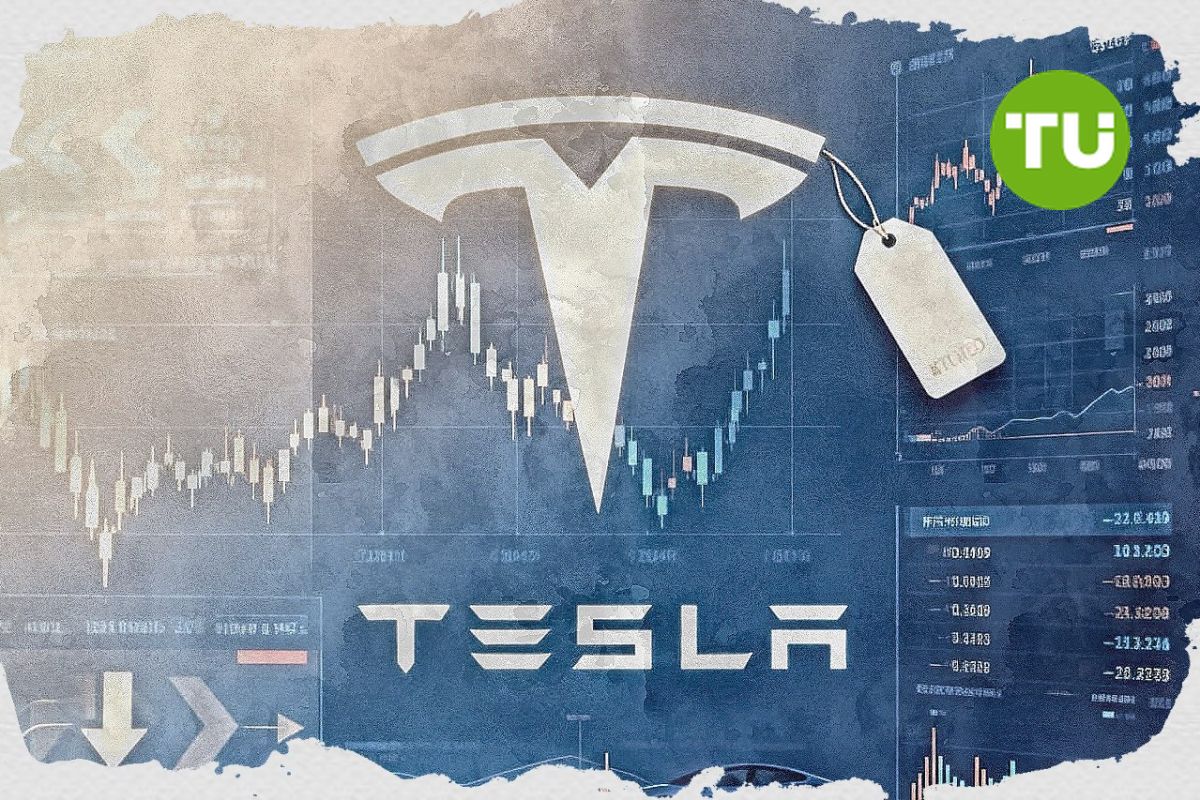
Bearish pressure prevails in the stock market, especially in relation to leading companies. Tesla is currently trading at $352.82, extending a short-term corrective phase. The stock is now trading below its 20-day moving average near $365 and testing the 50-day moving average around $350.
Highlights
- Tesla shares are in a short-term correction, with its positions weakening below key resistance at $365.
- Despite the pullback, Daniel Ives remains bullish, as he believes that Tesla’s AI potential is not yet priced in.
- Near-term expectations are negative, but a reclaim of $365 may revive upside toward $380–$400.
Intraday data confirms a wide range formed between $346.70 and $367.64. This shows elevated volatility and active institutional positioning. The inability to hold above $360 is caused by selling pressure on recent rallies. Volume remains robust at approximately 77 million shares. This means that the move is driven by large flows rather than low-liquidity fluctuations.
Momentum indicators show negative dynamics. The RSI has likely moved toward the mid-40s. This reflects a weakening bullish impulse without reaching oversold conditions. Thus, there is still potential for downside before the concentration of technical exhaustion risks.
Key support is defined at $345. A break below this level may expose $330, and it is close to a prior consolidation range in late March. On the upside, resistance is layered at $365. The broader uptrend from early 2025 remains intact above $320. Overall, the short-term structure has turned neutral-to-bearish after the previous rejection.

Tesla stock performance (February 2026–April 2026). Source: TradingView.
Recent declines have been characterized by high trading volume. This may be caused by institutional selling as such shift in participation often precedes deeper corrections. So the technical situation has transitioned from bullish continuation to early-stage correction. At the same time, near-term trading strategies still experience the expectations of further decline.
Ives bullish despite demand and margin concerns
The recent pullback aligns with the analysis presented by Wedbush analyst Daniel Ives. He remains optimistic on Tesla’s potential despite the stock’s weakness. His bullish is based on teh company’s artificial intelligence positioning, particularly its Full Self-Driving ecosystem and Dojo supercomputing platform. According to him, they are not fully reflected in current valuations.
However, the market is prioritizing near-term risks. Tesla faces margin pressure due to aggressive pricing strategies. The most challenging situation is observed in China where competition from domestic EV manufacturers is growing. At the same time, demand elasticity is changing due to a higher interest rate environment, where financing costs affect consumer affordability.
This divergence between long-term optimism and short-term caution is affects volatility. Tesla’s valuation creates sensitivity to any negative revisions in earnings expectations. Investors are questioning whether the AI narrative is sufficient to counterbalance cyclical pressures in the automotive business.
Long-term investors continue to view Tesla as a technology platform with asymmetric upside. However, shorter-term participants are rotating out due to macro uncertainty and earnings risk. Until there is evidence of margin stabilization or AI monetization, this tension may persist.
Price outlook and scenarios
In the short term, Tesla may remain under pressure unless it can reclaim the $365 level with high trading volume. The base case scenario is continued consolidation with a bearish bias. Bears may target the $340–$345 support zone. If this level fails, the next downside level is $330.
A bearish extension toward $320 becomes possible if market sentiment deteriorates or if Tesla-specific news disappoints. This level may create a key structural support and likely attract stronger buying interest.
BNP Paribas warns Tesla faces significant geopolitical risk due to its heavy reliance on China, where rising U.S.-China tensions could trigger consumer backlash and regulatory challenges.











-
 Afghanistan
-
 Albania
-
 Algeria
-
 Angola
-
 Argentina
-
 Armenia
-
 Australia
-
 Austria
-
 Azerbaijan
-
 Bahamas
-
 Bahrain
-
 Bangladesh
-
 Belarus
-
 Belgium
-
 Bolivia
-
 Botswana
-
 Brazil
-
 Brunei
-
 Bulgaria
-
 Cambodia
-
 Cameroon
-
 Canada
-
 Chile
Chile
-
 China
China
-
 Colombia
-
 Congo
Congo
-
 Costa Rica
-
 Cote d'Ivoire
-
 Croatia
-
 Cuba
Cuba
-
 Cyprus
-
 Czechia
-
 DR Congo
-
 Denmark
-
 Dominican Republic
-
 Ecuador
-
 Egypt
Egypt
-
 El Salvador
-
 Estonia
-
 Eswatini
-
 Ethiopia
-
 Finland
-
 France
-
 Georgia
-
 Germany
-
 Ghana
Ghana
-
 Greece
-
 Haiti
Haiti
-
 Hong Kong
-
 Hungary
-
 India
India
-
 Indonesia
-
 Iran, Islamic republic
-
 Iraq
Iraq
-
 Ireland
-
 Israel
-
 Italy
Italy
-
 Jamaica
-
 Japan
Japan
-
 Jordan
-
 Kazakhstan
-
 Kenya
Kenya
-
 Korea
Korea
-
 Kuwait
-
 Kyrgyzstan
-
 Laos
Laos
-
 Latvia
-
 Lebanon
-
 Lesotho
-
 Libya
Libya
-
 Lithuania
-
 Luxembourg
-
 Madagascar
-
 Malaysia
-
 Malta
Malta
-
 Mauritius
-
 Mexico
-
 Moldova
-
 Mongolia
-
 Montenegro
-
 Morocco
-
 Mozambique
-
 Myanmar
-
 Namibia
-
 Nepal
Nepal
-
 Netherlands
-
 New Zealand
-
 Nigeria
-
 North Macedonia
-
 Norway
-
 Oman
Oman
-
 Pakistan
-
 Palestine
-
 Panama
-
 Papua New Guinea
-
 Paraguay
-
 Peru
Peru
-
 Philippines
-
 Poland
-
 Portugal
-
 Puerto Rico
-
 Qatar
Qatar
-
 Reunion
-
 Romania
-
 Rwanda
-
 Saudi Arabia
-
 Serbia
-
 Singapore
-
 Slovakia
-
 Slovenia
-
 Somalia
-
 South Africa
-
 Spain
Spain
-
 Sri Lanka
-
 Sweden
-
 Switzerland
-
 Syria
Syria
-
 Taiwan
-
 Tajikistan
-
 Tanzania
-
 Thailand
-
 Trinidad and Tobago
-
 Tunisia
-
 Turkey
-
 UAE
UAE
-
 Uganda
-
 Ukraine
-
 United Kingdom
-
United States
-
 Uruguay
-
 Uzbekistan
-
 Venezuela
-
 Vietnam
-
 Yemen
Yemen
-
 Zambia
-
 Zimbabwe
- Forex
- Crypto












