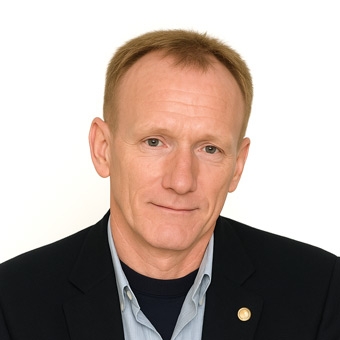
Federal Reserve faces strategic trade-offs under Kevin Warsh

Kevin Warsh starts his term as Federal Reserve chair with a sharper communications style and a firmer stated commitment to price stability. But his early approach also exposes unresolved tensions over guidance, data, credibility and how the central bank signals future policy.
Highlights
- Kevin Warsh introduces a shortened Fed policy statement pledging price stability but omitting forward guidance or interest rate projections, increasing uncertainty for markets.
- Warsh acknowledges uneven restrictiveness in current monetary policy—with tighter conditions for housing than financial markets—but declines to provide a detailed assessment or concrete policy actions.
- Tensions arise as Warsh questions reliance on official U.S. economic data quality post-2025 and recognizes artificial intelligence both fueling demand and potentially boosting productive capacity, complicating policy decisions.
Policy communication shifts and unresolved trade-offs
As reported by Financial Times, Warsh praises the Federal Open Market Committee’s tradition of rigorous debate while introducing a shorter policy statement that commits the Fed to delivering price stability without outlining any path for interest rates. He also says the central bank will change further in the months ahead after reviewing five task force reports covering communications, the balance sheet, use of data, productivity and the inflation framework.The central tension in this approach is that a push for simplicity can clash with the realities of monetary policy, where trade-offs are difficult to avoid. Warsh argues the Fed had become too reliant on forward guidance, but offering little or no signal about future policy could leave households, companies and markets to misread the stance of rates and increase financial volatility.
The article also points to friction between forecasts and guidance. Any central bank forecast implies assumptions about future rates, and the Fed has traditionally used projections from individual policymakers on appropriate interest-rate settings. Warsh does not provide his own projections, raising questions about how the Fed can justify current decisions if it avoids engaging with the future effects of policy.
That challenge extends to credibility in the present. When asked about the current restrictiveness of monetary policy, Warsh says rates are unevenly restrictive, tighter in housing than in financial markets, but he does not give a fuller assessment. The article argues that a firm promise to restore price stability becomes harder to sustain if the chair does not clearly define the existing policy stance or explain what concrete action supports that commitment.
Market interpretation, data quality and implications for U.S. policy
Another issue is the relationship between the Fed and financial markets. Warsh says he wants markets to respond to economic trends and for policymakers to learn from those reactions, yet the article notes that market pricing often reflects expectations of Fed behavior itself. That creates a feedback loop in which officials risk reading signals partly shaped by their own decisions.The Fed’s shorter statement may also create its own constraint later. A more concise text is easier to understand, but any future wording change could carry outsized significance because investors and economists are likely to scrutinize each new phrase more closely.
The article also highlights tensions in Warsh’s comments on information and data. He says corporate leaders have access to real-time information that policymakers might envy, but he also stresses that trends over three or six months matter more than any single release. That leaves an open question over how much weight the Fed should place on fast-moving, volatile indicators versus slower national statistics that are revised over time.
There is also a broader policy contradiction around official data. The article argues that complaints about the quality of U.S. economic data cannot be separated from pressure on the independence and funding of official statistical systems since 2025. On artificial intelligence, Warsh acknowledges a separate tension, saying AI is lifting demand, especially for electronic equipment, while also potentially expanding the productive capacity of the U.S. economy, a mix that could complicate future monetary policy decisions.
In our earlier article on Kevin Warsh’s shift toward less Fed guidance, we explained how reduced signaling could raise uncertainty for investors already grappling with concentrated AI-led market leadership and elevated positioning. We also noted that the Fed’s balance sheet has already shrunk materially from its 2023 peak, complicating assumptions about how policy changes might tighten financial conditions and affect risk appetite across U.S. equities.














-
 Afghanistan
-
 Albania
-
 Algeria
-
 Angola
-
 Argentina
-
 Armenia
-
 Australia
-
 Austria
-
 Azerbaijan
-
 Bahamas
-
 Bahrain
-
 Bangladesh
-
 Belarus
-
 Belgium
-
 Bolivia
-
 Botswana
-
 Brazil
-
 Brunei
-
 Bulgaria
-
 Cambodia
-
 Cameroon
-
 Canada
-
 Chile
Chile
-
 China
China
-
 Colombia
-
 Congo
Congo
-
 Costa Rica
-
 Cote d'Ivoire
-
 Croatia
-
 Cuba
Cuba
-
 Cyprus
-
 Czechia
-
 DR Congo
-
 Denmark
-
 Dominican Republic
-
 Ecuador
-
 Egypt
Egypt
-
 El Salvador
-
 Estonia
-
 Eswatini
-
 Ethiopia
-
 Finland
-
 France
-
 Georgia
-
 Germany
-
 Ghana
Ghana
-
 Greece
-
 Haiti
Haiti
-
 Hong Kong
-
 Hungary
-
 India
India
-
 Indonesia
-
 Iran, Islamic republic
-
 Iraq
Iraq
-
 Ireland
-
 Israel
-
 Italy
Italy
-
 Jamaica
-
 Japan
Japan
-
 Jordan
-
 Kazakhstan
-
 Kenya
Kenya
-
 Korea
Korea
-
 Kuwait
-
 Kyrgyzstan
-
 Laos
Laos
-
 Latvia
-
 Lebanon
-
 Lesotho
-
 Libya
Libya
-
 Lithuania
-
 Luxembourg
-
 Madagascar
-
 Malaysia
-
 Malta
Malta
-
 Mauritius
-
 Mexico
-
 Moldova
-
 Mongolia
-
 Montenegro
-
 Morocco
-
 Mozambique
-
 Myanmar
-
 Namibia
-
 Nepal
Nepal
-
 Netherlands
-
 New Zealand
-
 Nigeria
-
 North Macedonia
-
 Norway
-
 Oman
Oman
-
 Pakistan
-
 Palestine
-
 Panama
-
 Papua New Guinea
-
 Paraguay
-
 Peru
Peru
-
 Philippines
-
 Poland
-
 Portugal
-
 Puerto Rico
-
 Qatar
Qatar
-
 Reunion
-
 Romania
-
 Rwanda
-
 Saudi Arabia
-
 Serbia
-
 Singapore
-
 Slovakia
-
 Slovenia
-
 Somalia
-
 South Africa
-
 Spain
Spain
-
 Sri Lanka
-
 Sweden
-
 Switzerland
-
 Syria
Syria
-
 Taiwan
-
 Tajikistan
-
 Tanzania
-
 Thailand
-
 Trinidad and Tobago
-
 Tunisia
-
 Turkey
-
 UAE
UAE
-
 Uganda
-
 Ukraine
-
 United Kingdom
-
United States
-
 Uruguay
-
 Uzbekistan
-
 Venezuela
-
 Vietnam
-
 Yemen
Yemen
-
 Zambia
-
 Zimbabwe
- Forex
- Crypto











