
U.S. Treasury outlines economic statecraft strategy for trade, supply chains and finance

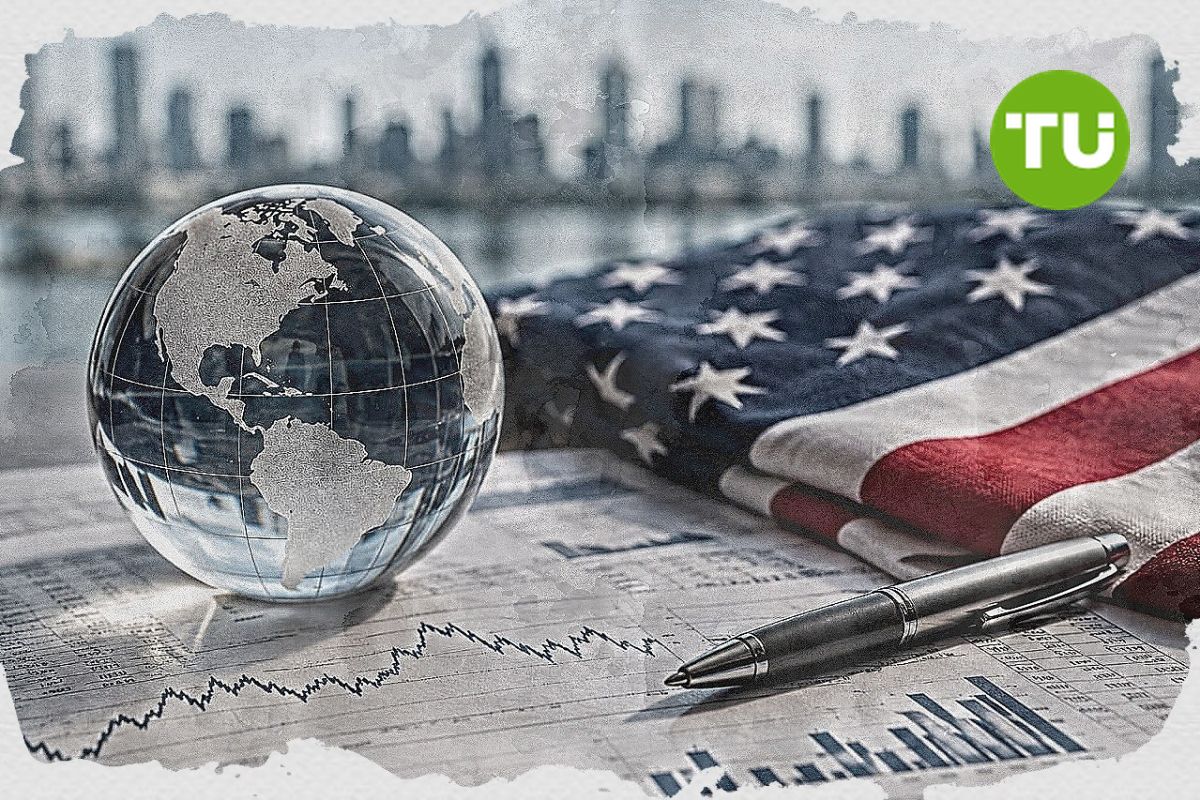
Ahead of the United States' 250th anniversary celebrations, the U.S. Treasury is setting out a broader policy framework that links economic policy more closely to national security and domestic industrial capacity. The strategy, presented under President Trump, centers on supply chain resilience, reciprocal market access, financial leadership and support for technologies such as digital assets and stablecoins.
Highlights
- The U.S. Treasury introduced a five-principle economic statecraft framework prioritizing domestic industry resilience, reciprocal market access, and stricter trade and supply chain controls.
- Policy signals increased scrutiny on trading partners regarding non-market barriers, sanctions avoidance, and discriminatory practices, while promoting domestic support for critical technology and manufacturing sectors.
- Treasury emphasized that digital assets and payment infrastructure innovation must strengthen the dollar and financial system integrity, linking fintech development to compliance, transparency, and enforcement.
Five-principle framework for economic policy
As reported by U.S. Department of the Treasury, the speech to the Economic Club of New York presents the administration's economic statecraft agenda around five core principles intended to strengthen U.S. sovereignty through trade, finance and industrial policy.The first principle is that economic security begins with national capacity, with the Treasury arguing that the U.S. must preserve the ability to build and scale industries including semiconductors, AI, quantum computing, advanced manufacturing, shipbuilding, critical minerals and pharmaceuticals. The remarks also emphasize more resilient supply chains, saying policy must account not only for cost but also for crisis durability, exposure to coercion and reliance on foreign chokepoints.
The second principle is reciprocity in economic relations. The speech says access to the U.S. market, capital and dollar-based financial system is no longer unconditional, and warns against discriminatory taxes, forced technology transfer, localization requirements and industrial policies that exclude American firms. A third principle focuses on writing the rules of the next economy, including standards for digital assets, stablecoins, tokenization and payment systems, with support for innovation that strengthens the dollar while meeting transparency, security and consumer protection requirements.
The fourth principle defines financial leadership as a core instrument of statecraft, linking the dollar's global role to the depth of U.S. markets and institutions while stressing enforcement against sanctions evasion, terrorist finance, cybercrime and illicit financial flows. The fifth principle states that economic statecraft must serve American households by connecting national power to jobs, production, investment and broadly shared prosperity.
Implications for trade, allies and strategic sectors
The policy direction signals a firmer U.S. stance toward trading partners and strategic competitors, with a greater willingness to use trade and financial tools where Washington sees non-market practices, market barriers or sanctions leakage. The speech says the administration welcomes alliances and open commerce, but expects partners to provide fair market access and avoid policies that single out American companies.For industry, the message points to continued policy support for domestic production and innovation in sectors viewed as critical to national power. Companies operating in advanced technologies, manufacturing, critical inputs and cross-border finance are likely to face a framework in which resilience, compliance and reciprocal treatment carry greater weight in U.S. economic policy.
The remarks also suggest that financial technology will remain an important competitive front. By backing innovation in digital assets and payment infrastructure while tying it to law enforcement access and financial integrity, the Treasury is signaling that future market development should reinforce, rather than dilute, the role of the dollar and the reach of the U.S. financial system.
Our earlier article covered Legion LegalTech’s federal lawsuit challenging a June 12 U.S. Commerce Department directive that pushed Anthropic to disable access to certain top-tier AI models for “foreign nationals,” disrupting cross-border development teams. We noted that the case highlights how export-style controls on frontier AI can quickly ripple through software operations and supply chains, raising compliance and continuity risks for firms dependent on a small set of leading model providers.












-
 Afghanistan
-
 Albania
-
 Algeria
-
 Angola
-
 Argentina
-
 Armenia
-
 Australia
-
 Austria
-
 Azerbaijan
-
 Bahamas
-
 Bahrain
-
 Bangladesh
-
 Belarus
-
 Belgium
-
 Bolivia
-
 Botswana
-
 Brazil
-
 Brunei
-
 Bulgaria
-
 Cambodia
-
 Cameroon
-
 Canada
-
 Chile
Chile
-
 China
China
-
 Colombia
-
 Congo
Congo
-
 Costa Rica
-
 Cote d'Ivoire
-
 Croatia
-
 Cuba
Cuba
-
 Cyprus
-
 Czechia
-
 DR Congo
-
 Denmark
-
 Dominican Republic
-
 Ecuador
-
 Egypt
Egypt
-
 El Salvador
-
 Estonia
-
 Eswatini
-
 Ethiopia
-
 Finland
-
 France
-
 Georgia
-
 Germany
-
 Ghana
Ghana
-
 Greece
-
 Haiti
Haiti
-
 Hong Kong
-
 Hungary
-
 India
India
-
 Indonesia
-
 Iran, Islamic republic
-
 Iraq
Iraq
-
 Ireland
-
 Israel
-
 Italy
Italy
-
 Jamaica
-
 Japan
Japan
-
 Jordan
-
 Kazakhstan
-
 Kenya
Kenya
-
 Korea
Korea
-
 Kuwait
-
 Kyrgyzstan
-
 Laos
Laos
-
 Latvia
-
 Lebanon
-
 Lesotho
-
 Libya
Libya
-
 Lithuania
-
 Luxembourg
-
 Madagascar
-
 Malaysia
-
 Malta
Malta
-
 Mauritius
-
 Mexico
-
 Moldova
-
 Mongolia
-
 Montenegro
-
 Morocco
-
 Mozambique
-
 Myanmar
-
 Namibia
-
 Nepal
Nepal
-
 Netherlands
-
 New Zealand
-
 Nigeria
-
 North Macedonia
-
 Norway
-
 Oman
Oman
-
 Pakistan
-
 Palestine
-
 Panama
-
 Papua New Guinea
-
 Paraguay
-
 Peru
Peru
-
 Philippines
-
 Poland
-
 Portugal
-
 Puerto Rico
-
 Qatar
Qatar
-
 Reunion
-
 Romania
-
 Rwanda
-
 Saudi Arabia
-
 Serbia
-
 Singapore
-
 Slovakia
-
 Slovenia
-
 Somalia
-
 South Africa
-
 Spain
Spain
-
 Sri Lanka
-
 Sweden
-
 Switzerland
-
 Syria
Syria
-
 Taiwan
-
 Tajikistan
-
 Tanzania
-
 Thailand
-
 Trinidad and Tobago
-
 Tunisia
-
 Turkey
-
 UAE
UAE
-
 Uganda
-
 Ukraine
-
 United Kingdom
-
United States
-
 Uruguay
-
 Uzbekistan
-
 Venezuela
-
 Vietnam
-
 Yemen
Yemen
-
 Zambia
-
 Zimbabwe
- Forex
- Crypto











