The tweet was deleted by the author.
But we saved everything 🙂.

Strategy (MSTR, formerly MicroStrategy) currently trades at $85.09, up $2.78 or 3.38% from the previous close, recovering slightly after opening with a modest upside gap. Despite today's intraday rebound, the price remains significantly below key moving averages, with rising activity attributed to technical support and moderate bounce in an otherwise bearish market environment; Michael Saylor's statement about disciplined MSTR issuance has also contributed to improved sentiment.
 99.05
104.60
99.05
104.60
Michael Saylor highlighted that Strategy intends to remain disciplined in issuing $MSTR, especially when the stock trades at or near its maintenance net asset value (mNAV). This approach matters because it supports market confidence around capital allocation and helps defend shareholder value by signaling prudent financial management and avoiding unnecessary dilution. The market appears to have responded positively as buyback authorizations and a new reserve policy reinforce the message of careful capital structuring. Additional background includes Strategy's June 2026 adoption of a Digital Credit Capital Framework, a $2 billion buyback program, and the expansion of its Bitcoin monetization and dividend policies.
The current price of $85.09 remains well below the MA-20 ($119.16), MA-50 ($150.54), and MA-200 ($185.95), confirming a sustained bearish trend, with dynamic resistance at $125.59. Nearest technical support is at $78.00 and resistance at $92.00. Bearish momentum dominates, as MACD and oversold RSI readings reflect ongoing seller control. The 5-day forecast range is $78.00 to $92.00, with the fundamental signal from the tweet supporting the technical outlook.
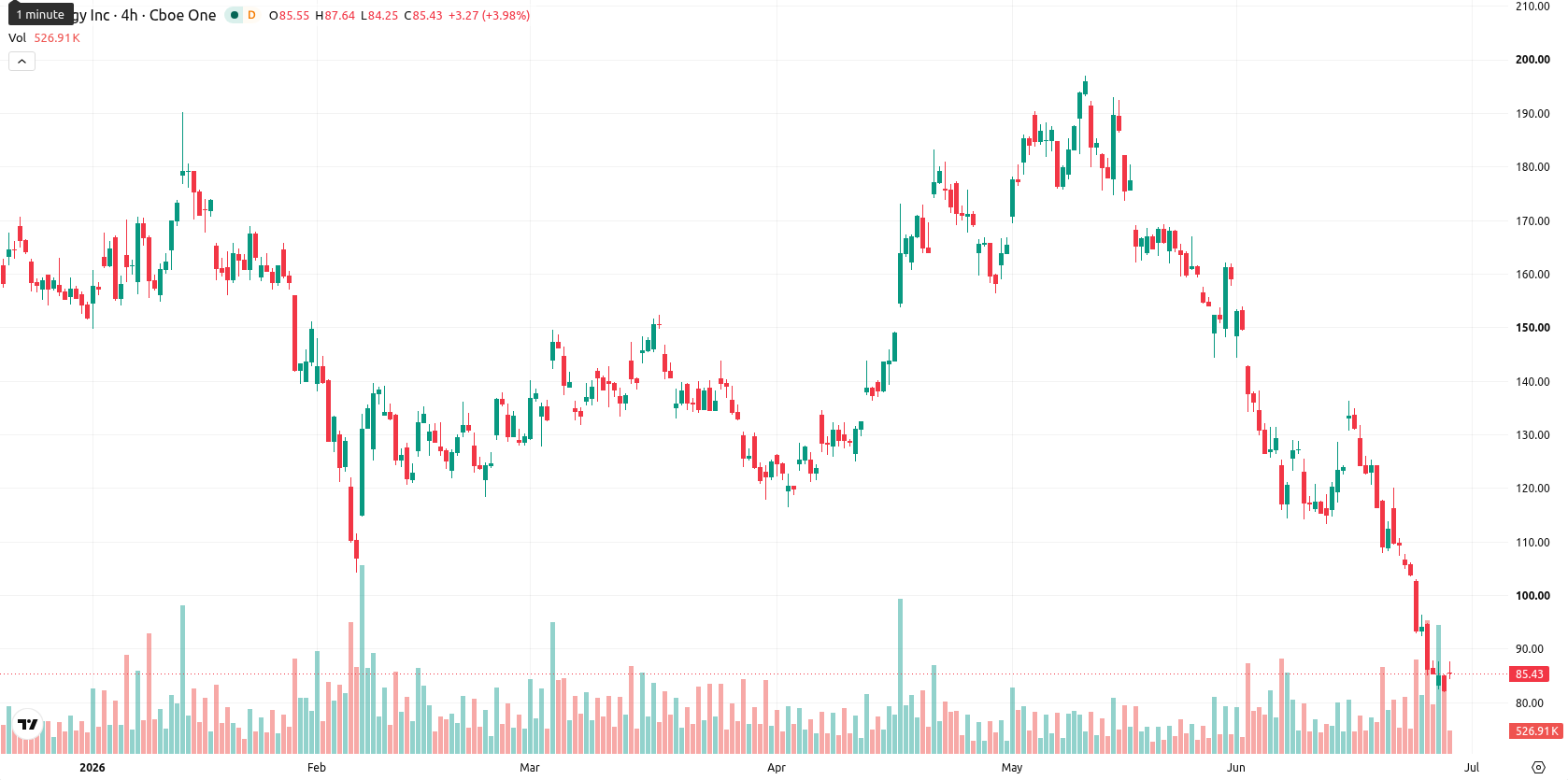
Earlier, analysts noted that Strategy faced sustained downward momentum amid acute liquidity concerns and doubts over the viability of its preferred dividend structure. This article adds to that perspective by highlighting evolving regulatory developments and ongoing market uncertainty, making it critical for investors to monitor any shifts in dividend policy or capital-raising strategies as indicators of near-term stability.

 Afghanistan
 Albania
 Algeria
 Angola
 Argentina
 Armenia
 Australia
 Austria
 Azerbaijan
 Bahamas
 Bahrain
 Bangladesh
 Belarus
 Belgium
 Bolivia
 Botswana
 Brazil
 Brunei
 Bulgaria
 Cambodia
 Cameroon
 Canada
 Chile
Chile
 China
China
 Colombia
 Congo
Congo
 Costa Rica
 Cote d'Ivoire
 Croatia
 Cuba
Cuba
 Cyprus
 Czechia
 DR Congo
 Denmark
 Dominican Republic
 Ecuador
 Egypt
Egypt
 El Salvador
 Estonia
 Eswatini
 Ethiopia
 Finland
 France
 Georgia
 Germany
 Ghana
Ghana
 Greece
 Haiti
Haiti
 Hong Kong
 Hungary
 India
India
 Indonesia
 Iran, Islamic republic
 Iraq
Iraq
 Ireland
 Israel
 Italy
Italy
 Jamaica
 Japan
Japan
 Jordan
 Kazakhstan
 Kenya
Kenya
 Korea
Korea
 Kuwait
 Kyrgyzstan
 Laos
Laos
 Latvia
 Lebanon
 Lesotho
 Libya
Libya
 Lithuania
 Luxembourg
 Madagascar
 Malaysia
 Malta
Malta
 Mauritius
 Mexico
 Moldova
 Mongolia
 Montenegro
 Morocco
 Mozambique
 Myanmar
 Namibia
 Nepal
Nepal
 Netherlands
 New Zealand
 Nigeria
 North Macedonia
 Norway
 Oman
Oman
 Pakistan
 Palestine
 Panama
 Papua New Guinea
 Paraguay
 Peru
Peru
 Philippines
 Poland
 Portugal
 Puerto Rico
 Qatar
Qatar
 Reunion
 Romania
 Rwanda
 Saudi Arabia
 Serbia
 Singapore
 Slovakia
 Slovenia
 Somalia
 South Africa
 Spain
Spain
 Sri Lanka
 Sweden
 Switzerland
 Syria
Syria
 Taiwan
 Tajikistan
 Tanzania
 Thailand
 Trinidad and Tobago
 Tunisia
 Turkey
 UAE
UAE
 Uganda
 Ukraine
 United Kingdom
United States
United Kingdom
United States
 Uruguay
 Uzbekistan
 Venezuela
 Vietnam
 Yemen
Yemen
 Zambia
 Zimbabwe