
Nasdaq Composite slips after weak services data reinforce seasonal sentiment

The Nasdaq Composite Index dropped 0.85% on Tuesday as investor sentiment took another hit following weaker-than-expected economic data and growing concerns about the impact of U.S. trade policy.
The ISM Services Index, a key gauge of the U.S. services sector, fell to 50.1 in July, narrowly holding above contraction territory. Economists had expected a stronger reading of 51.5, so the miss renewed worries about slowing economic momentum and potential stagflation risks.
Highlights
-Nasdaq falls 0.85% as ISM Services Index data sparks stagflation concerns
-The index stalled at 21,060 while RSI suggest more sideways action ahead
-Caution grows as Q2 earnings show early tariff cost impact
The services sector accounts for nearly 70% of the U.S. economy, and when it begins to slow, markets often react sharply. This data arrived at a time when investors were already wary due to weak seasonal patterns in August and ongoing geopolitical tension. Wall Street broke from the broader global equity trend and turned lower across the board, with the Nasdaq losing nearly 180 points to close near 20,900. The drop came after Monday’s partial rebound of 400 points from Friday’s 800-point selloff, leaving the week-to-date gain at just 1.3%.
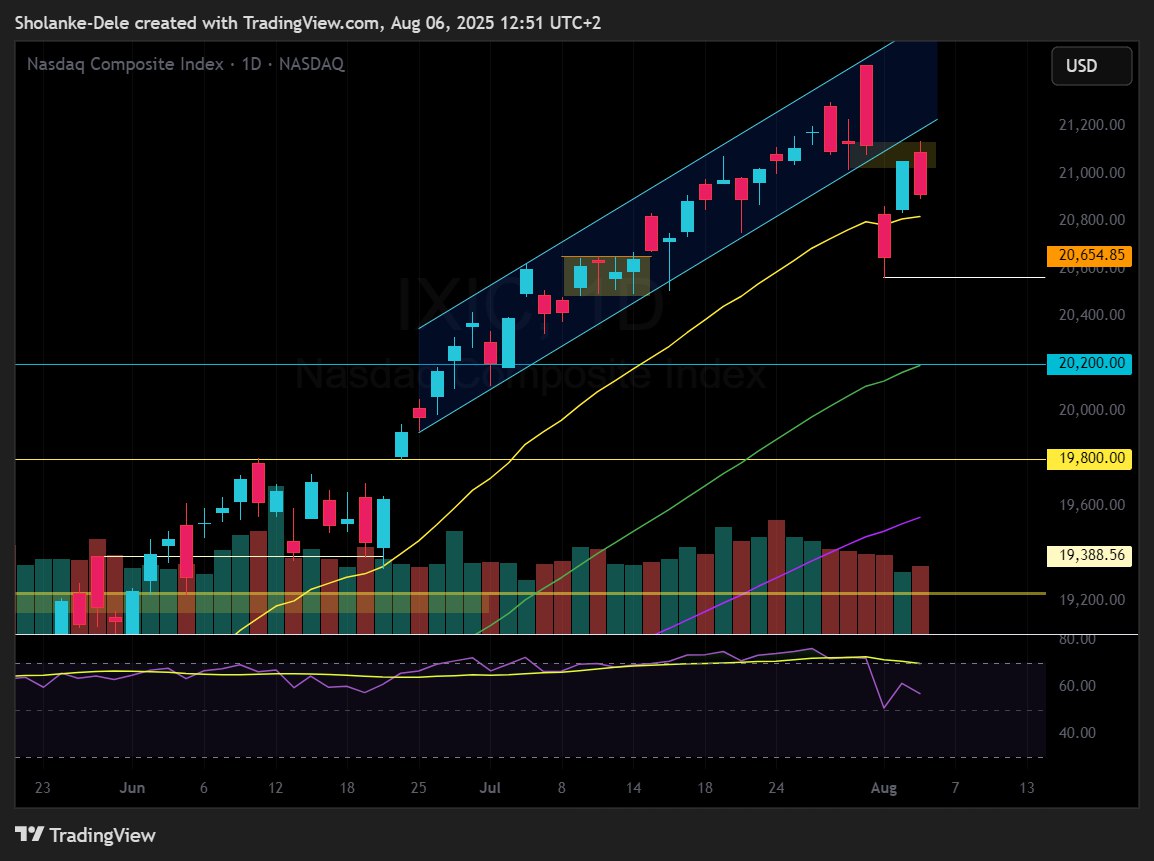
Nasdaq price dynamic (June - July 2025). Source: Tradingview
Technically, Monday’s rally had stalled at 21,060, a level that previously served as a demand zone but has now flipped to resistance. This resistance cap aligned with broader hesitations around corporate earnings and policy uncertainty. Tuesday’s rejection further solidified the 21,060 level as a barrier that the bulls must overcome to resume upside movement.
Nasdaq sideways risk grows in August amid weak seasonality
Contributing to the cautious tone were signs that second-quarter earnings are beginning to reflect the real cost of tariffs. Companies such as Caterpillar warned of up to $1.5 billion in tariff-related expenses this year, while Yum Brands flagged pressure on margins due to higher costs and muted consumer spending. Even AI-favored names have not been immune, as Advanced Micro Devices fell 6.6% in after-hours trading following weaker data center revenues.
Looking ahead, the Nasdaq Composite is now trading between the 20-day EMA near 20,820 and the resistance zone at 21,060. The 4-hour RSI sits in neutral territory, reflecting indecision among short-term market participants. Given this setup, the index may consolidate within this narrow range over the coming sessions unless new data or catalysts provide a directional push.
In the absence of strong bullish conviction or additional negative surprises, the Nasdaq appears poised to trade sideways. Investors will continue watching macroeconomic data, trade developments, and key earnings guidance to determine whether the index finds support above the 20-day EMA or risks slipping further into seasonal weakness.
Nasdaq rose as investors bought the dip despite macroeconomic headwinds. Nasdaq reclaimed key EMAs and printed a bullish RSI, but low volume cast doubt on the strength of the rebound.


Latest Nasdaq Composite News







-
 Afghanistan
-
 Albania
-
 Algeria
-
 Angola
-
 Argentina
-
 Armenia
-
 Australia
-
 Austria
-
 Azerbaijan
-
 Bahamas
-
 Bahrain
-
 Bangladesh
-
 Belarus
-
 Belgium
-
 Bolivia
-
 Botswana
-
 Brazil
-
 Brunei
-
 Bulgaria
-
 Cambodia
-
 Cameroon
-
 Canada
-
 Chile
Chile
-
 China
China
-
 Colombia
-
 Congo
Congo
-
 Costa Rica
-
 Cote d'Ivoire
-
 Croatia
-
 Cuba
Cuba
-
 Cyprus
-
 Czechia
-
 DR Congo
-
 Denmark
-
 Dominican Republic
-
 Ecuador
-
 Egypt
Egypt
-
 El Salvador
-
 Estonia
-
 Eswatini
-
 Ethiopia
-
 Finland
-
 France
-
 Georgia
-
 Germany
-
 Ghana
Ghana
-
 Greece
-
 Haiti
Haiti
-
 Hong Kong
-
 Hungary
-
 India
India
-
 Indonesia
-
 Iran, Islamic republic
-
 Iraq
Iraq
-
 Ireland
-
 Israel
-
 Italy
Italy
-
 Jamaica
-
 Japan
Japan
-
 Jordan
-
 Kazakhstan
-
 Kenya
Kenya
-
 Korea
Korea
-
 Kuwait
-
 Kyrgyzstan
-
 Laos
Laos
-
 Latvia
-
 Lebanon
-
 Lesotho
-
 Libya
Libya
-
 Lithuania
-
 Luxembourg
-
 Madagascar
-
 Malaysia
-
 Malta
Malta
-
 Mauritius
-
 Mexico
-
 Moldova
-
 Mongolia
-
 Montenegro
-
 Morocco
-
 Mozambique
-
 Myanmar
-
 Namibia
-
 Nepal
Nepal
-
 Netherlands
-
 New Zealand
-
 Nigeria
-
 North Macedonia
-
 Norway
-
 Oman
Oman
-
 Pakistan
-
 Palestine
-
 Panama
-
 Papua New Guinea
-
 Paraguay
-
 Peru
Peru
-
 Philippines
-
 Poland
-
 Portugal
-
 Puerto Rico
-
 Qatar
Qatar
-
 Reunion
-
 Romania
-
 Rwanda
-
 Saudi Arabia
-
 Serbia
-
 Singapore
-
 Slovakia
-
 Slovenia
-
 Somalia
-
 South Africa
-
 Spain
Spain
-
 Sri Lanka
-
 Sweden
-
 Switzerland
-
 Syria
Syria
-
 Taiwan
-
 Tajikistan
-
 Tanzania
-
 Thailand
-
 Trinidad and Tobago
-
 Tunisia
-
 Turkey
-
 UAE
UAE
-
 Uganda
-
 Ukraine
-
 United Kingdom
-
United States
-
 Uruguay
-
 Uzbekistan
-
 Venezuela
-
 Vietnam
-
 Yemen
Yemen
-
 Zambia
-
 Zimbabwe
- Forex
- Crypto












