
Leon Black Net Worth, Biography and Key Insights


Leon Black’s Profile Summary
|
Company
|
Apollo Global Management |
|---|---|
|
Position
|
Co-founder and former CEO and Chairman |
|
Source of wealth
|
Private equity investments through Apollo Global Management Art collection (major acquisitions like Edvard Munch’s The Scream) |
|
Also known as
|
Philanthropist, Art Collector, Private Equity Pioneer |
|
Age
|
75 |
|
Education
|
Dartmouth College – Bachelor of Arts (Philosophy and History), 1973 Harvard Business School – Master of Business Administration, 1975 |
|
Citizenship
|
United States |
|
Residence
|
New York City, New York |
|
Family
|
Wife: Debra Ressler, Children: Four |
|
Website, Social Media
|
https://www.apollo.com/ |
Biography
Leon David Black is an American billionaire investor and one of the most influential figures in the world of private equity. Born on July 31, 1951, he is the son of Eli M. Black, a prominent businessman. Leon graduated from Dartmouth College with a degree in Philosophy and History, and later earned an MBA from Harvard Business School, laying a strong foundation for a career in finance.He began his professional journey at Drexel Burnham Lambert, where he led the mergers and acquisitions division and became closely associated with high-yield (junk) bond financing under the mentorship of Michael Milken. His strategic skills and deep understanding of corporate structures positioned him as a major force in dealmaking during the 1980s.
Following Drexel’s collapse in 1990, Black co-founded Apollo Global Management together with Marc Rowan and Joshua Harris. Initially focused on distressed assets, Apollo quickly evolved into a global leader in alternative asset management, with interests spanning private equity, credit, and real assets. Under Black’s leadership, Apollo gained a reputation for acquiring undervalued companies and turning them around with aggressive restructuring strategies.
Beyond Apollo, Leon Black is also known as an art collector, philanthropist, and board member of several cultural and educational institutions, including the Museum of Modern Art (MoMA) and The Metropolitan Museum of Art. He has donated hundreds of millions of dollars to healthcare, education, and the arts.
Leadership at Apollo Global Management transitioned to Marc Rowan.
-
How did Leon Black make money?
Leon Black, an American billionaire, co-founded Apollo Global Management in 1990 after a successful career at Drexel Burnham Lambert, where he headed the buyout division. Using his experience in restructuring and managing distressed assets, he helped create one of the largest investment firms in the world, synonymous with efficiency and strategic approach to capital management.
Apollo Global Management focused on buying out companies in financial distress and turning them into profitable businesses. The company’s key revenue source was asset management fees, as well as income from private equity and credit instruments. Today, Apollo manages more than $600 billion in assets and generates significant returns for its investors annually.
Some of Apollo’s most famous projects were the buyouts and restructurings of companies such as LyondellBasell and Caesars Entertainment, demonstrating the ability of Black’s team to find opportunities even in difficult market conditions. These deals brought in billions of dollars for the company and solidified its position as a leader in the alternative investment industry.
Leon Black also developed investments in infrastructure and real estate, which became an important part of Apollo's revenue. This approach allowed the company to diversify its assets and minimize risks, strengthening its reputation as a reliable partner for investors around the world. -
What is Leon Black net worth?
As of 2026, Leon Black’s net worth is estimated to be $12.9B.
What is Leon Black also known as?
Leon Black is recognized not only for his impact on the financial world but also for his extensive art collection and philanthropic efforts. He has made significant donations to Dartmouth College and is a supporter of melanoma research. He owns fine art pieces such as Edvard Munch’s "The Scream" and works by PicassoProminent achievements
Co-founded Apollo Global Management, one of the largest alternative investment firms in the worldNoted for his art collection, including purchases of iconic works like The Scream
Donated over $48 million to Dartmouth College for its arts program
Reached a $62 million settlement with the U.S. Virgin Islands over Jeffrey Epstein–related matters.
What are Leon Black’s key insights?
Leon Black’s investment philosophy centers on contrarian value and distressed assets, with a focus on generating long-term value through strategic turnarounds. His leadership at Apollo emphasized risk-taking and exploiting market dislocations
Personal life
Spouse: Debra Ressler, Broadway producer
Children: Four, including Ben Black, who runs an investment fund
Useful insights
Advanced investment strategies

For those who have mastered the basics, the next step is exploring advanced investment strategies. These books delve into the complexities of portfolio management and alternative asset classes, offering sophisticated approaches to building wealth.
-
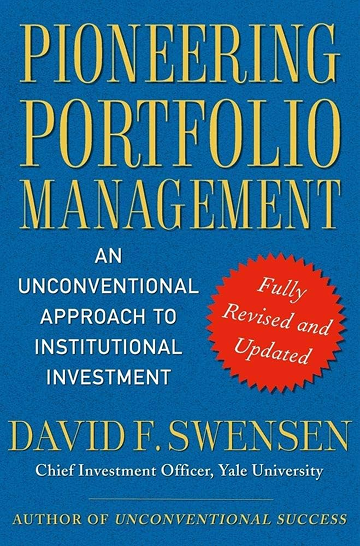
David Swensen - "Pioneering Portfolio Management"
-
Summary:
In this book, Swensen, who successfully managed Yale's endowment fund, outlines his investment philosophy, emphasizing diversification, a long-term perspective, and the inclusion of alternative asset classes such as hedge funds, private equity, and real estate. This approach aims to balance risk and reward to maximize returns for institutional investors.
-
Why read it:
Swensen’s methods are widely regarded as groundbreaking and have been adopted by many large institutional investors. His book is essential for anyone looking to build a robust, diversified portfolio with a focus on steady, long-term growth.
-
-
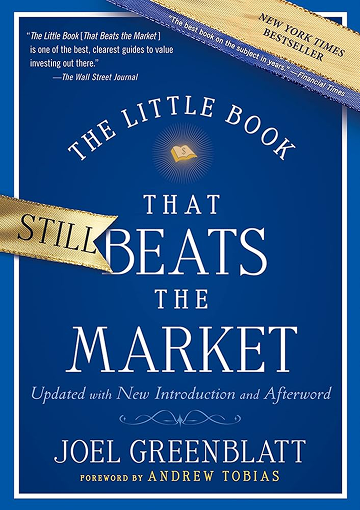
Joel Greenblatt - "The Little Book That Still Beats the Market"
-
Summary:
Greenblatt presents a simple yet effective formula for investing in value stocks. His "magic formula" identifies companies that are both undervalued and have high earnings yields, providing a clear strategy for beating the market. Greenblatt simplifies complex financial concepts for individual investors, making the book accessible to both beginners and experienced traders.
-
Why read it:
Greenblatt’s formula has consistently outperformed the market, making this book a practical guide for investors looking for a straightforward, effective strategy. It’s particularly useful for those who prefer a hands-on approach to stock selection without the need for deep financial expertise.
-
Other profiles in category
Popular Financial Guides
Editors' Top Picks and Insights






Latest Financial News

Menara Asia launches construction procurement platform to address quality and compliance gaps in Malaysia

Astaka Padu, Kimlun expand joint venture for RM450 million serviced apartment project in Johor Bahru

South African executive incentive payouts surge in JSE Top 200 pay review

-
 Afghanistan
-
 Albania
-
 Algeria
-
 Angola
-
 Argentina
-
 Armenia
-
 Australia
-
 Austria
-
 Azerbaijan
-
 Bahamas
-
 Bahrain
-
 Bangladesh
-
 Belarus
-
 Belgium
-
 Bolivia
-
 Botswana
-
 Brazil
-
 Brunei
-
 Bulgaria
-
 Cambodia
-
 Cameroon
-
 Canada
-
 Chile
Chile
-
 China
China
-
 Colombia
-
 Congo
Congo
-
 Costa Rica
-
 Cote d'Ivoire
-
 Croatia
-
 Cuba
Cuba
-
 Cyprus
-
 Czechia
-
 DR Congo
-
 Denmark
-
 Dominican Republic
-
 Ecuador
-
 Egypt
Egypt
-
 El Salvador
-
 Estonia
-
 Eswatini
-
 Ethiopia
-
 Finland
-
 France
-
 Georgia
-
 Germany
-
 Ghana
Ghana
-
 Greece
-
 Haiti
Haiti
-
 Hong Kong
-
 Hungary
-
 India
India
-
 Indonesia
-
 Iran, Islamic republic
-
 Iraq
Iraq
-
 Ireland
-
 Israel
-
 Italy
Italy
-
 Jamaica
-
 Japan
Japan
-
 Jordan
-
 Kazakhstan
-
 Kenya
Kenya
-
 Korea
Korea
-
 Kuwait
-
 Kyrgyzstan
-
 Laos
Laos
-
 Latvia
-
 Lebanon
-
 Lesotho
-
 Libya
Libya
-
 Lithuania
-
 Luxembourg
-
 Madagascar
-
 Malaysia
-
 Malta
Malta
-
 Mauritius
-
 Mexico
-
 Moldova
-
 Mongolia
-
 Montenegro
-
 Morocco
-
 Mozambique
-
 Myanmar
-
 Namibia
-
 Nepal
Nepal
-
 Netherlands
-
 New Zealand
-
 Nigeria
-
 North Macedonia
-
 Norway
-
 Oman
Oman
-
 Pakistan
-
 Palestine
-
 Panama
-
 Papua New Guinea
-
 Paraguay
-
 Peru
Peru
-
 Philippines
-
 Poland
-
 Portugal
-
 Puerto Rico
-
 Qatar
Qatar
-
 Reunion
-
 Romania
-
 Rwanda
-
 Saudi Arabia
-
 Serbia
-
 Singapore
-
 Slovakia
-
 Slovenia
-
 Somalia
-
 South Africa
-
 Spain
Spain
-
 Sri Lanka
-
 Sweden
-
 Switzerland
-
 Syria
Syria
-
 Taiwan
-
 Tajikistan
-
 Tanzania
-
 Thailand
-
 Trinidad and Tobago
-
 Tunisia
-
 Turkey
-
 UAE
UAE
-
 Uganda
-
 Ukraine
-
 United Kingdom
-
United States
-
 Uruguay
-
 Uzbekistan
-
 Venezuela
-
 Vietnam
-
 Yemen
Yemen
-
 Zambia
-
 Zimbabwe
- Forex
- Crypto












