
Volume Spread Analysis (VSA) | All You Need To Know


Editorial Note: While we adhere to strict Editorial Integrity, this post may contain references to products from our partners. Here's an explanation for How We Make Money. None of the data and information on this webpage constitutes investment advice according to our Disclaimer.
Volume Spread Analysis (VSA) is a powerful trading methodology that focuses on the relationship between volume and price action to understand market dynamics and identify trading opportunities. The top VSA strategies are: No Demand Bars, No Supply Bars, Buying Climax, etc.
Volume Spread Analysis provides traders with valuable tools to understand market dynamics, anticipate price movements, and improve their trading strategies. VSA offers enhanced market timing, trend confirmation, and risk management capabilities across various markets and timeframes.
Candlestick patterns and VSA trading signals can be very profitable, but their success often depends on how they are used and in what context they are applied. In this article, we will tell you about VSA strategies that can significantly improve your trading performance.
Here are some of the top strategies:
No Demand Bars: the market may not continue to rise;
No Supply Bars: this signals a potential buying opportunity;
Climax reversal strategy: Indicates the end of the current trend and the beginning of a new market phase;
Upthrusts and Springs: Springs are the opposite, where prices dip below support but then rise, signaling bullish pressure;
Tests for Supply and Demand: A successful test indicates the absence of selling or buying pressure, confirming the trend.
What is the Volume Price Analysis Method?
VSA focuses on the dynamics of supply and demand in the market, identifying the activities of professional traders who often leave "footprints" in volume data.
When demand exceeds supply, prices tend to rise. Conversely, when supply exceeds demand, prices tend to fall. VSA helps traders understand these dynamics by analyzing volume (the number of shares traded) and price spreads (the difference between the high and low prices within a trading period).
Example:
High Volume on a Price Rise: If a stock price rises on high volume, it indicates strong demand. Professional traders might be buying, expecting the price to continue rising.
Low Volume on a Price Rise: If the price rises on low volume, it indicates weak demand. This might be a sign that professional traders are not interested, suggesting the price rise could be unsustainable.
Note:
Professional traders and institutions often have significant capital to influence market movements. VSA helps identify their activities through specific patterns in volume and price.
Necessary Data for VSA
To use VSA effectively, traders need accurate volume and price data, as well as analyzing the relationship between the two. Let us remind you exactly what you need and where to get it.
Volume Data
Volume data represents the number of shares, contracts, or lots traded in a specific period. It is crucial for VSA as it helps in identifying the level of activity and the presence of professional traders in the market.
Total Volume: The total amount of trading activity for a given period.
Bid and Ask Volume: The volume of buy orders (bid) and sell orders (ask), which helps in understanding market pressure.
Price Data
Price data includes the opening, high, low, and closing prices for a specific period. This data helps in determining the price spread and understanding market sentiment.
OHLC price: Essential for analyzing price movements and spreads.
Price Spread: The difference between the high and low prices within a period.
Historical and Real-Time Market Data
Historical data is crucial for backtestingVSA strategies and understanding how volume and price have interacted over time.Real-Time data is essential for making timely trading decisions based on VSA signals.
Sources
Stock Exchanges: Major stock exchanges like NYSE, NASDAQ, and others provide real-time volume data. Exchanges provide detailed price data for listed securities;
Brokerage Platforms: Most brokerage platforms offer volume data for various assets. Examples include TD Ameritrade, E*TRADE, and Interactive Brokers. Most trading platforms offer OHLC data for various timeframes. Examples include MetaTrader, Thinkorswim, and TradingView;
Data Providers: Specialized financial data providers like Bloomberg, Reuters, and Morningstar offer comprehensive volume data;
Financial Websites: Websites like Yahoo Finance, Google Finance, and Investing.com provide free access to price data.
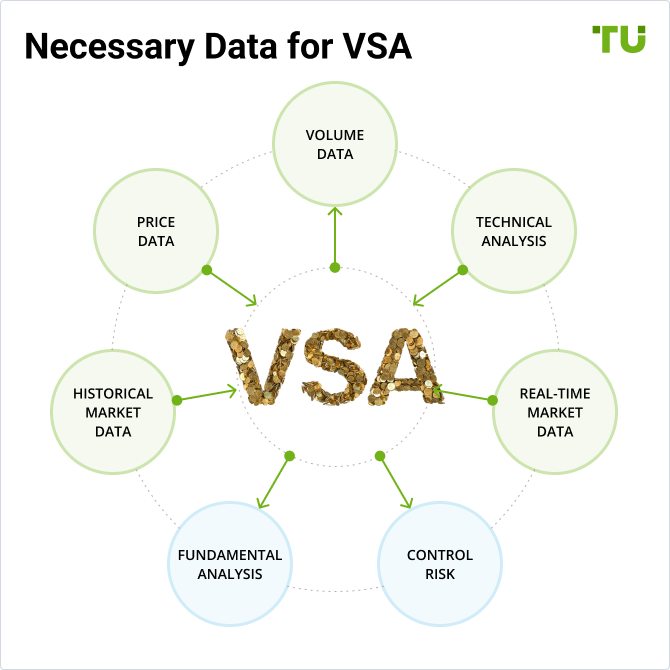 Necessary Data for VSA
Basic Candlestick Patterns of VSA
Recognizing these patterns helps traders interpret market conditions and make informed decisions.
Accumulation: This occurs when professional traders are buying large quantities of a security without significantly moving the price. This often happens over a period where the volume is high, but the price spread is narrow.
Example: A stock trading in a narrow range with high volume might indicate accumulation. Professionals are buying, anticipating a future price rise.
Distribution: This happens when professional traders are selling large quantities of a security. Similar to accumulation, this occurs with high volume but a narrow price spread.
Example: A stock in a narrow range with high volume after a significant uptrend might indicate distribution. Professionals are selling, expecting a price decline.
Buying Climax: This is characterized by a sharp price increase on high volume, followed by a reversal. It indicates the end of a bullish trend and the beginning of a bearish phase.
Example: A stock that rises rapidly with increasing volume but then reverses sharply can signal a buying climax. Professionals are selling their holdings, causing the reversal.
Selling Climax: The opposite of a buying climax, where a sharp price decline with high volume is followed by a reversal, indicating the end of a bearish trend.
Example: A stock that falls rapidly with increasing volume but then reverses sharply can signal a selling climax. Professionals are buying, expecting the price to rise.
Wide Spread with High Volume: Indicates strong market activity and the potential for significant price movement.
Example: If a stock has a wide price spread and high volume, it indicates strong buying or selling pressure. Analyzing whether the price closed higher or lower can help determine if demand or supply is dominant.
Narrow Spread with High Volume: Suggests market uncertainty or a potential turning point.
Example: A stock with a narrow spread and high volume after a trend could indicate that professionals are undecided, possibly preparing for a reversal.
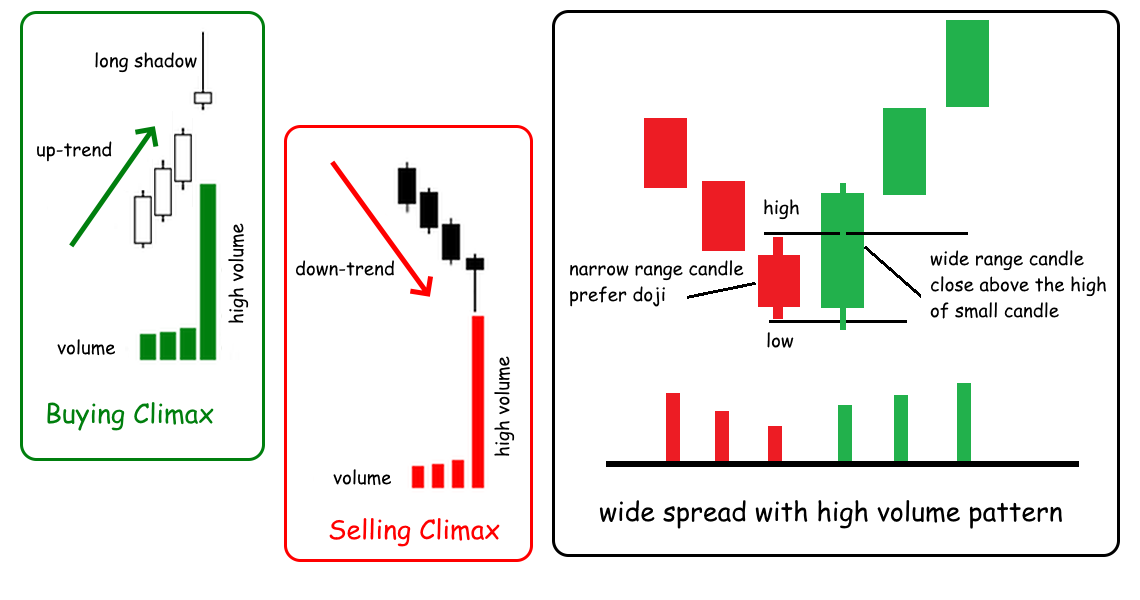 Example of standard VSA patterns
Volume Spread Analysis trading signals are especially effective when used in conjunction with other technical indicators, backed by thorough backtesting and ongoing training.
VSA provides various trading signals, such as confirming breakouts with volume, identifying trend reversals, and spotting divergence between price and volume.
When choosing a broker comfortable for VSA trades, pay attention to the possibility of scalping and algorithmic trading - all volume analysis strategies are perfectly automated. Also look for a platform with low spreads and no hidden commissions. For example:
| ECN Spread EUR/USD (pips) | ECN Spread GBP/USD (pips) | Min. deposit, $ | Scalping | Trading bots (EAs) | Open account | |
|---|---|---|---|---|---|---|
| 0.15 | 0.2 | No | Yes | Yes | Go to broker Your capital is at risk. |
|
| 0.2 | 0.4 | 100 | Yes | Yes | Study review | |
| 0.8 | 1 | 1 | Yes | Yes | Study review |
Basic VSA Strategies
Here are some of the top strategies:
No Demand Bars: the market may not continue to rise;
No Supply Bars: this signals a potential buying opportunity;
Buying Climax: It indicates the end of a bullish trend and the beginning of a bearish phase;
Selling Climax: This signals the end of a bearish trend;
Upthrusts and Springs: Springs are the opposite, where prices dip below support but then rise, signaling bullish pressure;
Tests for Supply and Demand: A successful test indicates the absence of selling or buying pressure, confirming the trend.
No Demand Bars/No Supply Bars Strategy
Look for no demand or no supply bars to identify potential turning points. Combine these signals with the overall market trend for higher accuracy.
No Demand Bars: When the market rises on low volume, indicating a lack of interest from buyers. This often precedes a price decline. Example: If a stock price rises but the volume is significantly lower than average, it signals no demand, suggesting a potential bearish move.
No Supply Bars: When the market falls on low volume, indicating a lack of selling pressure. This often precedes a price rise. Example: If a stock price falls but the volume is significantly lower than average, it signals no supply, suggesting a potential bullish move.
VSA helps traders understand market mechanics by highlighting the supply and demand imbalances that professional traders exploit.
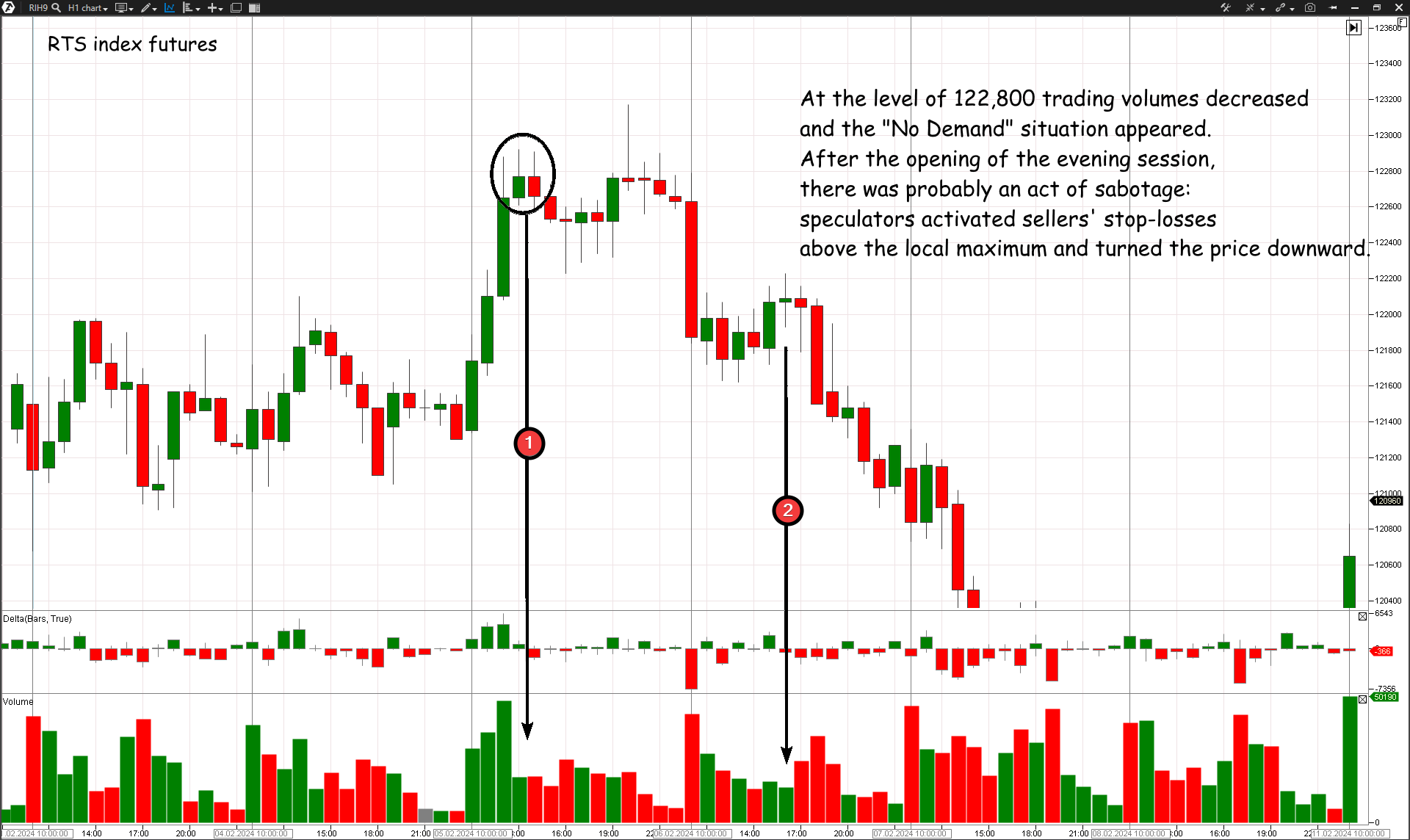 Example of market situation "No demand"
Climax Reversal Strategy
Identify buying or selling climaxes to catch trend reversals. Use additional indicators to confirm the reversal.
Buying/Selling Climaxes: High volume on a wide spread often signals the end of a trend and the start of a reversal.
Example: After a buying climax, wait for a bearish confirmation signal (e.g., a down bar with high volume) before entering a short position.
This suggests that the market may not continue to rise. This signals a potential buying opportunity. It indicates the end of a bullish trend and the beginning of a bearish phase.This signals the end of a bearish trend.
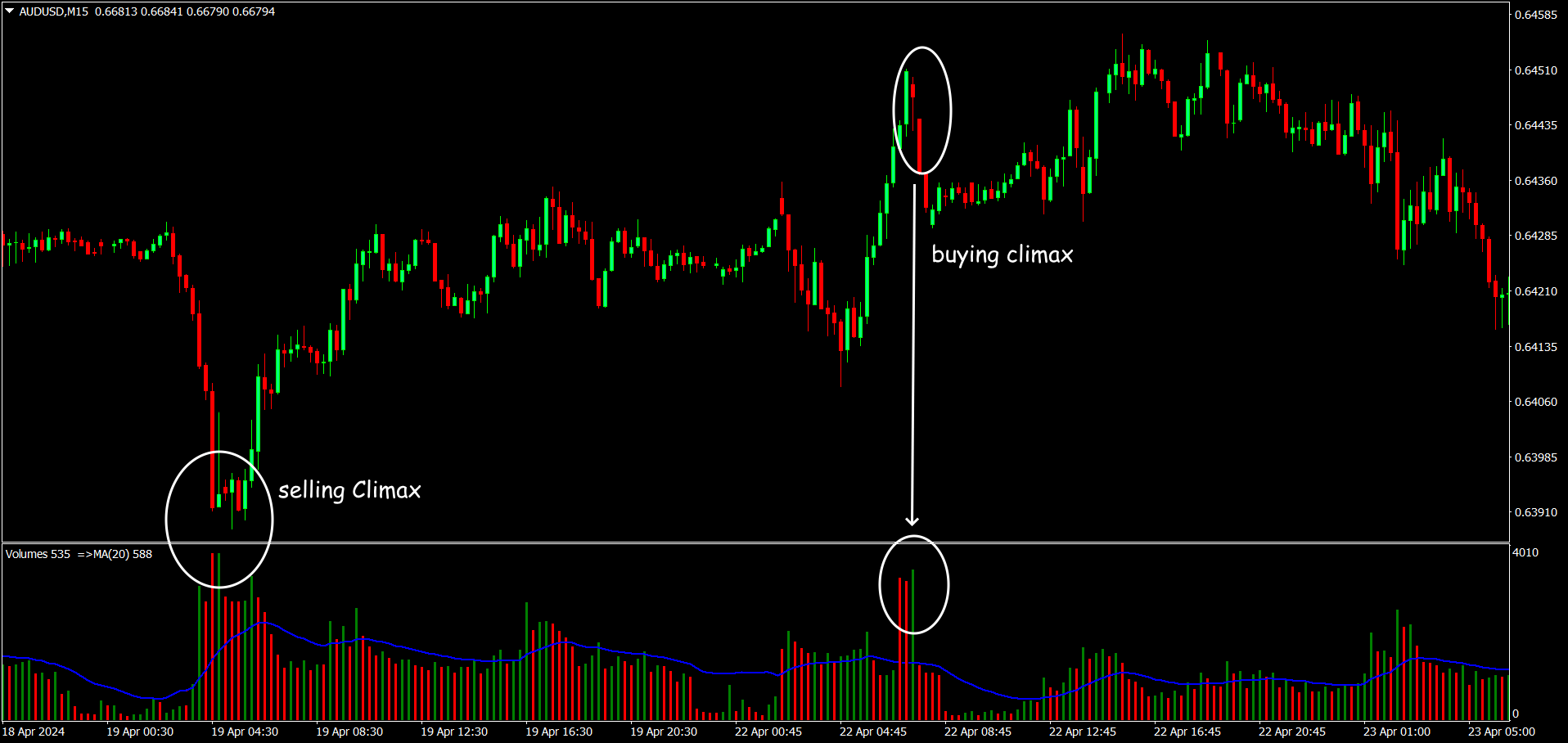 Example of a VSA reversal pattern
Breakout Confirmation
Use VSA to confirm breakouts from key levels of support or resistance. Ensure the breakout is accompanied by high volume for validation. Example: A breakout above resistance on high volume, followed by a low volume test of the new support level, can be a strong buy signal.
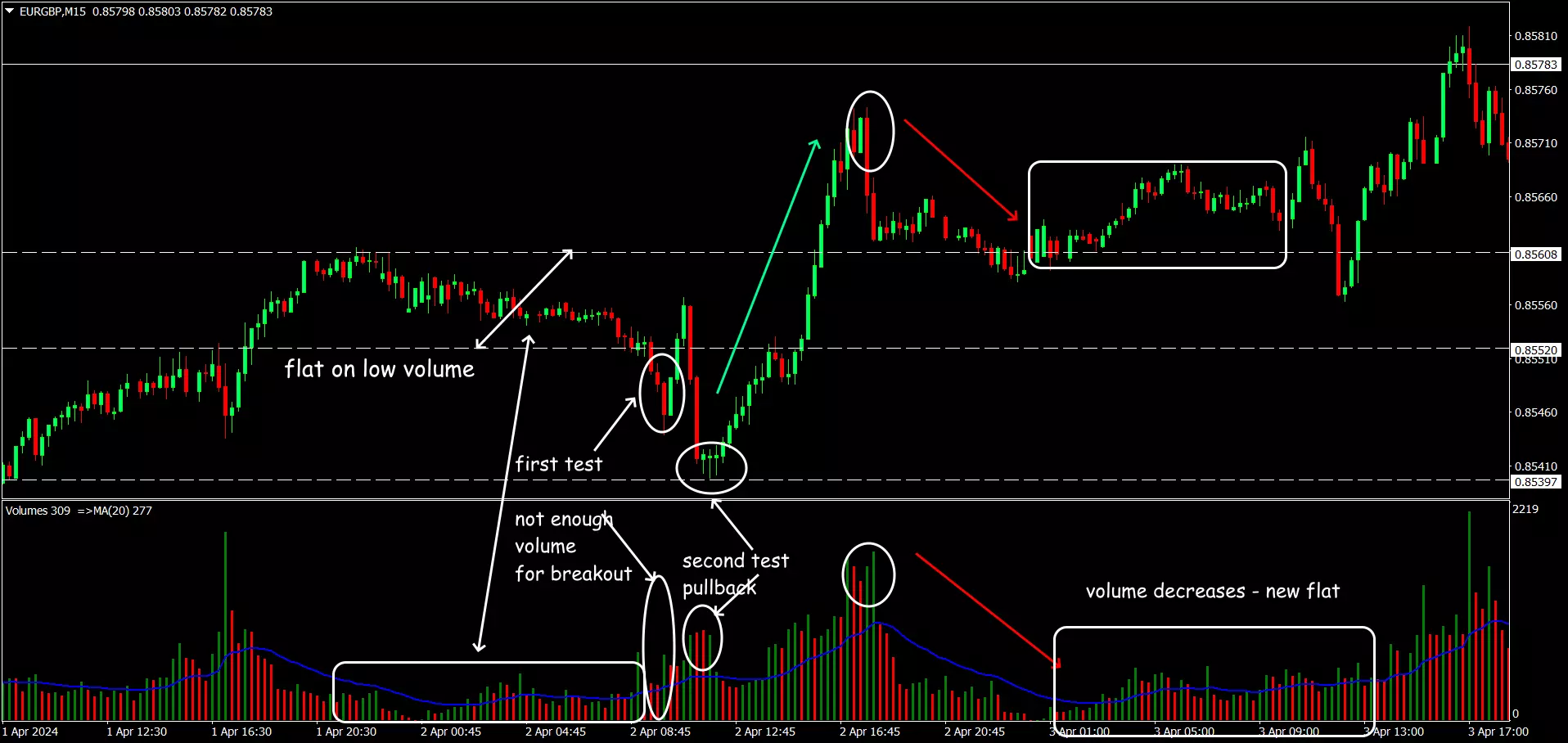 Example of VSA pattern for range breakout
Upthrusts and Springs
Springs are the opposite, where prices dip below support but then rise, signaling bullish pressure. False breakouts or breakdowns that indicate potential reversals.
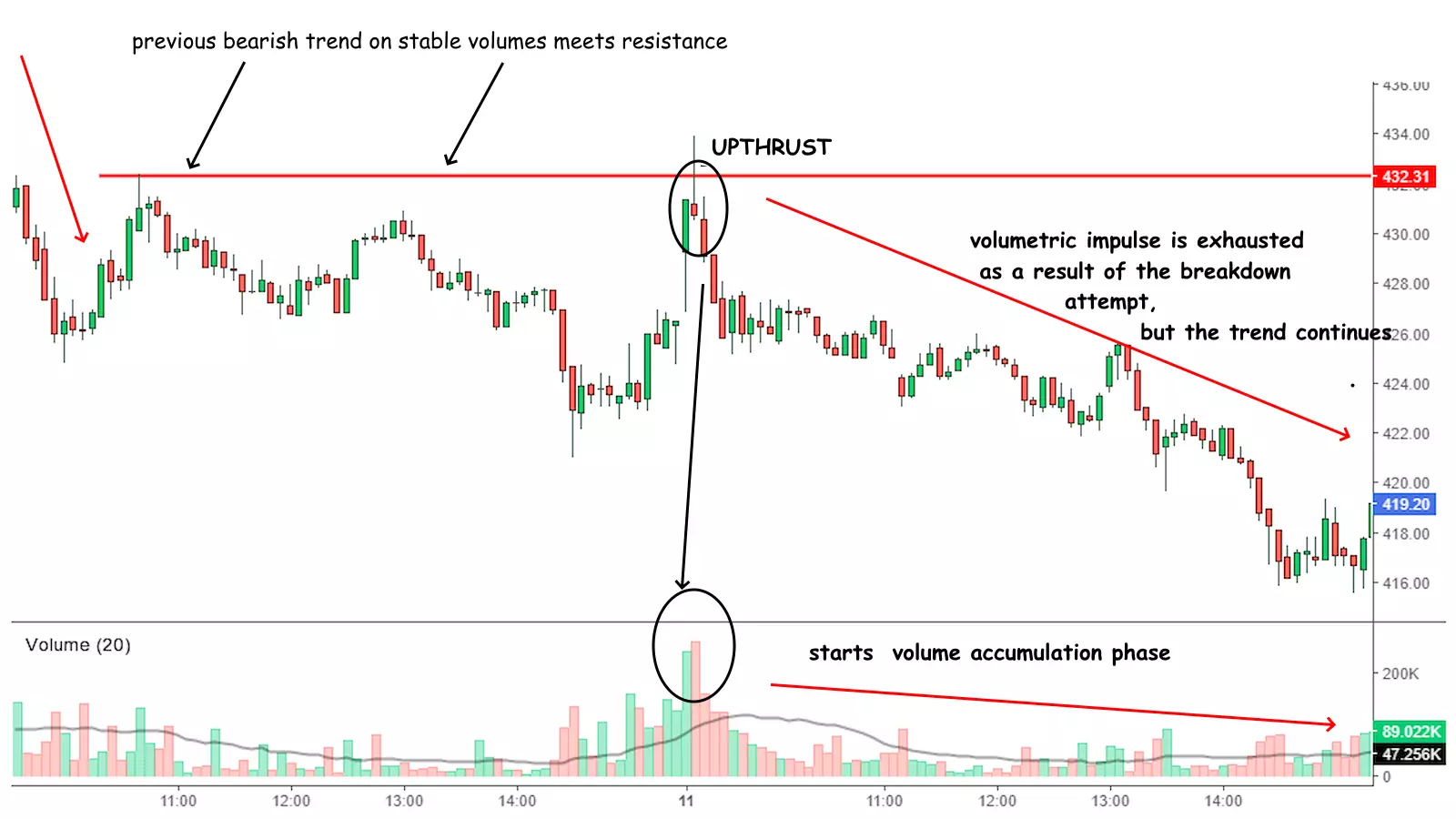 Example of VSA situation Upthrusts and Springs
Tests for Supply and Demand
A successful test indicates the absence of selling or buying pressure, confirming the trend.
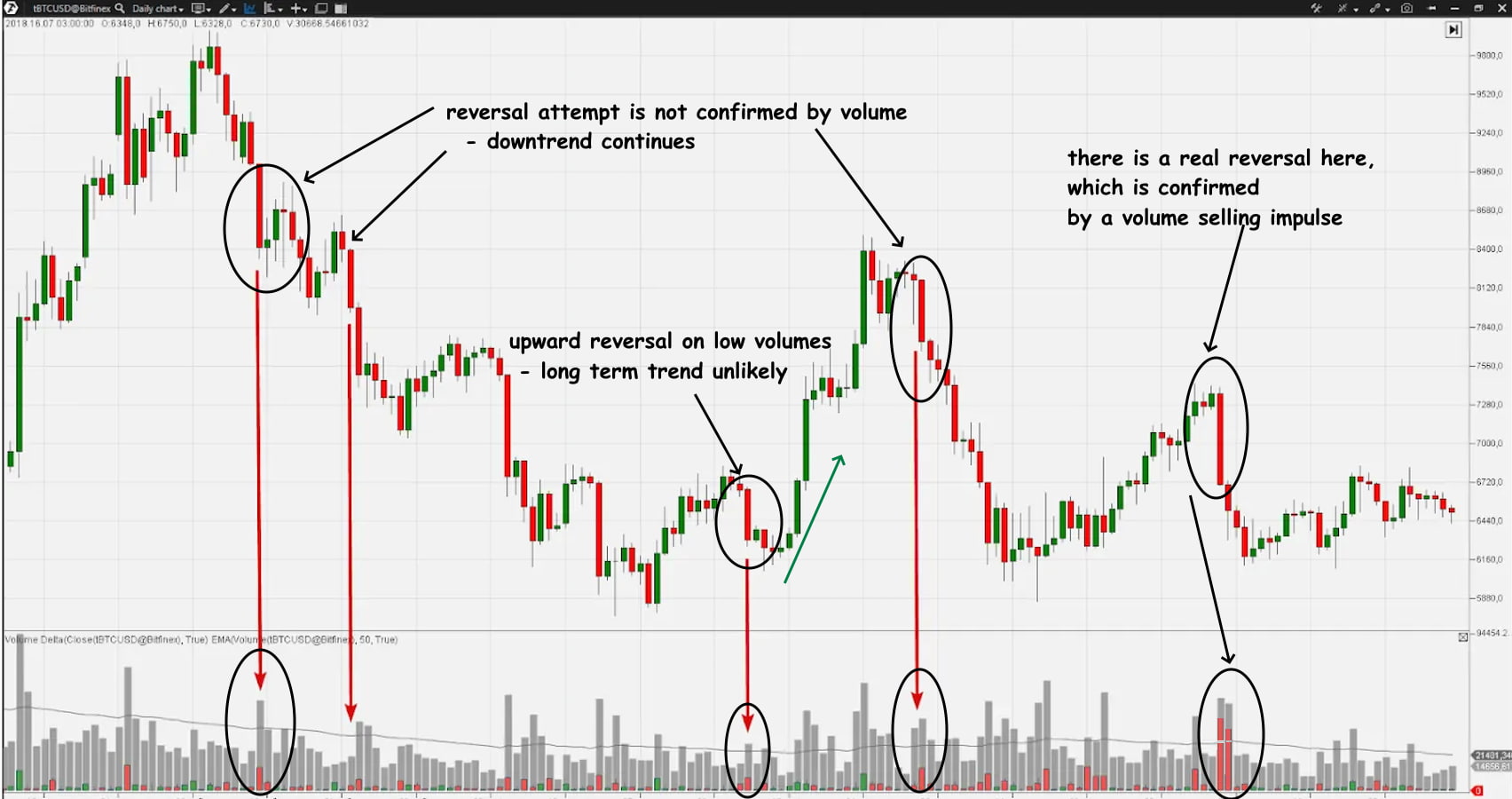 VSA:Tests for Supply and Demand
Combining VSA with Other Technical Indicators
Integrating VSA with indicators like Moving Averages, RSI, and MACD can enhance trading strategies, can enhance the accuracy of trading signals. This helps in filtering out false signals and increasing the reliability of trades. For example, combining VSA signals with RSI overbought/oversold levels can improve trade accuracy.
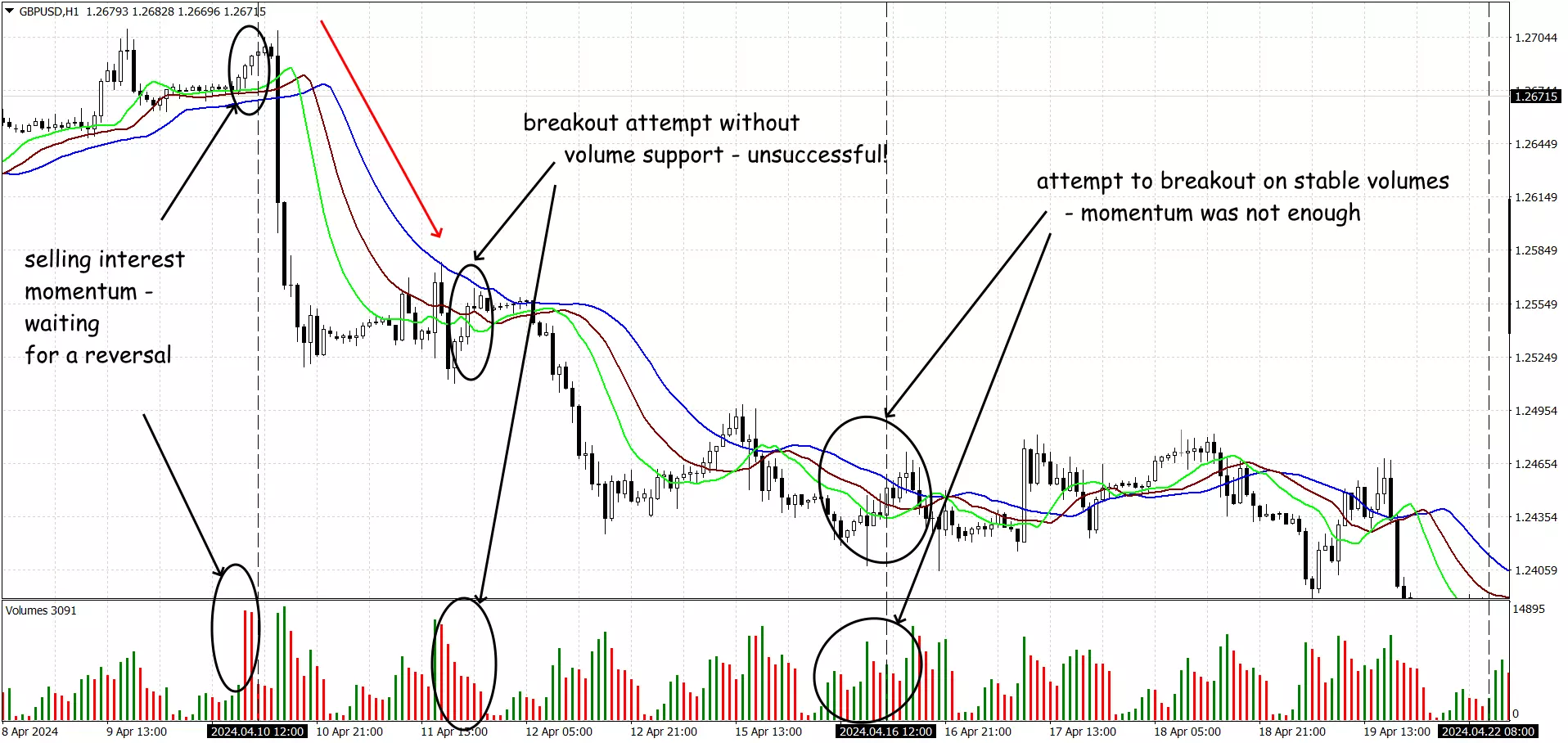 Example of VSA logic in a complex strategy
Evaluate Your Trading Style:
Day Trading: If you prefer short-term trades, focus on VSA patterns that appear on intraday charts (e.g., 5-minute or 15-minute charts).
Swing Trading: For holding positions for several days, use VSA patterns on daily or 4-hour charts.
Long-Term Investing: Use weekly or monthly charts to apply VSA for long-term investment decisions.
Backtest Your Strategy. Backtest your VSA strategies using historical data to evaluate their effectiveness. Look for consistency and profitability over different market conditions.
Optimize your strategy by adjusting parameters like the volume threshold for no demand/supply bars or the spread width for climaxes.
Tips for Beginners
Beginners should focus on understanding the basics of VSA before live trading. This includes learning key patterns, interpreting volume data, and practicing with demo accounts.
Books by market gurus such as Tom Williams and Richard Wyckoff can be considered an volume spread analysis cheat sheet.
Traders need reliable trading platforms with VSA capabilities, good charting software, and data feeds. Costs may include software subscriptions and hardware for efficient trading.
Tips for Advanced Traders
Advanced traders can explore sophisticated VSA techniques, such as combining multiple VSA patterns and integrating VSA with high-frequency trading algorithms.
Optimizing VSA strategies involves backtesting, adjusting parameters, and using statistical analysis to improve performance.
Ongoing market research is crucial for adapting VSA strategies. Analyzing market trends, news, and economic indicators helps traders stay ahead.
What are the advantages of using VSA in trading?
VSA offers several advantages to traders by providing deeper insights into market dynamics and enhancing trading strategies.
Identifying Market Moves Driven by Professional Traders
Enhanced Market Timing
Confirmation of Trends and Reversals
Detecting Market Manipulation
Versatility Across Markets and Timeframes
Combining with Other Technical Indicators
Improved Risk Management
Understanding Market Sentiment
Risks and Warnings
Trading Risks
VSA trading involves risks such as market volatility, misinterpretation of signals, and technical errors.
Illiquid or speculative market
VSA works best in markets with high liquidity and reliable volume data. It may not be as effective in markets with low liquidity or irregular volume patterns, such as certain cryptocurrency markets or small-cap stocks.
False Signals
Combine VSA with other technical analysis tools and indicators. Backtest your strategies to evaluate their historical performance.
Emotional and Psychological Factors
Develop a solid trading plan that includes entry and exit rules based on VSA signals. Use risk management techniques, such as setting stop-loss orders and position sizing, to control potential losses.
External Market Risks
Stay informed about global economic and political developments that could affect the markets. Incorporate fundamental analysis alongside VSA.
Expert Opinion

Both candlestick patterns and VSA can help in setting more accurate stop-loss and take-profit levels, enhancing risk management.
VSA trading strategies have proven effective for many traders by providing deep insights into market dynamics through the relationship between volume and price. Here are key points outlining their effectiveness:
Understanding Market Sentiment and Professional Activity
Enhanced Accuracy in Predicting Trends and Reversals
Applicability Across Markets and Timeframes
Combining VSA with Other Technical Indicators
While VSA offers powerful insights and can be highly beneficial for traders, its complexity and steep learning curve may pose challenges for beginners. However, with dedicated study, practice, and a cautious approach, beginners can gradually incorporate VSA into their trading strategies. It is essential to balance VSA with simpler techniques and robust risk management to enhance trading success while minimizing risks.
Conclusion
Volume Spread Analysis empowers traders to anticipate market moves by decoding the relationship between volume and price, allowing for more informed decisions and precise timing. Mastery of patterns such as no demand bars or climax reversals can help traders spot major turning points and enhance profitability. For instance, identifying a no supply bar on low volume can signal a bullish opportunity before the broader market reacts. Ultimately, those who dedicate themselves to understanding VSA unlock an edge, turning the footprints of professional traders into their own roadmap for trading success.
FAQs
What data sources are most reliable for conducting Volume Spread Analysis?
How can Volume Spread Analysis be combined with other technical indicators?
What are some practical steps for beginners to start using Volume Spread Analysis in trading?
How can traders optimize their Volume Spread Analysis strategies over time?
Editors' Top Picks and Insights






Related Articles
Team that worked on the article
Andrey Mastykin is an experienced author, editor, and content strategist who has been with Traders Union since 2020. As an editor, he is meticulous about fact-checking and ensuring the accuracy of all information published on the Traders Union platform.
Dan Blystone began his trading career in 1998 as an arbitrage clerk on the floor of the Chicago Mercantile Exchange (CME). He later traded bond and Eurex futures at proprietary firms such as Altea Trading, gaining valuable experience in high-frequency trading and risk management.
Chinmay Soni is a financial analyst with more than 5 years of experience in working with stocks, Forex, derivatives, and other assets. As a founder of a boutique research firm and an active researcher, he covers various industries and fields, providing insights backed by statistical data.
Swing trading is a trading strategy that involves holding positions in financial assets, such as stocks or forex, for several days to weeks, aiming to profit from short- to medium-term price swings or "swings" in the market. Swing traders typically use technical and fundamental analysis to identify potential entry and exit points.
Scalping in trading is a strategy where traders aim to make quick, small profits by executing numerous short-term trades within seconds or minutes, capitalizing on minor price fluctuations.
Forex indicators are tools used by traders to analyze market data, often based on technical and/or fundamental factors, to make informed trading decisions.
Fundamental analysis is a method or tool that investors use that seeks to determine the intrinsic value of a security by examining economic and financial factors. It considers macroeconomic factors such as the state of the economy and industry conditions.
Risk management is a risk management model that involves controlling potential losses while maximizing profits. The main risk management tools are stop loss, take profit, calculation of position volume taking into account leverage and pip value.

-
 Afghanistan
-
 Albania
-
 Algeria
-
 Angola
-
 Argentina
-
 Armenia
-
 Australia
-
 Austria
-
 Azerbaijan
-
 Bahamas
-
 Bahrain
-
 Bangladesh
-
 Belarus
-
 Belgium
-
 Bolivia
-
 Botswana
-
 Brazil
-
 Brunei
-
 Bulgaria
-
 Cambodia
-
 Cameroon
-
 Canada
-
 Chile
Chile
-
 China
China
-
 Colombia
-
 Congo
Congo
-
 Costa Rica
-
 Cote d'Ivoire
-
 Croatia
-
 Cuba
Cuba
-
 Cyprus
-
 Czechia
-
 DR Congo
-
 Denmark
-
 Dominican Republic
-
 Ecuador
-
 Egypt
Egypt
-
 El Salvador
-
 Estonia
-
 Eswatini
-
 Ethiopia
-
 Finland
-
 France
-
 Georgia
-
 Germany
-
 Ghana
Ghana
-
 Greece
-
 Haiti
Haiti
-
 Hong Kong
-
 Hungary
-
 India
India
-
 Indonesia
-
 Iran, Islamic republic
-
 Iraq
Iraq
-
 Ireland
-
 Israel
-
 Italy
Italy
-
 Jamaica
-
 Japan
Japan
-
 Jordan
-
 Kazakhstan
-
 Kenya
Kenya
-
 Korea
Korea
-
 Kuwait
-
 Kyrgyzstan
-
 Laos
Laos
-
 Latvia
-
 Lebanon
-
 Lesotho
-
 Libya
Libya
-
 Lithuania
-
 Luxembourg
-
 Madagascar
-
 Malaysia
-
 Malta
Malta
-
 Mauritius
-
 Mexico
-
 Moldova
-
 Mongolia
-
 Montenegro
-
 Morocco
-
 Mozambique
-
 Myanmar
-
 Namibia
-
 Nepal
Nepal
-
 Netherlands
-
 New Zealand
-
 Nigeria
-
 North Macedonia
-
 Norway
-
 Oman
Oman
-
 Pakistan
-
 Palestine
-
 Panama
-
 Papua New Guinea
-
 Paraguay
-
 Peru
Peru
-
 Philippines
-
 Poland
-
 Portugal
-
 Puerto Rico
-
 Qatar
Qatar
-
 Reunion
-
 Romania
-
 Rwanda
-
 Saudi Arabia
-
 Serbia
-
 Singapore
-
 Slovakia
-
 Slovenia
-
 Somalia
-
 South Africa
-
 Spain
Spain
-
 Sri Lanka
-
 Sweden
-
 Switzerland
-
 Syria
Syria
-
 Taiwan
-
 Tajikistan
-
 Tanzania
-
 Thailand
-
 Trinidad and Tobago
-
 Tunisia
-
 Turkey
-
 UAE
UAE
-
 Uganda
-
 Ukraine
-
 United Kingdom
-
United States
-
 Uruguay
-
 Uzbekistan
-
 Venezuela
-
 Vietnam
-
 Yemen
Yemen
-
 Zambia
-
 Zimbabwe
- Forex
- Crypto












