
Silver-Backed Stablecoins And Crypto Assets



Editorial Note: While we adhere to strict Editorial Integrity, this post may contain references to products from our partners. Here's an explanation for How We Make Money. None of the data and information on this webpage constitutes investment advice according to our Disclaimer.
Silver-backed stablecoins and crypto assets:
Silver Token (XAGX): a silver-backed stablecoin whose value tracks the price of silver and is supported by physical metal reserves.
Kinesis Silver (KAG): a token backed by physical silver, designed for storage, transfer, and exchange within a digital ecosystem.
iShares Silver Trust (SLVon): a tokenized instrument providing access to silver investment exposure through an ETF structure.
Gram Silver (GRAMS): a tokenized silver-backed asset that offers digital access to the value of physical silver via blockchain infrastructure.
Silver-backed crypto assets give traders a way to gain exposure to silver without holding physical metal or relying on traditional commodity instruments. By linking blockchain tokens to vaulted silver, these assets sit between fiat-pegged stablecoins and precious-metal investments, offering diversification with continuous market access.
For traders, the appeal lies in flexibility. Silver-backed tokens can be traded, transferred, or held on-chain while tracking the underlying metal price, making them relevant for hedging, medium-term positioning, and portfolio diversification rather than pure speculation.
Risk warning: Cryptocurrency markets are highly volatile, with sharp price swings and regulatory uncertainties. Research indicates that 75-90% of traders face losses. Only invest discretionary funds and consult an experienced financial advisor.
Leading silver-backed crypto tokens
The market for silver-backed crypto is small but clearly defined. Most active trading and liquidity are concentrated in a handful of tokens that use different models for custody, issuance, and utility.
Silver Token (XAGX)
XAGX is a silver backed crypto token designed to track the spot price of silver using Bloomberg pricing data. It is issued on the Avalanche blockchain, which allows for faster transactions and lower fees compared with Ethereum-based silver tokens.

Key facts:
Backing. Price-linked to silver, with supply managed through a mint-and-burn mechanism.
Pricing source. Bloomberg silver spot data.
Blockchain. Avalanche C-Chain.
Liquidity. Developing, primarily on DeFi platforms.
Yield or redemption. None.
From a trading perspective, Silver Token appeals to users who prioritize execution speed and low transaction costs. Avalanche’s infrastructure makes XAGX more efficient for on-chain strategies, but thinner liquidity means execution risk is higher for larger positions.
Compared with KAG, XAGX offers less regulatory structure and fewer off-chain assurances. As a result, it is better suited to experienced traders who actively monitor liquidity and spreads.
Best for: Traders seeking low-fee silver exposure on DeFi platforms and willing to manage liquidity risk.
Kinesis Silver (KAG)
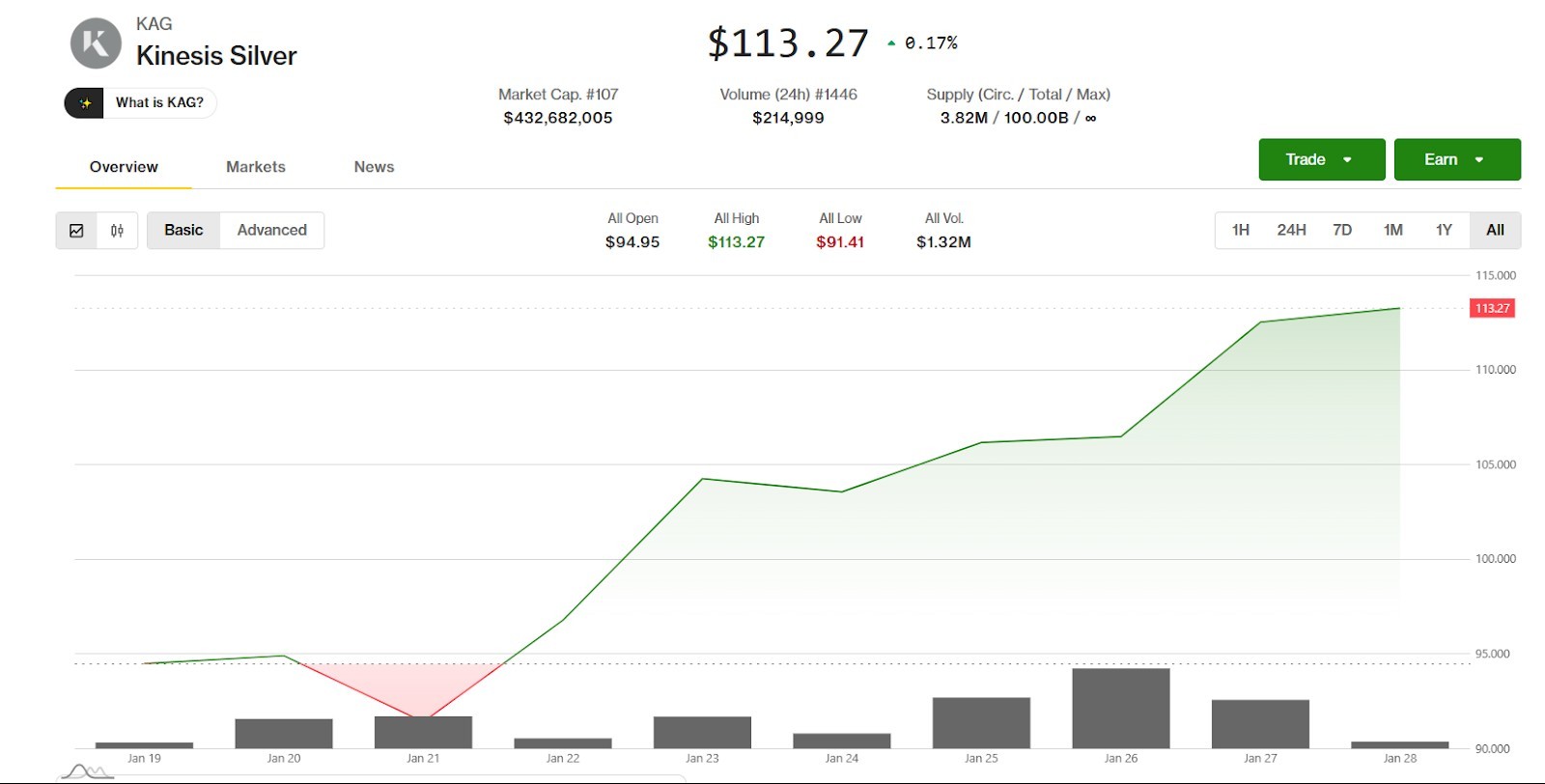
KAG is a silver backed crypto issued within the Kinesis Monetary System. Each token represents one troy ounce of fully allocated physical silver stored in insured vaults across multiple jurisdictions.
Key facts:
Backing. Allocated physical silver held in audited vaults.
Yield model. Token holders receive a share of transaction fees generated within the Kinesis ecosystem.
Blockchain. Native Kinesis infrastructure with blockchain settlement.
Liquidity. Moderate, with most activity concentrated inside the Kinesis platform.
Spending utility. Integrated payments and card-based usage.
From a trading perspective, Kinesis Silver is less focused on short-term price speculation and more on utility-driven holding. The yield component can partially offset holding costs, but external exchange liquidity is thin, which can limit fast entries and exits.
Best for: Medium- to long-term holders seeking silver exposure combined with yield and real-world spending functionality.
iShares Silver Trust (SLVon)
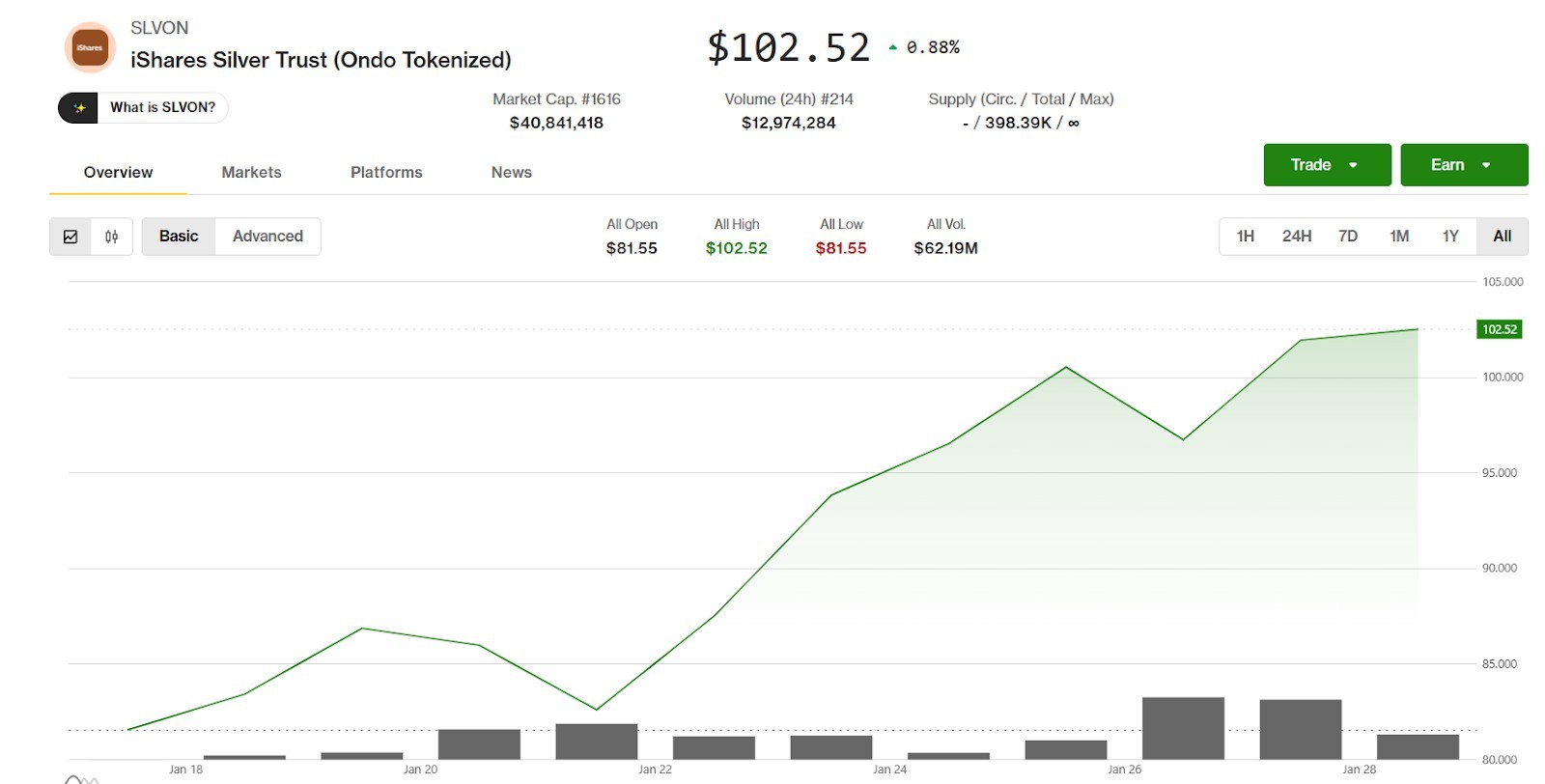
SLVon is a tokenized version of the iShares Silver Trust (SLV) ETF, issued via Ondo Finance. It provides on-chain exposure to the economic performance of BlackRock’s silver ETF rather than direct ownership of physical silver.
Key facts:
Backing. Linked to the value of the SLV ETF (which holds physical silver).
Structure. Tokenized real-world asset (RWA), not a native silver-backed crypto.
Blockchain. Issued through Ondo’s tokenization infrastructure (on-chain format).
Liquidity. Dependent on tokenized RWA market access and platform support.
Redemption. Typically structured through regulated intermediaries, not direct silver redemption.
From an investment perspective, SLVon appeals to users seeking regulated ETF exposure within a blockchain environment. It combines traditional financial oversight with digital transferability but is less DeFi-native than purely crypto-issued silver tokens.
Best for: Investors seeking institutional-grade silver exposure in tokenized form.
Gram Silver (GRAMS)
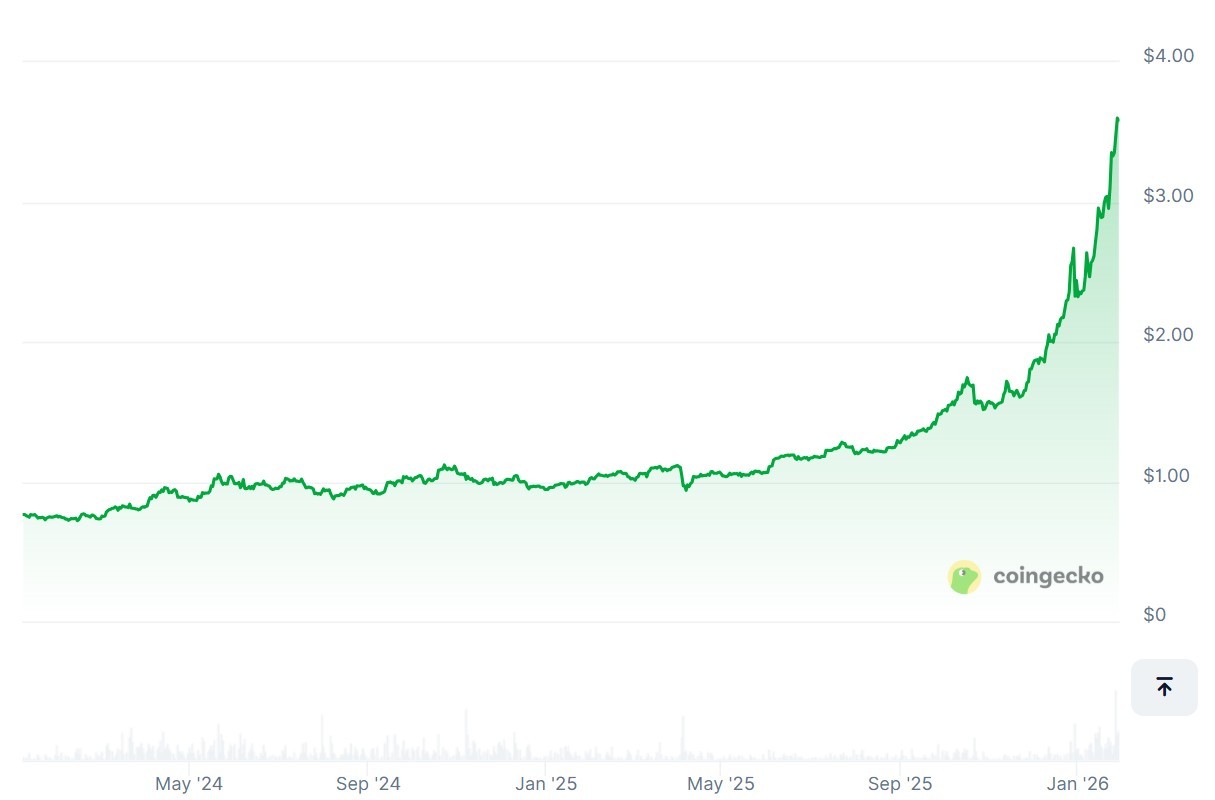
GRAMS is a silver-backed crypto token pegged 1:1 to physical silver. For each token issued, an equivalent amount of silver is held in reserve by Token Teknoloji Anonim Şirketi.
Key facts:
Backing. 1:1 physical silver reserves.
Pricing. Tracks the global silver market price.
Blockchain. Avalanche C-Chain (EVM-compatible).
Liquidity. Primarily within Avalanche ecosystem and selected platforms.
Redemption. Supply adjusted via mint-and-burn mechanism tied to reserves.
From a portfolio perspective, GRAMS is designed for investors who want direct silver exposure in digital form without handling bullion. Its structure prioritizes asset backing over synthetic exposure, though ecosystem reach is narrower than major ETF-based products.
Best for: Investors seeking physically backed silver exposure through blockchain infrastructure.
| Asset | Instrument type | Backing | Peg structure | Primary use case |
|---|---|---|---|---|
| XAGX Silver Token | Stablecoin | Physical silver | Tracks the price of 1 ounce of silver | Digital store of value and trading |
| Kinesis Silver (KAG) | Silver-backed token | Physical silver held in vaults | 1 token = 1 ounce of silver | Long-term holding and payments |
| iShares Silver Trust (SLVon) | Tokenized ETF instrument | Silver ETF fund | Exposure to silver price via ETF | Institutional on-chain silver access |
| Gram Silver (GRAMS) | Silver-backed token | Physical silver reserves | Pegged to the value of silver (per gram) | Digital silver ownership and portfolio diversification |
What is a silver-backed cryptocurrency?
A silver-backed cryptocurrency is a digital token whose value is directly linked to physical silver held in secure vaults. In most cases, one token represents one troy ounce of silver, giving holders price exposure to the metal without owning it physically.
Unlike fiat-pegged stablecoins, which track currencies such as the U.S. dollar or euro, crypto backed by silver follows the spot price of silver. This makes it more sensitive to commodity market cycles, industrial demand, and inflation expectations.
In practical terms, silver-backed tokens function like tokenized commodities. They allow traders to gain silver exposure through crypto exchanges and wallets, with 24/7 trading access and easier transferability than traditional silver ETFs or futures contracts.
These assets are not designed to eliminate volatility entirely. Instead, silver-backed crypto sits between stablecoins and speculative tokens, offering lower volatility than most cryptocurrencies but more price movement than fiat-backed alternatives.
How silver-backed crypto works
Most silver backed crypto tokens follow a simple mint-and-burn model. A centralized issuer stores physical silver in professional vaults and issues tokens that represent that metal. When additional silver is deposited, new tokens are minted. When silver is redeemed or removed from reserves, the corresponding tokens are burned.
The credibility of this system depends on three elements:
Custody model. Where the silver is stored, who controls it, and whether it is insured.
Verification. Regular third-party attestations or audits confirming that on-chain supply matches vaulted silver.
Redemption rules. Whether holders can redeem tokens for physical silver or only trade them on markets.
Some projects rely entirely on trusted custodians, while others combine custodial storage with on-chain transparency tools. For traders, the key question is not decentralization in theory, but whether the silver backed crypto token reliably tracks silver prices and can be exited without friction.
Unlike algorithmic stablecoins, silver-backed assets are constrained by the physical supply of metal. This limits extreme issuance risk, but it also means liquidity and transaction speed depend on both vault operations and exchange depth.
Trading use cases and strategy fit
Silver-backed crypto assets are typically used as tactical tools rather than long-term growth positions. Their role depends on how a trader approaches risk and diversification.
Common use cases include:
Portfolio diversification. Silver often behaves differently from fiat currencies and major cryptocurrencies, which can reduce correlation risk.
Inflation and currency hedging. Silver-backed tokens can act as a hedge during periods of fiat weakness or rising inflation expectations.
Medium-term positioning. Traders may hold exposure during phases of rising industrial demand or favorable commodity cycles.
On-chain transfers. In some regions, silver-backed crypto can function as a borderless store of value without relying on banking rails.

Because liquidity is limited compared with major stablecoins, position sizing matters. These assets are better suited to measured allocations than frequent high-volume trading.
Risks and limitations of silver-backed crypto
Silver-backed crypto assets reduce some risks associated with fiat or purely algorithmic tokens, but they introduce their own set of constraints that traders need to account for.
Key risks include:
Custody and transparency risk. Not all issuers provide real-time audits or clear proof that on-chain supply matches vaulted silver.
Redemption limitations. Many tokens cannot be redeemed for physical silver, which weakens the link between token price and metal ownership.
Liquidity constraints. Order books are often thin, increasing slippage for larger trades.
Issuer and jurisdiction risk. Legal treatment varies by country and can change, affecting access or trading conditions.
Tracking divergence. Token prices can temporarily deviate from spot silver due to exchange liquidity, fees, or market stress.
These risks do not make silver-backed crypto unsuitable, but they do require conservative position sizing and careful venue selection.
Is silver a good crypto peg?
Silver behaves differently from fiat currencies and from gold, which makes it a distinctive peg for crypto assets. Unlike fiat, silver has intrinsic value and industrial demand. Unlike gold, it tends to show higher volatility and stronger cyclical moves.
For traders, this means silver-pegged crypto is not a pure stability tool. Price movements are influenced by manufacturing demand, economic cycles, and broader commodity trends. This added volatility can be a disadvantage for capital preservation but an advantage for tactical positioning.
Silver-backed tokens work best when treated as commodity-linked instruments rather than stable substitutes. They are more suitable for diversification and medium-term strategies than for parking funds or minimizing short-term risk. In this context, commodity-backed stablecoins should be viewed as hybrid assets that combine blockchain accessibility with exposure to real-world commodities, rather than as direct equivalents to fiat-pegged stability mechanisms.
| Feature | Silver-backed tokens | Fiat stablecoins | Gold-backed tokens |
|---|---|---|---|
| Peg | Physical silver | USD or EUR | Physical gold |
| Volatility | Moderate (commodity-linked) | Low (fiat-pegged) | Low to moderate |
| Market hours | 24/7 on blockchain | 24/7 | 24/7 |
| Custody risk | Physical metal storage | Bank accounts | Physical metal storage |
| Target users | Commodity traders, inflation hedgers | Payments, DeFi users | Safe-haven seekers |
How to evaluate silver-pegged assets
Not all silver-pegged tokens offer the same level of security or usability. Before trading or holding a silver backed cryptocurrency, traders should evaluate a few core factors.
Use this checklist:
Reserve verification. Confirm whether the issuer provides regular third-party attestations or audits of silver reserves.
Custody structure. Check where the silver is stored, who controls it, and whether it is insured.
Redemption terms. Determine if tokens can be redeemed for physical silver or only traded on secondary markets.
Liquidity and venues. Review exchange support, order book depth, and historical spreads.
Legal framework. Understand the issuer’s jurisdiction and regulatory exposure.
Before trading any silver-backed token, it is also important to consider where you will access it. Not every crypto platform lists commodity-linked assets or provides consistent liquidity for them. The exchange comparison below highlights crypto platforms in your region where silver-backed cryptocurrencies are available for trading and transfers.
| Kraken | OKX | BTCC | Coinbase | Nebeus | |
|---|---|---|---|---|---|
|
Min. Deposit, $ |
10 | 10 | 10 | 10 | 5 |
|
Coins Supported |
278 | 329 | 399 | 249 | 30 |
|
Spot Taker fee, % |
0.4 | 0.1 | 0.3 | 0.5 | Not available |
|
Spot Maker Fee, % |
0.25 | 0.08 | 0.2 | 0.5 | Not available |
|
Alerts |
Yes | Yes | No | Yes | No |
|
Copy trading |
Yes | Yes | Yes | No | No |
|
TU overall score |
9.2 | 8.9 | 7.84 | 7.68 | 7.6 |
|
Open an account |
Go to broker Your capital is at risk. |
Go to broker Your capital is at risk. |
Go to broker Your capital is at risk.
|
Go to broker Your capital is at risk. |
Go to broker Your capital is at risk.
|
Market dynamics and pricing behavior
Silver-backed crypto prices generally follow the spot price of silver, but they are also influenced by crypto-specific factors. Exchange liquidity, network fees, and issuer mechanics can cause temporary price gaps between the token and the underlying metal.
Key dynamics to watch include:
Liquidity-driven deviations. Thin order books can lead to short-term mispricing during volatile sessions.
Fee impact. High network fees can reduce arbitrage efficiency, especially on Ethereum-based tokens.
Market hours overlap. Silver trades on traditional markets during fixed hours, while crypto markets operate 24/7, which can create lag or overreaction.
Issuer actions. Minting, burning, or supply caps can affect short-term price behavior.
For active traders, these factors create both risk and opportunity. Arbitrage is possible, but it requires fast execution, reliable pricing data, and careful attention to transaction costs.
Treat silver-backed crypto as a commodity tool, not a stablecoin

In my experience, silver-backed crypto works best when it is treated as a commodity position, not as a substitute for stablecoins. Traders often underestimate how much liquidity and custody structure matter with these assets. A token can be fully backed by silver on paper, but if trading depth is thin or exits are slow, that backing offers little practical protection in fast markets.
For most traders, regulated and transparent options like XAGX make more sense for structured exposure, while ecosystem-based tokens such as KAG are better viewed as longer-term holdings with added utility. Silver-backed crypto can play a useful role in diversification, but only when position size, liquidity, and redemption constraints are clearly understood.
Conclusion
Silver-backed cryptocurrencies mark a significant evolution in the intersection of precious metals and digital assets, offering traders the tangible stability of silver with the accessibility and efficiency of blockchain technology. By understanding how tokens like SilverCoin or XAG tokens function—each backed by real, audited silver reserves—investors gain exposure to the metal's price movements without the burdens of physical storage. Yet, as with all crypto assets, risks persist in the form of custodial transparency and market volatility. Ultimately, digital silver tokens present a compelling tool for diversifying portfolios and hedging against economic uncertainty, proving that the oldest forms of value can blend seamlessly with modern innovation.
FAQs
What are the primary use cases for silver-backed cryptocurrencies in a diversified portfolio?
How do silver-backed crypto tokens maintain their price link to physical silver?
What are the key liquidity and market dynamics that affect silver-backed cryptocurrency pricing?
In what scenarios might silver-backed crypto be less suitable compared to other stablecoin options?
Editors' Top Picks and Insights

The crypto IPO problem: How high-profile listings became investor traps
U.S. Bitcoin reserve: Trump’s unrealized crypto promise

Aiming for leadership: Payment giants prepare a new stablecoin
Proof of Reserves: the new standard for cryptocurrency exchanges

Three trends that could reshape the crypto market over the next decade

Trump financial disclosure: How the president's crypto income became a U.S. ethics issue
Related Articles
Team that worked on the article
Viktoras Karapetjanc is a seasoned financial trader, market analyst, and content creator with over 20 years of expertise in Forex, cryptocurrency, and stock markets. As a contributor to the Traders Union website, he provides in-depth analysis, data-driven strategies, and educational content to empower traders of all levels.
Dan Blystone began his trading career in 1998 as an arbitrage clerk on the floor of the Chicago Mercantile Exchange (CME). He later traded bond and Eurex futures at proprietary firms such as Altea Trading, gaining valuable experience in high-frequency trading and risk management.
Chinmay Soni is a financial analyst with more than 5 years of experience in working with stocks, Forex, derivatives, and other assets. As a founder of a boutique research firm and an active researcher, he covers various industries and fields, providing insights backed by statistical data.
Bitcoin is a decentralized digital cryptocurrency that was created in 2009 by an anonymous individual or group using the pseudonym Satoshi Nakamoto. It operates on a technology called blockchain, which is a distributed ledger that records all transactions across a network of computers.
Cryptocurrency is a type of digital or virtual currency that relies on cryptography for security. Unlike traditional currencies issued by governments (fiat currencies), cryptocurrencies operate on decentralized networks, typically based on blockchain technology.
Copy trading is an investing tactic where traders replicate the trading strategies of more experienced traders, automatically mirroring their trades in their own accounts to potentially achieve similar results.
A bear market is a period of time in which an investment asset, such as stocks, bonds, or commodities, experiences a decline in price for an extended period of time.
A futures contract is a standardized financial agreement between two parties to buy or sell an underlying asset, such as a commodity, currency, or financial instrument, at a predetermined price on a specified future date. Futures contracts are commonly used in financial markets to hedge against price fluctuations, speculate on future price movements, or gain exposure to various assets.


-
 Afghanistan
-
 Albania
-
 Algeria
-
 Angola
-
 Argentina
-
 Armenia
-
 Australia
-
 Austria
-
 Azerbaijan
-
 Bahamas
-
 Bahrain
-
 Bangladesh
-
 Belarus
-
 Belgium
-
 Bolivia
-
 Botswana
-
 Brazil
-
 Brunei
-
 Bulgaria
-
 Cambodia
-
 Cameroon
-
 Canada
-
 Chile
Chile
-
 China
China
-
 Colombia
-
 Congo
Congo
-
 Costa Rica
-
 Cote d'Ivoire
-
 Croatia
-
 Cuba
Cuba
-
 Cyprus
-
 Czechia
-
 DR Congo
-
 Denmark
-
 Dominican Republic
-
 Ecuador
-
 Egypt
Egypt
-
 El Salvador
-
 Estonia
-
 Eswatini
-
 Ethiopia
-
 Finland
-
 France
-
 Georgia
-
 Germany
-
 Ghana
Ghana
-
 Greece
-
 Haiti
Haiti
-
 Hong Kong
-
 Hungary
-
 India
India
-
 Indonesia
-
 Iran, Islamic republic
-
 Iraq
Iraq
-
 Ireland
-
 Israel
-
 Italy
Italy
-
 Jamaica
-
 Japan
Japan
-
 Jordan
-
 Kazakhstan
-
 Kenya
Kenya
-
 Korea
Korea
-
 Kuwait
-
 Kyrgyzstan
-
 Laos
Laos
-
 Latvia
-
 Lebanon
-
 Lesotho
-
 Libya
Libya
-
 Lithuania
-
 Luxembourg
-
 Madagascar
-
 Malaysia
-
 Malta
Malta
-
 Mauritius
-
 Mexico
-
 Moldova
-
 Mongolia
-
 Montenegro
-
 Morocco
-
 Mozambique
-
 Myanmar
-
 Namibia
-
 Nepal
Nepal
-
 Netherlands
-
 New Zealand
-
 Nigeria
-
 North Macedonia
-
 Norway
-
 Oman
Oman
-
 Pakistan
-
 Palestine
-
 Panama
-
 Papua New Guinea
-
 Paraguay
-
 Peru
Peru
-
 Philippines
-
 Poland
-
 Portugal
-
 Puerto Rico
-
 Qatar
Qatar
-
 Reunion
-
 Romania
-
 Rwanda
-
 Saudi Arabia
-
 Serbia
-
 Singapore
-
 Slovakia
-
 Slovenia
-
 Somalia
-
 South Africa
-
 Spain
Spain
-
 Sri Lanka
-
 Sweden
-
 Switzerland
-
 Syria
Syria
-
 Taiwan
-
 Tajikistan
-
 Tanzania
-
 Thailand
-
 Trinidad and Tobago
-
 Tunisia
-
 Turkey
-
 UAE
UAE
-
 Uganda
-
 Ukraine
-
 United Kingdom
-
United States
-
 Uruguay
-
 Uzbekistan
-
 Venezuela
-
 Vietnam
-
 Yemen
Yemen
-
 Zambia
-
 Zimbabwe
- Forex
- Crypto










- Leading silver-backed crypto tokens
- What is a silver-backed cryptocurrency?
- How silver-backed crypto works
- Trading use cases and strategy fit
- Risks and limitations of silver-backed crypto
- Is silver a good crypto peg?
- How to evaluate silver-pegged assets
- Market dynamics and pricing behavior
- Expert opinion
- Conclusion
- FAQs


