
XBTFX explains indicators: Leading vs lagging use
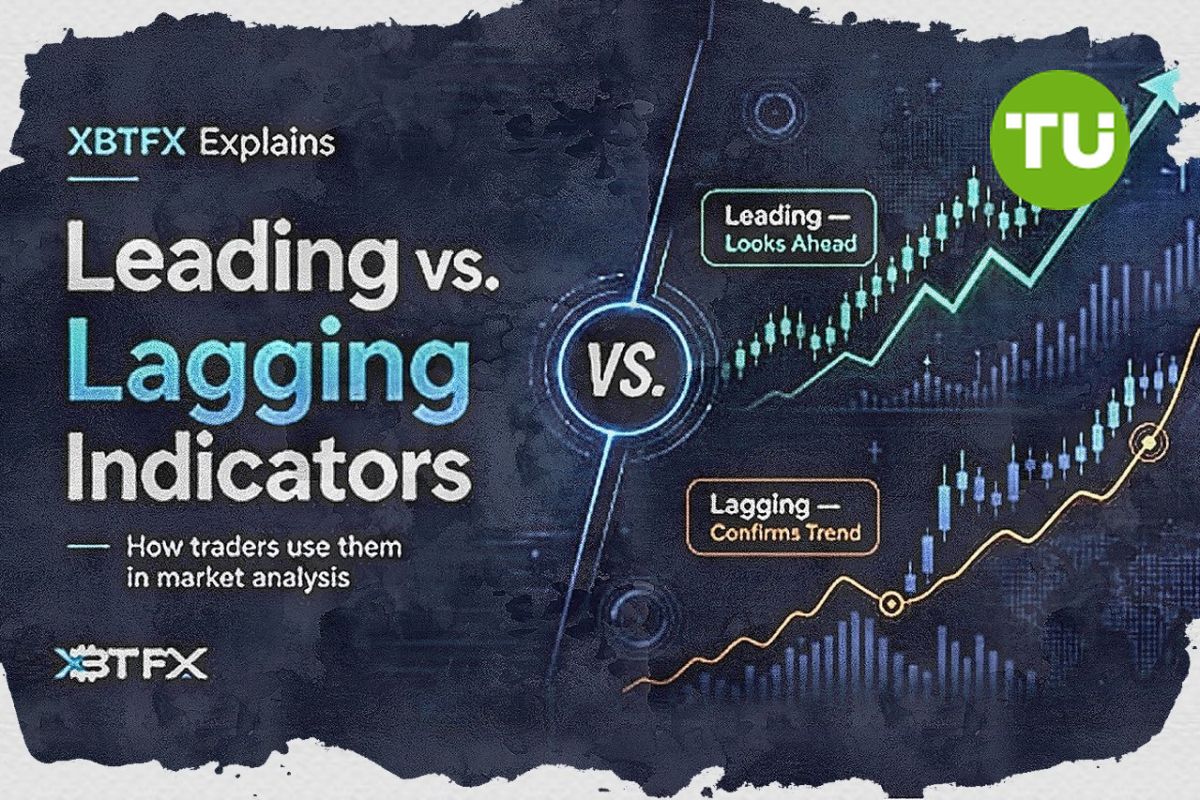
Technical indicators are a staple of most Forex trading strategies – but not every indicator works the same way. Some are built to flag potential moves before they happen. Others wait for price to start moving first, then confirm what's already underway. Knowing the difference matters more than most traders initially realize.

- Chosen by 3 200+ local traders in the last 3 months.
- Traders earn on average 12% more per month vs other brokers.
XBTFX's latest educational guide tackles this directly, walking through how leading vs lagging indicators actually function and why understanding the distinction is worth doing before building any strategy. The guide is designed for both trading for beginners and more experienced traders who want a cleaner framework for applying indicators in real market conditions.
Leading vs lagging indicators: What they are and how to use both
Leading indicators are designed to get ahead of price. Common examples include the Relative Strength Index, Stochastic Oscillator, and similar momentum tools that flag overbought or oversold conditions. They can also help traders identify bullish divergence or bearish divergence – situations where price and momentum are moving in opposite directions, which sometimes precedes a reversal.
The appeal is timing. But XBTFX is clear about the trade-off: early signals come with a higher rate of false reads, particularly in strong trending markets. An asset can stay overbought for a long time during a clean uptrend, and treating that reading as an automatic sell signal can be a costly habit. No single leading indicator should be used as a standalone trigger.
Lagging indicators work from the other direction. Rather than anticipating a move, they confirm what price has already started doing. A simple moving average, MACD, Bollinger Bands, and the Average Directional Index all fall into this category. These tools help identify trend direction, trend strength, and volatility – but by design, they react later. The confirmation comes with a delay, which means entries often come after the earliest part of a move has passed.
According to XBTFX, the more practical approach isn't choosing one type over the other – it's understanding how both can work together. A lagging indicator can establish the broader market context, while a leading indicator supports entry timing. A trader might use a moving average to define trend direction, then look to RSI or Stochastic signals to identify pullback entries within that trend.
Trading tips: combining indicators and market context
The guide also stresses the importance of market structure – and this is where a lot of traders skip a step. Indicators become significantly more useful when combined with price action, support and resistance levels, and a read on whether the market is trending, ranging, or breaking out. In sideways conditions, tools like RSI, Stochastic, and Bollinger Bands can help identify range extremes worth watching. In trending markets, moving averages, MACD, and ADX tend to offer more reliable confirmation.
That distinction is directly relevant to traders building Forex trading strategies around specific conditions, or looking for the best indicators for swing trading. XBTFX makes the point plainly: a tool that works well in a clean trend can fail completely in a choppy range, and a reversal signal near established support is very different from the same signal in open price space. Understanding which Forex indicators fit which conditions is part of using them properly.
For beginners, XBTFX recommends keeping the setup simple rather than stacking multiple tools at once. A basic combination – one moving average for trend context, RSI for momentum – is often easier to read and act on than a chart crowded with overlapping signals that contradict each other.
The guide also points to demo trading as a practical step before using live capital. A demo trading account or Forex demo account lets traders see how indicators behave across actual market sessions, including news volatility, range breaks, and trending conditions. For anyone approaching Forex trading for beginners, that kind of live observation builds an understanding of signal quality and reliability that reading alone can't replicate.
XBTFX frames the guide as part of its ongoing effort to help traders build more informed approaches to technical analysis. Through its online trading platform, traders can test setups, explore different market conditions, and develop confidence before committing real capital.
Traders looking to learn more about leading vs lagging indicators, compare Forex trading strategies, or start practicing in a lower-risk environment can visit xbtfx.com to access the full educational library and demo trading tools.














-
 Afghanistan
-
 Albania
-
 Algeria
-
 Angola
-
 Argentina
-
 Armenia
-
 Australia
-
 Austria
-
 Azerbaijan
-
 Bahamas
-
 Bahrain
-
 Bangladesh
-
 Belarus
-
 Belgium
-
 Bolivia
-
 Botswana
-
 Brazil
-
 Brunei
-
 Bulgaria
-
 Cambodia
-
 Cameroon
-
 Canada
-
 Chile
Chile
-
 China
China
-
 Colombia
-
 Congo
Congo
-
 Costa Rica
-
 Cote d'Ivoire
-
 Croatia
-
 Cuba
Cuba
-
 Cyprus
-
 Czechia
-
 DR Congo
-
 Denmark
-
 Dominican Republic
-
 Ecuador
-
 Egypt
Egypt
-
 El Salvador
-
 Estonia
-
 Eswatini
-
 Ethiopia
-
 Finland
-
 France
-
 Georgia
-
 Germany
-
 Ghana
Ghana
-
 Greece
-
 Haiti
Haiti
-
 Hong Kong
-
 Hungary
-
 India
India
-
 Indonesia
-
 Iran, Islamic republic
-
 Iraq
Iraq
-
 Ireland
-
 Israel
-
 Italy
Italy
-
 Jamaica
-
 Japan
Japan
-
 Jordan
-
 Kazakhstan
-
 Kenya
Kenya
-
 Korea
Korea
-
 Kuwait
-
 Kyrgyzstan
-
 Laos
Laos
-
 Latvia
-
 Lebanon
-
 Lesotho
-
 Libya
Libya
-
 Lithuania
-
 Luxembourg
-
 Madagascar
-
 Malaysia
-
 Malta
Malta
-
 Mauritius
-
 Mexico
-
 Moldova
-
 Mongolia
-
 Montenegro
-
 Morocco
-
 Mozambique
-
 Myanmar
-
 Namibia
-
 Nepal
Nepal
-
 Netherlands
-
 New Zealand
-
 Nigeria
-
 North Macedonia
-
 Norway
-
 Oman
Oman
-
 Pakistan
-
 Palestine
-
 Panama
-
 Papua New Guinea
-
 Paraguay
-
 Peru
Peru
-
 Philippines
-
 Poland
-
 Portugal
-
 Puerto Rico
-
 Qatar
Qatar
-
 Reunion
-
 Romania
-
 Rwanda
-
 Saudi Arabia
-
 Serbia
-
 Singapore
-
 Slovakia
-
 Slovenia
-
 Somalia
-
 South Africa
-
 Spain
Spain
-
 Sri Lanka
-
 Sweden
-
 Switzerland
-
 Syria
Syria
-
 Taiwan
-
 Tajikistan
-
 Tanzania
-
 Thailand
-
 Trinidad and Tobago
-
 Tunisia
-
 Turkey
-
 UAE
UAE
-
 Uganda
-
 Ukraine
-
 United Kingdom
-
United States
-
 Uruguay
-
 Uzbekistan
-
 Venezuela
-
 Vietnam
-
 Yemen
Yemen
-
 Zambia
-
 Zimbabwe
- Forex
- Crypto












