
South Korea opens the door to institutional crypto investing
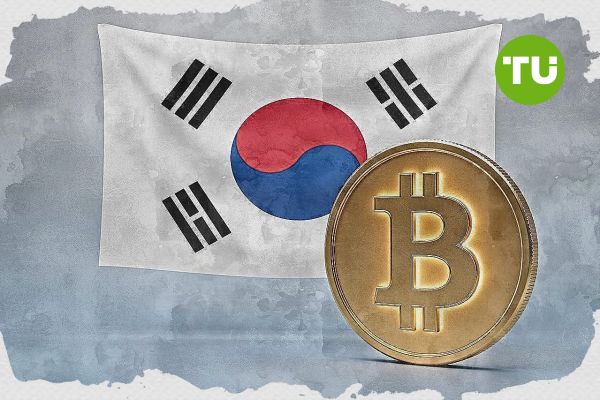
South Korea’s Financial Services Commission (FSC) is set to allow listed companies and professional investors to invest directly in cryptocurrencies, marking a major policy shift after nearly a decade of restrictions.
Under the new framework, more than 3,500 listed firms and registered corporate investors will be permitted to allocate up to 5% of their equity capital to virtual assets such as Bitcoin and Ethereum, reports Cryptopolitan.
The move is aimed at rebalancing a market that has long been dominated by retail traders and bringing institutional capital into the ecosystem. The policy forms part of the second phase of corporate participation in crypto markets, first outlined by the FSC in early 2025. Regulators have already shared draft trading guidelines with a public-private task force. Final rules are expected to be released in January or February, paving the way for corporate crypto transactions later this year.
Rules, limits and the path toward a digital asset framework
According to local reports, the FSC is also coordinating with lawmakers on a broader Framework Law on Digital Assets, which is expected to be proposed in the first quarter of 2026. Under the current plan, each company will face an annual investment cap of 5% of its equity capital, a limit that applies across all crypto holdings. Corporate investors will initially be restricted to virtual assets ranked in the top 20 by market capitalization, based on semiannual data from South Korea’s five largest exchanges.
The inclusion of US dollar–backed stablecoins remains under discussion, particularly as the country considers launching a won-pegged stablecoin later this month. While market participants broadly welcomed the decision, some criticized the cap as overly conservative compared with the US and Japan. Critics argue that strict limits could dampen capital inflows and discourage the emergence of domestic crypto-focused investment firms.
Bitcoin inflows and legal clarity reshape the market
Economists estimate that lifting the nine-year ban could unlock tens of trillions of won in potential crypto investment, with major conglomerates seen as early beneficiaries. Internet giant Naver, for example, held roughly 27 trillion won in equity capital as of September, meaning a full allocation could translate into more than 10,000 Bitcoin at current prices. Market participants also expect the policy shift to accelerate discussions around launching a spot Bitcoin ETF in South Korea.
The move comes as the country’s crypto investor base surpassed 10 million users last year, despite most trading activity flowing overseas. In parallel, legal clarity around digital assets is improving, with South Korea’s Supreme Court ruling that Bitcoin held on exchanges can be seized under the Criminal Procedure Act. The decision confirmed that digital assets qualify as property subject to confiscation. Together, regulatory reform and judicial clarity are setting the stage for a more institutionalized Korean crypto market.
Recently we wrote that spot Bitcoin ETFs in the US reached their two-year anniversary, accumulating approximately $57 billion in net inflows, despite notable outflows exceeding $600 million in a single week.









-
 Afghanistan
-
 Albania
-
 Algeria
-
 Angola
-
 Argentina
-
 Armenia
-
 Australia
-
 Austria
-
 Azerbaijan
-
 Bahamas
-
 Bahrain
-
 Bangladesh
-
 Belarus
-
 Belgium
-
 Bolivia
-
 Botswana
-
 Brazil
-
 Brunei
-
 Bulgaria
-
 Cambodia
-
 Cameroon
-
 Canada
-
 Chile
Chile
-
 China
China
-
 Colombia
-
 Congo
Congo
-
 Costa Rica
-
 Cote d'Ivoire
-
 Croatia
-
 Cuba
Cuba
-
 Cyprus
-
 Czechia
-
 DR Congo
-
 Denmark
-
 Dominican Republic
-
 Ecuador
-
 Egypt
Egypt
-
 El Salvador
-
 Estonia
-
 Eswatini
-
 Ethiopia
-
 Finland
-
 France
-
 Georgia
-
 Germany
-
 Ghana
Ghana
-
 Greece
-
 Haiti
Haiti
-
 Hong Kong
-
 Hungary
-
 India
India
-
 Indonesia
-
 Iran, Islamic republic
-
 Iraq
Iraq
-
 Ireland
-
 Israel
-
 Italy
Italy
-
 Jamaica
-
 Japan
Japan
-
 Jordan
-
 Kazakhstan
-
 Kenya
Kenya
-
 Korea
Korea
-
 Kuwait
-
 Kyrgyzstan
-
 Laos
Laos
-
 Latvia
-
 Lebanon
-
 Lesotho
-
 Libya
Libya
-
 Lithuania
-
 Luxembourg
-
 Madagascar
-
 Malaysia
-
 Malta
Malta
-
 Mauritius
-
 Mexico
-
 Moldova
-
 Mongolia
-
 Montenegro
-
 Morocco
-
 Mozambique
-
 Myanmar
-
 Namibia
-
 Nepal
Nepal
-
 Netherlands
-
 New Zealand
-
 Nigeria
-
 North Macedonia
-
 Norway
-
 Oman
Oman
-
 Pakistan
-
 Palestine
-
 Panama
-
 Papua New Guinea
-
 Paraguay
-
 Peru
Peru
-
 Philippines
-
 Poland
-
 Portugal
-
 Puerto Rico
-
 Qatar
Qatar
-
 Reunion
-
 Romania
-
 Rwanda
-
 Saudi Arabia
-
 Serbia
-
 Singapore
-
 Slovakia
-
 Slovenia
-
 Somalia
-
 South Africa
-
 Spain
Spain
-
 Sri Lanka
-
 Sweden
-
 Switzerland
-
 Syria
Syria
-
 Taiwan
-
 Tajikistan
-
 Tanzania
-
 Thailand
-
 Trinidad and Tobago
-
 Tunisia
-
 Turkey
-
 UAE
UAE
-
 Uganda
-
 Ukraine
-
 United Kingdom
-
United States
-
 Uruguay
-
 Uzbekistan
-
 Venezuela
-
 Vietnam
-
 Yemen
Yemen
-
 Zambia
-
 Zimbabwe
- Forex
- Crypto











