
Tether is becoming a major gold buyer alongside sovereign holders
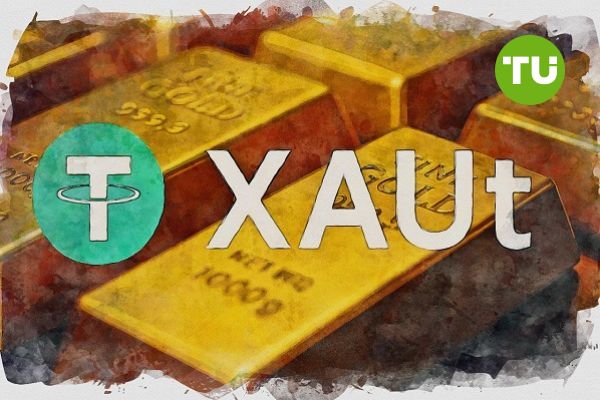
Tether reported purchasing 27 tonnes of gold in the fourth quarter, consistently ranking among the most active buyers alongside sovereign gold holders.
On Monday, Tether, the issuer of the world’s largest stablecoin, announced that it added approximately 27 tonnes of gold to its investment portfolios in the fourth quarter of 2025 — nearly matching its 26-tonne gold purchase in the third quarter.
“We are operating at a scale that places the Tether Gold investment fund on par with sovereign gold holders, and that comes with real responsibility,” said Paolo Ardoino, CEO of Tether.
For comparison, Poland’s central bank — the most active buyer among reporting central banks — increased its total gold reserves by 35 tonnes in the fourth quarter to 550 tonnes.
Currently, Tether’s gold-backed token XAUT accounts for 60% of global supply among gold-backed stablecoins. As of the end of December, Tether held 16.2 tonnes of gold as backing for XAUT. At that time, 520,089 XAUT tokens were in circulation, each backed one-to-one by physical gold held in reserve.
Meanwhile, the reserve attestation for Tether’s USDt stablecoin for the third quarter — the latest publicly available — showed that gold reserves backing USDt amounted to $12.9 billion at the end of September, equivalent to approximately 104 tonnes of gold at market prices at that time.
However, gold accounted for just 7% of USDt’s total reserves as of the end of September, with the majority consisting of US Treasury securities.
The golden triangle: Bitcoin, the dollar, and gold — who is left out?
Tether’s announcement came as gold prices on the Comex exchange surpassed $5,000 per troy ounce for the first time, following a gain of approximately 17% since the start of the year.
According to the World Gold Council, central banks accelerated gold purchases in the second half of 2025, acquiring 220 tonnes of gold in the third quarter alone. The renewed accumulation reflects broader efforts by reserve managers to diversify away from dollar-denominated assets toward stores of value outside the global financial system.
As official gold purchases by central banks accelerate, the US dollar has weakened. The US Dollar Index (DXY) fell 9.4% in 2025 — its worst annual performance since 2017 — and continued to decline this month, reaching its lowest level since September.
The rise in gold prices has been years in the making and has largely been driven by central banks gradually reducing their reliance on the US dollar and rebuilding precious-metal reserves as a hedge against currency risks, rising geopolitical tensions, and, to a lesser extent, sanctions.
Some analysts warn that the dollar’s downward trend may not be over. Otavio Costa of Azuria Capital noted that the dollar has broken a long-term support line for the first time in more than a decade, with confirmation likely to emerge on a monthly basis.
While bitcoin is often positioned as a hedge against currency debasement and has been touted by many as a potential replacement for physical gold, it has yet to fully assume that role.
According to Cointelegraph, analysis by investment strategist Karel Mercx of Dutch financial consultancy and investment magazine Beleggers Belangen found that bitcoin has so far failed to meet expectations as a hedge against asset debasement, leaving gold as the preferred instrument.
At the time of writing, bitcoin was trading at $87,754, up 1% over the past 24 hours, but down more than 5% over the past week.
As we wrote, Tether expands USDt adoption with crypto wallet integration on Rumble


Latest XAU/USD News







-
 Afghanistan
-
 Albania
-
 Algeria
-
 Angola
-
 Argentina
-
 Armenia
-
 Australia
-
 Austria
-
 Azerbaijan
-
 Bahamas
-
 Bahrain
-
 Bangladesh
-
 Belarus
-
 Belgium
-
 Bolivia
-
 Botswana
-
 Brazil
-
 Brunei
-
 Bulgaria
-
 Cambodia
-
 Cameroon
-
 Canada
-
 Chile
Chile
-
 China
China
-
 Colombia
-
 Congo
Congo
-
 Costa Rica
-
 Cote d'Ivoire
-
 Croatia
-
 Cuba
Cuba
-
 Cyprus
-
 Czechia
-
 DR Congo
-
 Denmark
-
 Dominican Republic
-
 Ecuador
-
 Egypt
Egypt
-
 El Salvador
-
 Estonia
-
 Eswatini
-
 Ethiopia
-
 Finland
-
 France
-
 Georgia
-
 Germany
-
 Ghana
Ghana
-
 Greece
-
 Haiti
Haiti
-
 Hong Kong
-
 Hungary
-
 India
India
-
 Indonesia
-
 Iran, Islamic republic
-
 Iraq
Iraq
-
 Ireland
-
 Israel
-
 Italy
Italy
-
 Jamaica
-
 Japan
Japan
-
 Jordan
-
 Kazakhstan
-
 Kenya
Kenya
-
 Korea
Korea
-
 Kuwait
-
 Kyrgyzstan
-
 Laos
Laos
-
 Latvia
-
 Lebanon
-
 Lesotho
-
 Libya
Libya
-
 Lithuania
-
 Luxembourg
-
 Madagascar
-
 Malaysia
-
 Malta
Malta
-
 Mauritius
-
 Mexico
-
 Moldova
-
 Mongolia
-
 Montenegro
-
 Morocco
-
 Mozambique
-
 Myanmar
-
 Namibia
-
 Nepal
Nepal
-
 Netherlands
-
 New Zealand
-
 Nigeria
-
 North Macedonia
-
 Norway
-
 Oman
Oman
-
 Pakistan
-
 Palestine
-
 Panama
-
 Papua New Guinea
-
 Paraguay
-
 Peru
Peru
-
 Philippines
-
 Poland
-
 Portugal
-
 Puerto Rico
-
 Qatar
Qatar
-
 Reunion
-
 Romania
-
 Rwanda
-
 Saudi Arabia
-
 Serbia
-
 Singapore
-
 Slovakia
-
 Slovenia
-
 Somalia
-
 South Africa
-
 Spain
Spain
-
 Sri Lanka
-
 Sweden
-
 Switzerland
-
 Syria
Syria
-
 Taiwan
-
 Tajikistan
-
 Tanzania
-
 Thailand
-
 Trinidad and Tobago
-
 Tunisia
-
 Turkey
-
 UAE
UAE
-
 Uganda
-
 Ukraine
-
 United Kingdom
-
United States
-
 Uruguay
-
 Uzbekistan
-
 Venezuela
-
 Vietnam
-
 Yemen
Yemen
-
 Zambia
-
 Zimbabwe
- Forex
- Crypto












