
Bitcoin drops below $68 000 after fresh ETF outflows hit market

The recovery rally in Bitcoin, which began earlier this week, stalled after capital outflows from spot exchange-traded funds.
Highlights
- Bitcoin rally lost momentum after $228M ETF outflows.
- Weak U.S. labor data and Middle East tensions pressured crypto sentiment.
- Analysts warn Bitcoin could drop below $60K without new catalysts.
A rally with obstacles
Since the beginning of the week, investors poured more than $1.1 billion into BTC ETFs, pushing Bitcoin above $74,000. However, the rally proved short-lived as some investors reconsidered their positions due to weak U.S. labor market data and rising geopolitical tensions in the Middle East. Together, these factors could affect the Federal Reserve’s fight against inflation in a way that is unfavorable for cryptocurrencies.
As a result, ETFs recorded $228 million in outflows on Thursday, which pressured the spot market price. According to Lookonchain data, another $117 million followed on Friday, sending Bitcoin down 5% to below $68,000.
What will investors do next?
Despite the recent pullback, BTC ETFs still saw around $900 million in inflows this week. However, roughly the same amount has been withdrawn from these funds since the start of the year. So far in 2026, total inflows into BTC ETFs amount to $3.58 billion, while total outflows stand at $4.49 billion.
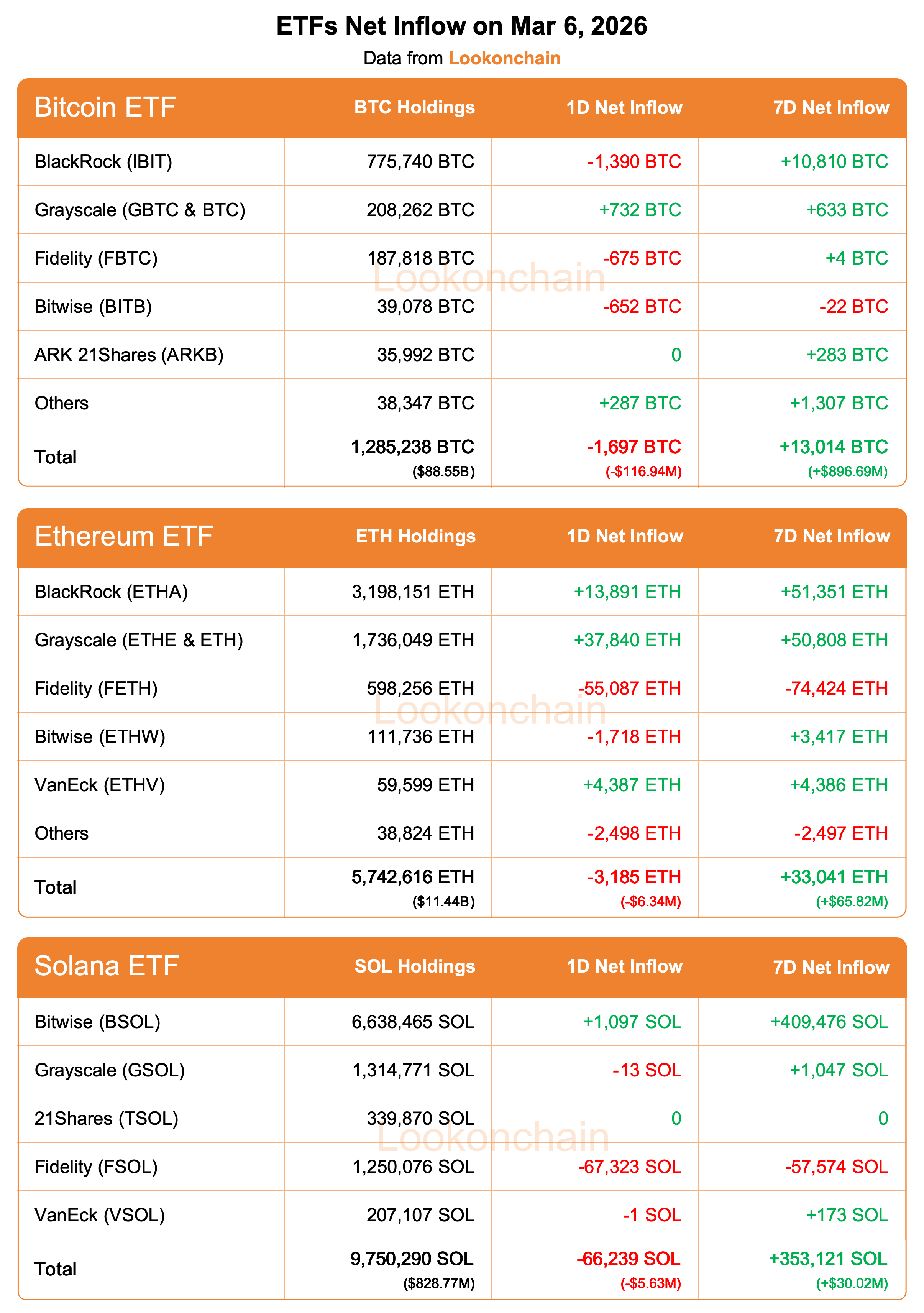
According to Lookonchain, the weekly leader in inflows was BlackRock’s iShares Bitcoin Trust ETF (IBIT) with 10,870 BTC. It was followed by Grayscale with 633 BTC and ARK 21Shares with 283 BTC.
Meanwhile, CryptoQuant describes the March Bitcoin rally as a recovery rather than the start of a new bullish phase. Analysts note that amid the ongoing crypto winter, Bitcoin could fall below $60,000 if the market fails to receive strong catalysts for growth.
Analysts also emphasize that ETF flows remain one of the key indicators of institutional demand for cryptocurrencies. Inflows into spot funds were a major driver of Bitcoin’s rally in 2024–2025, meaning that even short-term outflows can increase volatility and trigger profit-taking across the market.
At the same time, macroeconomic uncertainty continues to weigh on risk assets. If the Federal Reserve is forced to maintain tighter monetary policy for longer due to inflation risks and geopolitical tensions, demand for speculative assets such as cryptocurrencies may remain limited, raising the likelihood of further market corrections.
As we wrote, Bitcoin pulls back to $70,000 after failing to break key resistance





Latest Bitcoin News










-
 Afghanistan
-
 Albania
-
 Algeria
-
 Angola
-
 Argentina
-
 Armenia
-
 Australia
-
 Austria
-
 Azerbaijan
-
 Bahamas
-
 Bahrain
-
 Bangladesh
-
 Belarus
-
 Belgium
-
 Bolivia
-
 Botswana
-
 Brazil
-
 Brunei
-
 Bulgaria
-
 Cambodia
-
 Cameroon
-
 Canada
-
 Chile
Chile
-
 China
China
-
 Colombia
-
 Congo
Congo
-
 Costa Rica
-
 Cote d'Ivoire
-
 Croatia
-
 Cuba
Cuba
-
 Cyprus
-
 Czechia
-
 DR Congo
-
 Denmark
-
 Dominican Republic
-
 Ecuador
-
 Egypt
Egypt
-
 El Salvador
-
 Estonia
-
 Eswatini
-
 Ethiopia
-
 Finland
-
 France
-
 Georgia
-
 Germany
-
 Ghana
Ghana
-
 Greece
-
 Haiti
Haiti
-
 Hong Kong
-
 Hungary
-
 India
India
-
 Indonesia
-
 Iran, Islamic republic
-
 Iraq
Iraq
-
 Ireland
-
 Israel
-
 Italy
Italy
-
 Jamaica
-
 Japan
Japan
-
 Jordan
-
 Kazakhstan
-
 Kenya
Kenya
-
 Korea
Korea
-
 Kuwait
-
 Kyrgyzstan
-
 Laos
Laos
-
 Latvia
-
 Lebanon
-
 Lesotho
-
 Libya
Libya
-
 Lithuania
-
 Luxembourg
-
 Madagascar
-
 Malaysia
-
 Malta
Malta
-
 Mauritius
-
 Mexico
-
 Moldova
-
 Mongolia
-
 Montenegro
-
 Morocco
-
 Mozambique
-
 Myanmar
-
 Namibia
-
 Nepal
Nepal
-
 Netherlands
-
 New Zealand
-
 Nigeria
-
 North Macedonia
-
 Norway
-
 Oman
Oman
-
 Pakistan
-
 Palestine
-
 Panama
-
 Papua New Guinea
-
 Paraguay
-
 Peru
Peru
-
 Philippines
-
 Poland
-
 Portugal
-
 Puerto Rico
-
 Qatar
Qatar
-
 Reunion
-
 Romania
-
 Rwanda
-
 Saudi Arabia
-
 Serbia
-
 Singapore
-
 Slovakia
-
 Slovenia
-
 Somalia
-
 South Africa
-
 Spain
Spain
-
 Sri Lanka
-
 Sweden
-
 Switzerland
-
 Syria
Syria
-
 Taiwan
-
 Tajikistan
-
 Tanzania
-
 Thailand
-
 Trinidad and Tobago
-
 Tunisia
-
 Turkey
-
 UAE
UAE
-
 Uganda
-
 Ukraine
-
 United Kingdom
-
United States
-
 Uruguay
-
 Uzbekistan
-
 Venezuela
-
 Vietnam
-
 Yemen
Yemen
-
 Zambia
-
 Zimbabwe
- Forex
- Crypto












