The tweet was deleted by the author.
But we saved everything 🙂.
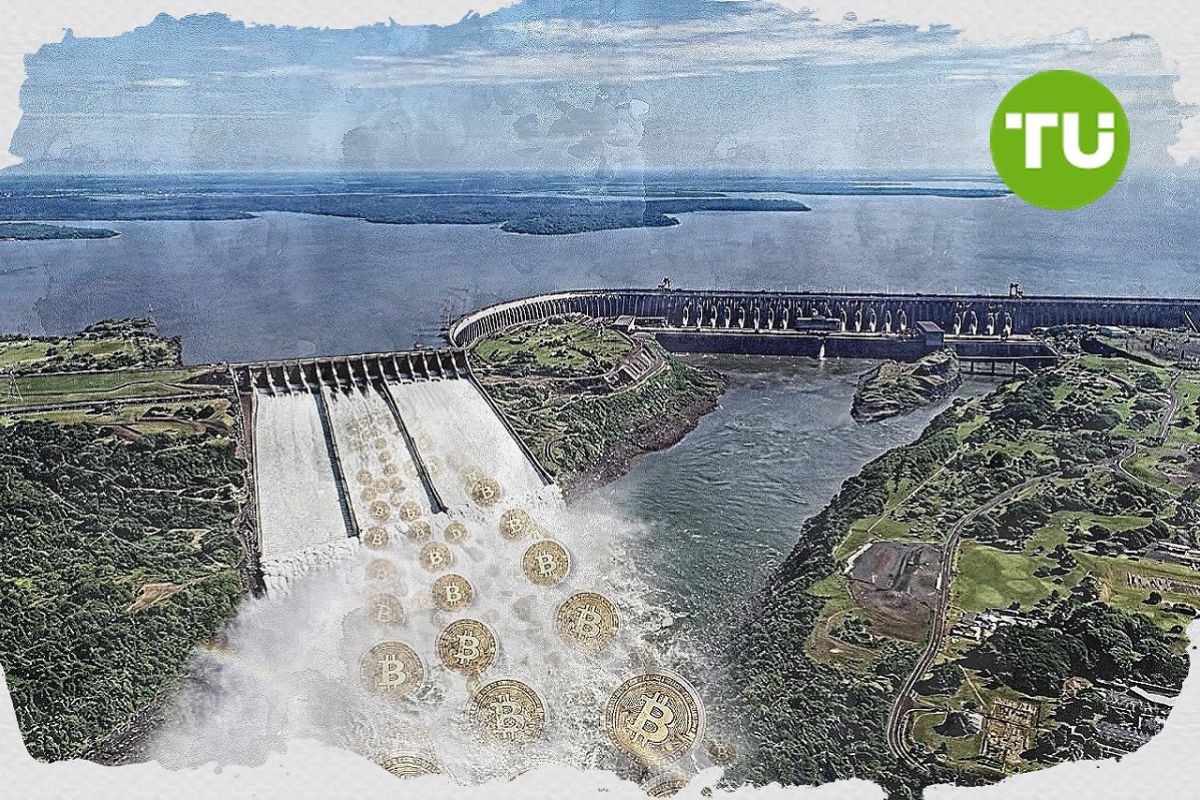
One of the world’s largest electricity exporters — Paraguay — is considering developing state-backed crypto mining operations using equipment confiscated from illegal miners. The feasibility of such a Bitcoin strategy will be assessed by Morphware, which has signed a memorandum of cooperation with Paraguay’s National Electricity Administration (ANDE).
Paraguay’s energy sector is unique: the country’s three operating hydropower plants — Itaipu, Yacyretá, and Acaray — with capacities of 14 GW, 3.2 GW, and 230 MW respectively, not only almost fully satisfy domestic electricity demand but also allow Paraguay to export significant volumes of power to neighboring Argentina and Brazil.
The largest of them, Itaipu, supplies about 78% of Paraguay’s domestic electricity demand, while Yacyretá covers roughly 19% and Acaray about 3%.
Overall, Paraguay produces far more electricity than it consumes. In recent years, the country has exported more than half of its total electricity generation, mainly to Brazil and Argentina.
Thanks to its cheap hydropower, Paraguay has in recent years been flooded with illegal crypto miners. However, the government has long made little effort to leverage its natural advantage for developing cryptocurrency mining or hosting large-scale data centers.
A shift in policy emerged after the signing of a memorandum of cooperation between Paraguay’s National Electricity Administration (ANDE) and Morphware, which will evaluate the feasibility of profitable cryptocurrency mining using the country’s available energy resources.
“The agreement establishes a formal framework for collaboration and technical coordination between Morphware and ANDE, focusing on analyzing and developing initiatives related to digital assets, advanced data processing infrastructure, and strategic opportunities in energy technologies in Paraguay. … Morphware and ANDE will also explore the role of Bitcoin mining as a national-level opportunity,” Morphware CEO Kenso Trabing wrote on the company’s X page.
According to Morphware and ANDE, one of the simplest ways to launch a pilot program could be using equipment confiscated from illegal miners. However, engineer and energy expert Nelson Cristaldo believes that generating profit using older-generation machines may be difficult. Therefore, the initiative will initially focus on analyzing potential future mining operations.
“But it’s very good news that the government is doing this. The government has a very unique vision,” Cristaldo added.
Fernando Arriola, chief financial officer of BC Mining, also told DL News that the government initiative is a step in the right direction. Although authorities have not yet expressed plans to create a national Bitcoin reserve, some observers, including Arriola, consider such a scenario possible.
Unlike El Salvador, which focused on accumulating Bitcoin as part of its national reserves, Paraguay may pursue a different model — monetizing its energy advantage. Electricity is one of the key pillars of the country’s economy: in different years it has accounted for between 13% and nearly 24% of Paraguay’s total exports.
The development of data centers and crypto mining could significantly increase the value added of this resource. Instead of selling excess electricity to neighbors at relatively low prices, Paraguay could convert it into digital assets or use it to power high-performance computing infrastructure.
Some projects in Paraguay are already moving in this direction. For example, new data centers powered by Itaipu hydropower can consume hundreds of megawatts of electricity and may serve as a foundation for developing the country’s computing and blockchain infrastructure industries.
In addition, legalizing and regulating mining could help reduce the scale of the shadow economy. Controlled deployment of mining farms and data centers could generate additional state revenue, stimulate technological infrastructure development, and gradually transform Paraguay into one of South America’s regional hubs for the digital economy.
As we wrote, El Salvador accelerates Bitcoin accumulation, holdings hit 7,500 BTC



 Afghanistan
 Albania
 Algeria
 Angola
 Argentina
 Armenia
 Australia
 Austria
 Azerbaijan
 Bahamas
 Bahrain
 Bangladesh
 Belarus
 Belgium
 Bolivia
 Botswana
 Brazil
 Brunei
 Bulgaria
 Cambodia
 Cameroon
 Canada
 Chile
Chile
 China
China
 Colombia
 Congo
Congo
 Costa Rica
 Cote d'Ivoire
 Croatia
 Cuba
Cuba
 Cyprus
 Czechia
 DR Congo
 Denmark
 Dominican Republic
 Ecuador
 Egypt
Egypt
 El Salvador
 Estonia
 Eswatini
 Ethiopia
 Finland
 France
 Georgia
 Germany
 Ghana
Ghana
 Greece
 Haiti
Haiti
 Hong Kong
 Hungary
 India
India
 Indonesia
 Iran, Islamic republic
 Iraq
Iraq
 Ireland
 Israel
 Italy
Italy
 Jamaica
 Japan
Japan
 Jordan
 Kazakhstan
 Kenya
Kenya
 Korea
Korea
 Kuwait
 Kyrgyzstan
 Laos
Laos
 Latvia
 Lebanon
 Lesotho
 Libya
Libya
 Lithuania
 Luxembourg
 Madagascar
 Malaysia
 Malta
Malta
 Mauritius
 Mexico
 Moldova
 Mongolia
 Montenegro
 Morocco
 Mozambique
 Myanmar
 Namibia
 Nepal
Nepal
 Netherlands
 New Zealand
 Nigeria
 North Macedonia
 Norway
 Oman
Oman
 Pakistan
 Palestine
 Panama
 Papua New Guinea
 Paraguay
 Peru
Peru
 Philippines
 Poland
 Portugal
 Puerto Rico
 Qatar
Qatar
 Reunion
 Romania
 Rwanda
 Saudi Arabia
 Serbia
 Singapore
 Slovakia
 Slovenia
 Somalia
 South Africa
 Spain
Spain
 Sri Lanka
 Sweden
 Switzerland
 Syria
Syria
 Taiwan
 Tajikistan
 Tanzania
 Thailand
 Trinidad and Tobago
 Tunisia
 Turkey
 UAE
UAE
 Uganda
 Ukraine
 United Kingdom
United States
United Kingdom
United States
 Uruguay
 Uzbekistan
 Venezuela
 Vietnam
 Yemen
Yemen
 Zambia
 Zimbabwe