
50 shades of gold: Types of bullion on blockchain

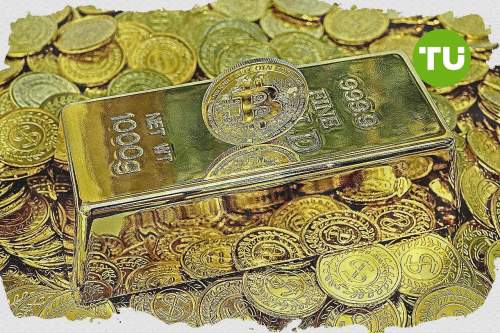
Just a few years ago, Bitcoin effectively held a monopoly on the role of “digital gold.” But as demand for the real yellow metal grew, the market took a different path. Today, the blockchain offers dozens of versions of tokenized gold — from products issued by major players such as Tether to lesser-known names. And while all of these tokens promise access to the same underlying asset, the differences between them run much deeper than they may seem at first glance.
Paxos as the pioneer of gold tokenization
The modern history of tokenized gold effectively began in September 2019, when Paxos launched PAX Gold (PAXG). This was not an attempt to reinvent gold — the issuer simply made it technologically convenient for the digital age. The mechanics are straightforward: one token equals one troy ounce of physical metal that meets the London Good Delivery standard. This is not an abstract “basket of assets,” but specific gold bars stored in professional Brink’s vaults.PAXG’s key advantage lies in its direct link to real gold. Token holders can verify the serial number, weight, and purity of the bar backing their asset. In that sense, PAXG looks more like a digital form of ownership than a conventional financial derivative. The status of the issuer also matters. Paxos operates under the supervision of US regulators, including the New York State Department of Financial Services, bringing familiar traditional-finance standards into the crypto segment — from regular reserve audits to public reporting. It is precisely this issuer credibility that keeps PAXG priced at a slight premium to XAU.
That said, there is also a practical nuance. While the tokens can theoretically be redeemed for physical gold, the process is only available for large volumes — starting from 430 PAXG, equivalent to the weight of a full bar. For most investors, this means PAXG functions not as a way to receive metal “in hand,” but as an instrument with near-ideal liquidity, available across many centralized and decentralized exchanges.
Gold from Tether
If PAXG is a story about regulation, then Tether Gold (XAUT) is a story about expansion. When Tether launched its gold token in January 2020, it applied to gold the same logic that made its stablecoin USDT dominant in the market. Technically, the mechanism is identical to PAXG: one token represents one troy ounce of gold meeting the London Good Delivery standard. The metal is stored in Switzerland, and the verification system allows holders to identify the specific bar assigned to the asset.The main difference in XAUT, however, lies not in the structure but in the infrastructure. Tether integrated gold into its vast ecosystem: the token is available across different networks and listed on major venues from Binance to Kraken, as well as in other digital-asset storage tools such as the Telegram wallet. For investors, this translates into strong liquidity — the ability to enter and exit a position without significant slippage. It is precisely this deep integration into the crypto market that allows XAUT to compete consistently with PAXG for leadership, leaving the rest of the projects on the periphery.
In practical terms, the “physical” use case here is just as conditional: conversion into real metal is also reserved for large volumes. That makes XAUT, first and foremost, an efficient instrument for trading or hedging rather than a way to fill a home safe. In the end, Tether repeated its dollar playbook: it created a highly liquid asset that moves easily between exchanges and wallets. It is this operational convenience, rather than any philosophical concept, that has become its main driver.
Gold in grams and a payments ecosystem from Kinesis
While the market giants operate in troy ounces, Kinesis took a different route by betting on the democratization of gold. The main distinction of its KAU token is that it is backed by one gram of allocated gold. That smaller denomination significantly lowers the entry threshold and turns gold from a “heavy” exchange-traded asset into a flexible unit for everyday transactions.Kinesis was built not just as a digital vault, but as a full-fledged payments ecosystem. The company places particular emphasis on legal clarity: the gold is fully allocated to the token holder, and the existence of the reserves is confirmed twice a year by the independent auditor Inspectorate International. Unlike many competitors, the mechanism for physical redemption is spelled out more clearly here, although it is still constrained by logistics costs and relatively high minimum thresholds.
From a market perspective, Kinesis remains a niche player. Most of its liquidity is concentrated within its own Kinesis Money platform, and in terms of recognition the asset still trails far behind PAXG and XAUT. This is not a mass-market exchange standard, but an attempt to build an alternative digital currency in which gold serves not only as a hedging instrument, but also as a means of everyday transactions.
Gold in RWA format from Matrixdock
Matrixdock entered the market later than the veterans — its XAUm token was launched only in September 2024. But its bet is different: not simply to digitize metal, but to fit it into the new wave of tokenized real-world assets, or RWAs. Here, gold is presented not as a passive “bar in a vault,” but as a working instrument integrated into modern crypto infrastructure.XAUm’s structure follows LBMA standards, with one ounce per token, but with Asian storage geography. Matrixdock is targeting the institutional level: the reserves undergo physical audits by Bureau Veritas, and backing data is published openly. For a young project, that kind of transparency is a critical trust factor, allowing it to position itself as Asia’s largest gold token with a market capitalization of about $85 million.
What makes XAUm especially interesting is its DeFi background. Matrixdock designed the asset from the outset as a resource that could “work” through cross-chain bridges and protocol integrations. While PAXG and XAUT are selling reliability and liquidity, Matrixdock is offering a model of the future, in which tokenized gold becomes a dynamic part of the digital ecosystem. This is no longer a niche experiment, but a serious attempt to make gold a fully fledged participant in the RWA market — though for now it remains less popular than its predecessors.
Gold with a Dubai address
ComTech Gold, or CGO, is a regional player with a clear Middle Eastern focus. Its strategy is built not on global dominance, but on a specific trust infrastructure. The gold backing CGO is stored with TransGuard, part of the Emirates Group, which immediately places the asset within a logistics ecosystem that is well understood in the region.The project’s defining feature is its Sharia certification from Amanie Advisors. For the Islamic financial world, this is not merely a formal label, but a prerequisite for access to the asset. In that sense, ComTech is offering not universal “crypto gold,” but a product adapted to a specific cultural and legal context.
In terms of use, CGO is closer to a direct-ownership instrument. The issuer emphasizes buying and redeeming tokens through its own platform, rather than aggressive exchange-based trading. Although the asset is present on venues such as Bitrue and BitMart, it still lags behind the segment leaders in liquidity. In the end, CGO’s strength lies not in scale, but in a clear jurisdiction, reliable storage, and compliance with religious financial principles.
Why tokenized gold is often more convenient than “paper” gold
Ultimately, tokenized gold is far more convenient where speed, divisibility, and easy access matter most. Investors can enter a position with a small amount, without having to buy a full bar or an exchange lot, trade at any time of day, and, if needed, transfer the asset just as easily as any other token. For some investors, that is an important advantage over both physical metal and “paper” gold, which offers neither the same mobility nor the option of redeeming into real metal within one digital wrapper.That is where the strength of tokenization lies: gold becomes more accessible to retail investors. It is no longer tied to the schedule of a bank, broker, or exchange session, while the entry threshold falls to an almost symbolic level. In theory, this turns the metal not only into a store-of-value instrument, but into a fully fledged trading asset.
But despite the blockchain, smart contracts, and the polished rhetoric of a new financial era, tokenized gold remains an old story about trust. The main nuance is that most issuers are still young players who have yet to build the historical reputation and level of confidence that traditional participants in the gold market accumulated over centuries.
That is why the strongest use case for tokenized gold today is not as a “new form of eternal safety,” but as a convenient way to trade gold on the blockchain. Faster, smaller, more flexible. But before buying, investors still need to look not only at the price of the metal, but also at the name of the issuer.





Latest Gold News






-
 Afghanistan
-
 Albania
-
 Algeria
-
 Angola
-
 Argentina
-
 Armenia
-
 Australia
-
 Austria
-
 Azerbaijan
-
 Bahamas
-
 Bahrain
-
 Bangladesh
-
 Belarus
-
 Belgium
-
 Bolivia
-
 Botswana
-
 Brazil
-
 Brunei
-
 Bulgaria
-
 Cambodia
-
 Cameroon
-
 Canada
-
 Chile
Chile
-
 China
China
-
 Colombia
-
 Congo
Congo
-
 Costa Rica
-
 Cote d'Ivoire
-
 Croatia
-
 Cuba
Cuba
-
 Cyprus
-
 Czechia
-
 DR Congo
-
 Denmark
-
 Dominican Republic
-
 Ecuador
-
 Egypt
Egypt
-
 El Salvador
-
 Estonia
-
 Eswatini
-
 Ethiopia
-
 Finland
-
 France
-
 Georgia
-
 Germany
-
 Ghana
Ghana
-
 Greece
-
 Haiti
Haiti
-
 Hong Kong
-
 Hungary
-
 India
India
-
 Indonesia
-
 Iran, Islamic republic
-
 Iraq
Iraq
-
 Ireland
-
 Israel
-
 Italy
Italy
-
 Jamaica
-
 Japan
Japan
-
 Jordan
-
 Kazakhstan
-
 Kenya
Kenya
-
 Korea
Korea
-
 Kuwait
-
 Kyrgyzstan
-
 Laos
Laos
-
 Latvia
-
 Lebanon
-
 Lesotho
-
 Libya
Libya
-
 Lithuania
-
 Luxembourg
-
 Madagascar
-
 Malaysia
-
 Malta
Malta
-
 Mauritius
-
 Mexico
-
 Moldova
-
 Mongolia
-
 Montenegro
-
 Morocco
-
 Mozambique
-
 Myanmar
-
 Namibia
-
 Nepal
Nepal
-
 Netherlands
-
 New Zealand
-
 Nigeria
-
 North Macedonia
-
 Norway
-
 Oman
Oman
-
 Pakistan
-
 Palestine
-
 Panama
-
 Papua New Guinea
-
 Paraguay
-
 Peru
Peru
-
 Philippines
-
 Poland
-
 Portugal
-
 Puerto Rico
-
 Qatar
Qatar
-
 Reunion
-
 Romania
-
 Rwanda
-
 Saudi Arabia
-
 Serbia
-
 Singapore
-
 Slovakia
-
 Slovenia
-
 Somalia
-
 South Africa
-
 Spain
Spain
-
 Sri Lanka
-
 Sweden
-
 Switzerland
-
 Syria
Syria
-
 Taiwan
-
 Tajikistan
-
 Tanzania
-
 Thailand
-
 Trinidad and Tobago
-
 Tunisia
-
 Turkey
-
 UAE
UAE
-
 Uganda
-
 Ukraine
-
 United Kingdom
-
United States
-
 Uruguay
-
 Uzbekistan
-
 Venezuela
-
 Vietnam
-
 Yemen
Yemen
-
 Zambia
-
 Zimbabwe
- Forex
- Crypto












