


The oil market has once again sharply shifted toward a geopolitical premium in recent days. WTI tested the $100 per barrel level following the breakdown of another round of U.S.–Iran negotiations and the continued restrictions in the Strait of Hormuz.
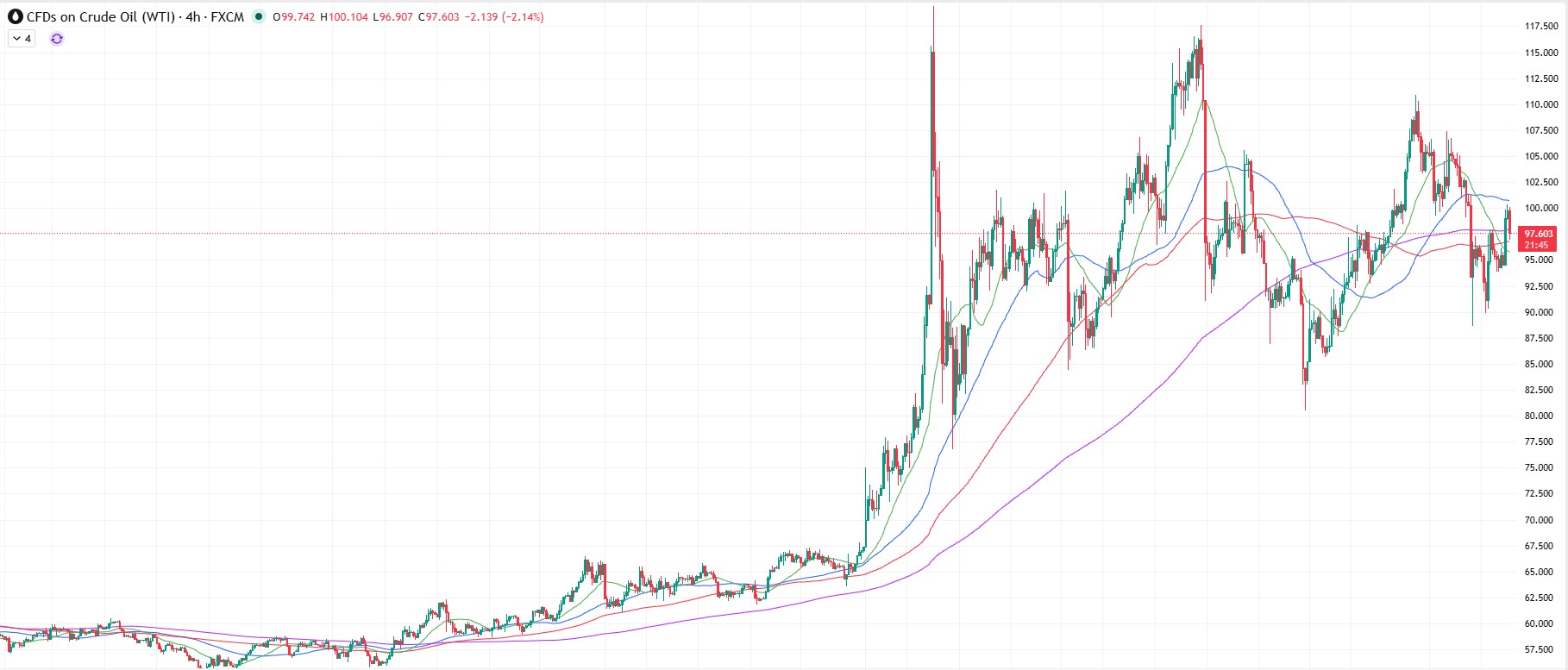
However, amid reports of ongoing talks between the U.S. and Iran, bulls failed to break above this level, leaving downside risks intact toward the $95–92.5 range.
According to Reuters and MarketWatch, the market is pricing in the risk of prolonged supply disruptions from the Persian Gulf, which accounted for around 20% of global oil trade before the crisis. Against this backdrop, Brent remains above $100–105, while intraday volatility is at its highest since the 2022 energy crisis.
OPEC losing control of the market
An additional shock came from the UAE’s exit from OPEC/OPEC+, which many analysts describe as the biggest blow to the cartel in recent years. Abu Dhabi has effectively signaled its intention to increase production outside OPEC quotas, deepening divisions within the bloc between Saudi Arabia and several Gulf states.
Formally, this should pressure prices via increased supply, but for now the effect is being offset by military risks and the threat of supply disruptions in the region.
Fundamentals remain mixed
Despite the current bullish impulse, the fundamental picture remains unclear. The latest EIA outlook still points to an oil surplus in 2026 due to rising production outside OPEC+, particularly in the U.S., Brazil, and Canada. At the same time, the IEA has sharply downgraded its global demand forecast amid the energy shock and slowing global economy.
Analysts note that the market is currently caught between two forces: short-term fears of supply shortages and medium-term risks of declining global demand in the event of a recession.
Key scenario for the coming weeks
The main driver for oil remains the situation around Hormuz. As long as the strait operates under instability, the market will retain a high geopolitical premium. If the U.S.–Iran conflict escalates or new attacks on infrastructure in Saudi Arabia or the UAE occur, WTI could quickly test $110–120.
However, any progress in negotiations could trigger an equally sharp decline — the market has already shown 6–8% drops in a single day on de-escalation headlines.
At this point, oil is effectively trading as a geopolitical asset, where headlines from the Middle East have a stronger impact on prices than inventory or demand data, as I previously noted in the article U.S. crude remains a geopolitical market.





Latest WTI News




-
 Afghanistan
-
 Albania
-
 Algeria
-
 Angola
-
 Argentina
-
 Armenia
-
 Australia
-
 Austria
-
 Azerbaijan
-
 Bahamas
-
 Bahrain
-
 Bangladesh
-
 Belarus
-
 Belgium
-
 Bolivia
-
 Botswana
-
 Brazil
-
 Brunei
-
 Bulgaria
-
 Cambodia
-
 Cameroon
-
 Canada
-
 Chile
Chile
-
 China
China
-
 Colombia
-
 Congo
Congo
-
 Costa Rica
-
 Cote d'Ivoire
-
 Croatia
-
 Cuba
Cuba
-
 Cyprus
-
 Czechia
-
 DR Congo
-
 Denmark
-
 Dominican Republic
-
 Ecuador
-
 Egypt
Egypt
-
 El Salvador
-
 Estonia
-
 Eswatini
-
 Ethiopia
-
 Finland
-
 France
-
 Georgia
-
 Germany
-
 Ghana
Ghana
-
 Greece
-
 Haiti
Haiti
-
 Hong Kong
-
 Hungary
-
 India
India
-
 Indonesia
-
 Iran, Islamic republic
-
 Iraq
Iraq
-
 Ireland
-
 Israel
-
 Italy
Italy
-
 Jamaica
-
 Japan
Japan
-
 Jordan
-
 Kazakhstan
-
 Kenya
Kenya
-
 Korea
Korea
-
 Kuwait
-
 Kyrgyzstan
-
 Laos
Laos
-
 Latvia
-
 Lebanon
-
 Lesotho
-
 Libya
Libya
-
 Lithuania
-
 Luxembourg
-
 Madagascar
-
 Malaysia
-
 Malta
Malta
-
 Mauritius
-
 Mexico
-
 Moldova
-
 Mongolia
-
 Montenegro
-
 Morocco
-
 Mozambique
-
 Myanmar
-
 Namibia
-
 Nepal
Nepal
-
 Netherlands
-
 New Zealand
-
 Nigeria
-
 North Macedonia
-
 Norway
-
 Oman
Oman
-
 Pakistan
-
 Palestine
-
 Panama
-
 Papua New Guinea
-
 Paraguay
-
 Peru
Peru
-
 Philippines
-
 Poland
-
 Portugal
-
 Puerto Rico
-
 Qatar
Qatar
-
 Reunion
-
 Romania
-
 Rwanda
-
 Saudi Arabia
-
 Serbia
-
 Singapore
-
 Slovakia
-
 Slovenia
-
 Somalia
-
 South Africa
-
 Spain
Spain
-
 Sri Lanka
-
 Sweden
-
 Switzerland
-
 Syria
Syria
-
 Taiwan
-
 Tajikistan
-
 Tanzania
-
 Thailand
-
 Trinidad and Tobago
-
 Tunisia
-
 Turkey
-
 UAE
UAE
-
 Uganda
-
 Ukraine
-
 United Kingdom
-
United States
-
 Uruguay
-
 Uzbekistan
-
 Venezuela
-
 Vietnam
-
 Yemen
Yemen
-
 Zambia
-
 Zimbabwe
- Forex
- Crypto












