


Microsoft is entering a new phase of the AI cycle: investors remain optimistic about the company’s dominance in enterprise AI, but the focus is gradually shifting from a pure “growth story” toward the return on massive capital investments. Azure continues to deliver strong expansion, while Microsoft 365 Copilot is steadily becoming the core enterprise product within the ecosystem.
Against this backdrop, Microsoft is aggressively accelerating investments in data centers, GPU infrastructure, and power capacity for AI workloads. Analysts note that Azure’s infrastructure advantage is now becoming Microsoft’s key strategic asset in competition with Google and Amazon.
Nadella launches Microsoft’s biggest management overhaul in years
One of the most discussed developments has been Microsoft’s large-scale internal restructuring. According to Business Insider, Satya Nadella is effectively dismantling the company’s traditional hierarchical management model by reducing the influence of the old senior structure and strengthening engineering-focused AI teams. Microsoft is trying to become faster and less bureaucratic amid growing pressure from OpenAI, Google DeepMind, and Meta. Internally, the influence of product and AI leadership continues to rise, while key strategic decisions are increasingly centered around Copilot, Azure AI, and infrastructure services.
OpenAI partnership shifts the balance of power
At the same time, the relationship between Microsoft and OpenAI is becoming less exclusive. OpenAI continues to diversify its infrastructure partnerships and reduce dependence on a single cloud provider, gradually changing Microsoft’s previous level of influence within the OpenAI ecosystem. For the market, this is an important signal: Microsoft remains the leading enterprise AI player, but no longer has absolute control over its key strategic partner. Investors are closely watching whether the company can maintain its leadership through AI integration across Office, Windows, and Azure faster than competitors can deliver comparable solutions.
Rising costs and margin pressure remain the key risk
The main risk for Microsoft in 2026 is no longer AI demand itself, but the cost of scaling. Across the market, Big Tech companies are simultaneously reducing headcount while sharply increasing AI-related capital expenditures. Analysts warn that investors are beginning to evaluate the efficiency of AI infrastructure spending more critically, especially amid rising energy consumption and the soaring cost of GPU clusters. While Microsoft still appears to be one of the primary beneficiaries of the AI boom, the company’s next challenge will be proving that AI can support not only revenue growth, but also long-term profitability.
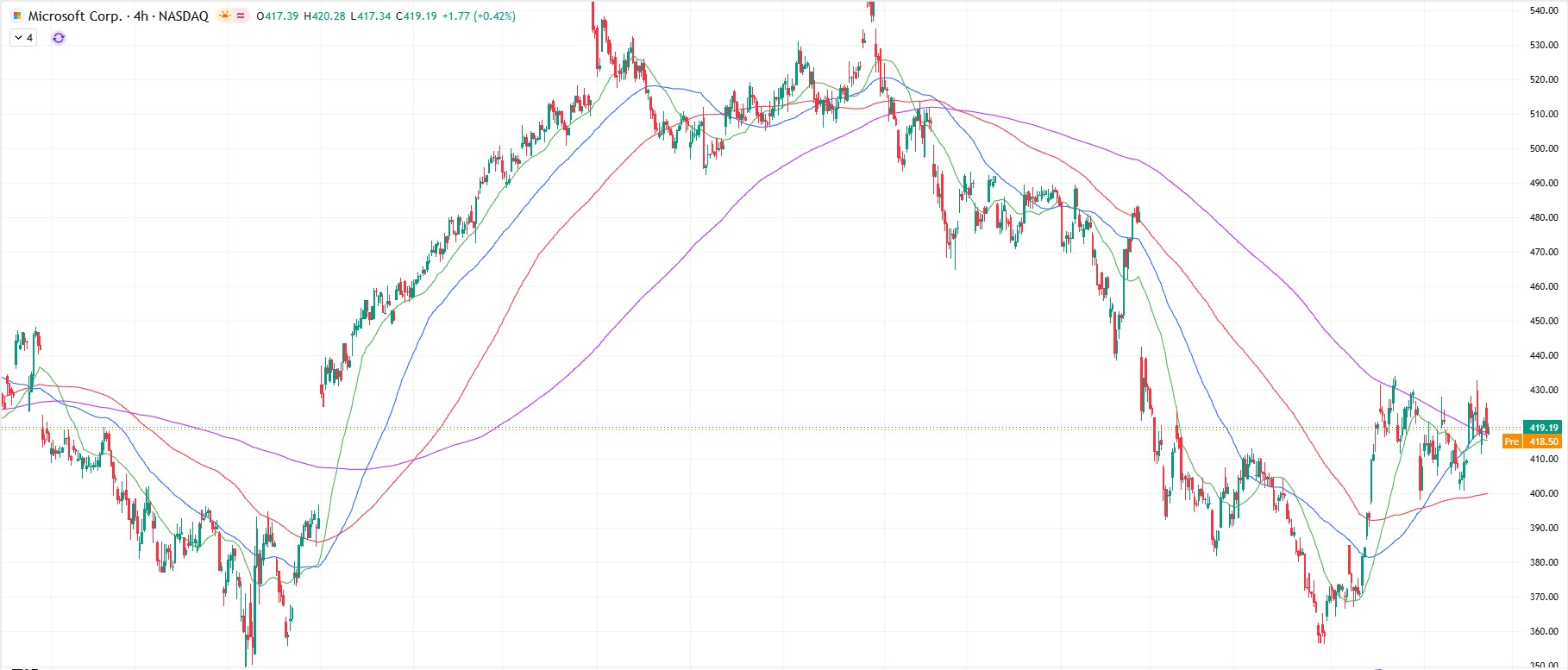
As a result, Microsoft shares are still trading below the $430 level, but as strong demand continues to hold within the $400–410 range, the probability of a breakout above resistance and a move toward $450–460 remains elevated. A loss of support, as previously discussed in the article Microsoft remains under pressure as capex concerns weigh on investors, would likely intensify downside pressure.





Latest Microsoft News





-
 Afghanistan
-
 Albania
-
 Algeria
-
 Angola
-
 Argentina
-
 Armenia
-
 Australia
-
 Austria
-
 Azerbaijan
-
 Bahamas
-
 Bahrain
-
 Bangladesh
-
 Belarus
-
 Belgium
-
 Bolivia
-
 Botswana
-
 Brazil
-
 Brunei
-
 Bulgaria
-
 Cambodia
-
 Cameroon
-
 Canada
-
 Chile
Chile
-
 China
China
-
 Colombia
-
 Congo
Congo
-
 Costa Rica
-
 Cote d'Ivoire
-
 Croatia
-
 Cuba
Cuba
-
 Cyprus
-
 Czechia
-
 DR Congo
-
 Denmark
-
 Dominican Republic
-
 Ecuador
-
 Egypt
Egypt
-
 El Salvador
-
 Estonia
-
 Eswatini
-
 Ethiopia
-
 Finland
-
 France
-
 Georgia
-
 Germany
-
 Ghana
Ghana
-
 Greece
-
 Haiti
Haiti
-
 Hong Kong
-
 Hungary
-
 India
India
-
 Indonesia
-
 Iran, Islamic republic
-
 Iraq
Iraq
-
 Ireland
-
 Israel
-
 Italy
Italy
-
 Jamaica
-
 Japan
Japan
-
 Jordan
-
 Kazakhstan
-
 Kenya
Kenya
-
 Korea
Korea
-
 Kuwait
-
 Kyrgyzstan
-
 Laos
Laos
-
 Latvia
-
 Lebanon
-
 Lesotho
-
 Libya
Libya
-
 Lithuania
-
 Luxembourg
-
 Madagascar
-
 Malaysia
-
 Malta
Malta
-
 Mauritius
-
 Mexico
-
 Moldova
-
 Mongolia
-
 Montenegro
-
 Morocco
-
 Mozambique
-
 Myanmar
-
 Namibia
-
 Nepal
Nepal
-
 Netherlands
-
 New Zealand
-
 Nigeria
-
 North Macedonia
-
 Norway
-
 Oman
Oman
-
 Pakistan
-
 Palestine
-
 Panama
-
 Papua New Guinea
-
 Paraguay
-
 Peru
Peru
-
 Philippines
-
 Poland
-
 Portugal
-
 Puerto Rico
-
 Qatar
Qatar
-
 Reunion
-
 Romania
-
 Rwanda
-
 Saudi Arabia
-
 Serbia
-
 Singapore
-
 Slovakia
-
 Slovenia
-
 Somalia
-
 South Africa
-
 Spain
Spain
-
 Sri Lanka
-
 Sweden
-
 Switzerland
-
 Syria
Syria
-
 Taiwan
-
 Tajikistan
-
 Tanzania
-
 Thailand
-
 Trinidad and Tobago
-
 Tunisia
-
 Turkey
-
 UAE
UAE
-
 Uganda
-
 Ukraine
-
 United Kingdom
-
United States
-
 Uruguay
-
 Uzbekistan
-
 Venezuela
-
 Vietnam
-
 Yemen
Yemen
-
 Zambia
-
 Zimbabwe
- Forex
- Crypto












