


Microsoft continues to aggressively expand its AI and OpenAI strategy. Following strong FY26 results, revenue is still growing at a double-digit pace, Azure growth has reaccelerated, and management now estimates the company’s AI business at roughly a $37 billion annual run rate.
At the same time, a meaningful portion of quarterly earnings was driven by the revaluation of Microsoft’s OpenAI investment, which added approximately $7.6 billion to net income.
However, the market is increasingly questioning how sustainable this model really is. Analysts note that a large share of Microsoft’s massive backlog is tied to OpenAI-related demand, while AI infrastructure spending has already reached unprecedented levels. Wall Street debate around a potential AI bubble continues to intensify, particularly amid enormous data center expenditures and limited transparency around actual Copilot monetization.
Microsoft undergoes a major internal transformation
Satya Nadella is effectively leading the company through its largest organizational transformation in years. Microsoft is simplifying management layers, reducing bureaucracy, and building more startup-like AI-focused teams around Copilot, Azure AI, and emerging agent platforms. At the same time, the company continues workforce reductions and resource reallocation toward AI initiatives.
This shift is already impacting Microsoft’s internal culture, with growing pressure on execution speed and AI monetization efficiency. Competition with Amazon, Google, and Meta for infrastructure capacity and AI talent is also intensifying. Increasingly, analysts argue that Microsoft risks repeating parts of its mobile-era story — strong infrastructure leadership without guaranteed mass consumer AI adoption. Concerns are especially visible around Copilot, where analysts and former Microsoft executives have publicly criticized weak user engagement.
AI leadership remains intact, but the easy upside may be over
The key investment thesis remains largely unchanged: Microsoft is still one of the biggest beneficiaries of the AI cycle thanks to Azure, its enterprise ecosystem, and its partnership with OpenAI. However, the market is gradually moving from the AI hype phase into a phase focused on efficiency and returns. Investors now want proof of sustainable monetization, rising real-world Copilot usage, and lower dependency on OpenAI rather than simply expanding capex and AI integrations.
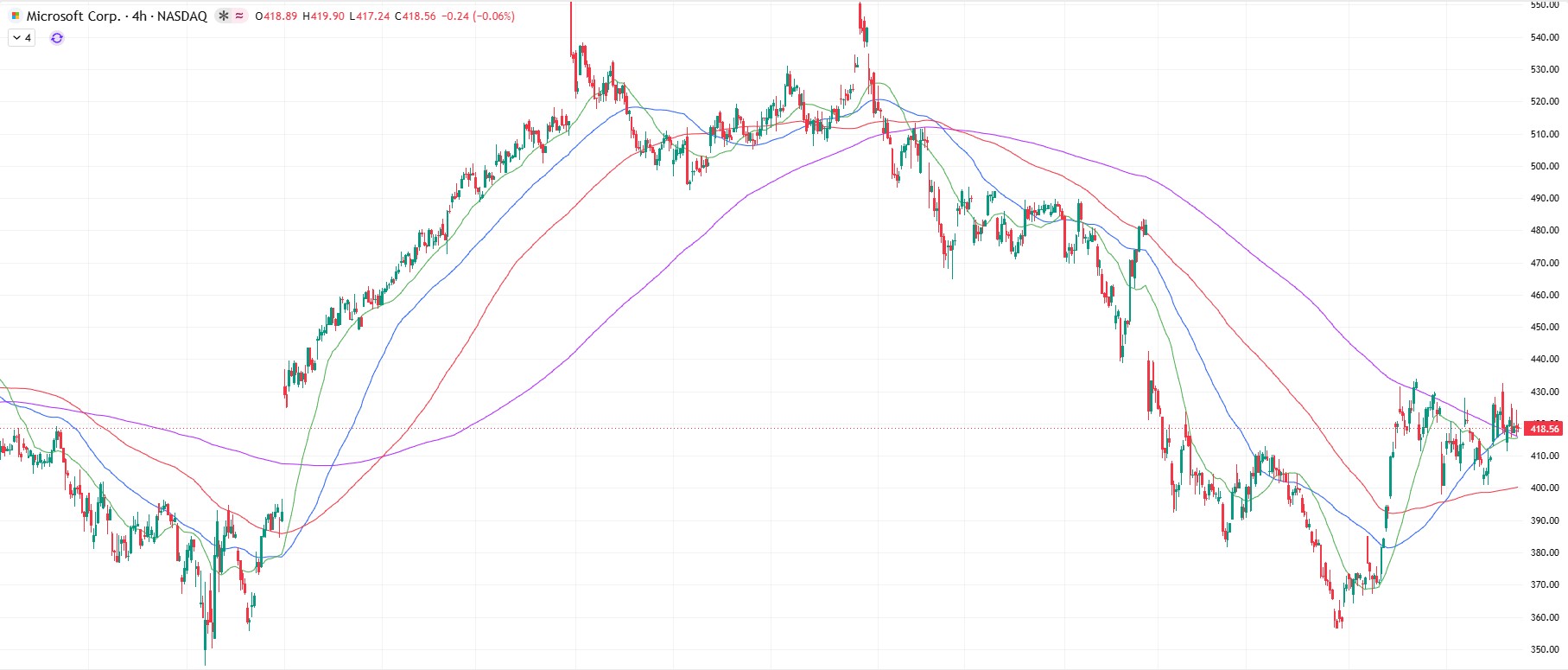
Massive capex spending continues to weigh on MSFT shares, with bulls still unable to break through resistance around the $430 area. As long as the stock remains below this level, downside risks toward the $390–385 range remain relevant. Nevertheless, as previously noted in Microsoft tests $430 as breakout odds continue to rise, weaker price action could eventually attract renewed buying interest.





Latest Microsoft News





-
 Afghanistan
-
 Albania
-
 Algeria
-
 Angola
-
 Argentina
-
 Armenia
-
 Australia
-
 Austria
-
 Azerbaijan
-
 Bahamas
-
 Bahrain
-
 Bangladesh
-
 Belarus
-
 Belgium
-
 Bolivia
-
 Botswana
-
 Brazil
-
 Brunei
-
 Bulgaria
-
 Cambodia
-
 Cameroon
-
 Canada
-
 Chile
Chile
-
 China
China
-
 Colombia
-
 Congo
Congo
-
 Costa Rica
-
 Cote d'Ivoire
-
 Croatia
-
 Cuba
Cuba
-
 Cyprus
-
 Czechia
-
 DR Congo
-
 Denmark
-
 Dominican Republic
-
 Ecuador
-
 Egypt
Egypt
-
 El Salvador
-
 Estonia
-
 Eswatini
-
 Ethiopia
-
 Finland
-
 France
-
 Georgia
-
 Germany
-
 Ghana
Ghana
-
 Greece
-
 Haiti
Haiti
-
 Hong Kong
-
 Hungary
-
 India
India
-
 Indonesia
-
 Iran, Islamic republic
-
 Iraq
Iraq
-
 Ireland
-
 Israel
-
 Italy
Italy
-
 Jamaica
-
 Japan
Japan
-
 Jordan
-
 Kazakhstan
-
 Kenya
Kenya
-
 Korea
Korea
-
 Kuwait
-
 Kyrgyzstan
-
 Laos
Laos
-
 Latvia
-
 Lebanon
-
 Lesotho
-
 Libya
Libya
-
 Lithuania
-
 Luxembourg
-
 Madagascar
-
 Malaysia
-
 Malta
Malta
-
 Mauritius
-
 Mexico
-
 Moldova
-
 Mongolia
-
 Montenegro
-
 Morocco
-
 Mozambique
-
 Myanmar
-
 Namibia
-
 Nepal
Nepal
-
 Netherlands
-
 New Zealand
-
 Nigeria
-
 North Macedonia
-
 Norway
-
 Oman
Oman
-
 Pakistan
-
 Palestine
-
 Panama
-
 Papua New Guinea
-
 Paraguay
-
 Peru
Peru
-
 Philippines
-
 Poland
-
 Portugal
-
 Puerto Rico
-
 Qatar
Qatar
-
 Reunion
-
 Romania
-
 Rwanda
-
 Saudi Arabia
-
 Serbia
-
 Singapore
-
 Slovakia
-
 Slovenia
-
 Somalia
-
 South Africa
-
 Spain
Spain
-
 Sri Lanka
-
 Sweden
-
 Switzerland
-
 Syria
Syria
-
 Taiwan
-
 Tajikistan
-
 Tanzania
-
 Thailand
-
 Trinidad and Tobago
-
 Tunisia
-
 Turkey
-
 UAE
UAE
-
 Uganda
-
 Ukraine
-
 United Kingdom
-
United States
-
 Uruguay
-
 Uzbekistan
-
 Venezuela
-
 Vietnam
-
 Yemen
Yemen
-
 Zambia
-
 Zimbabwe
- Forex
- Crypto












