
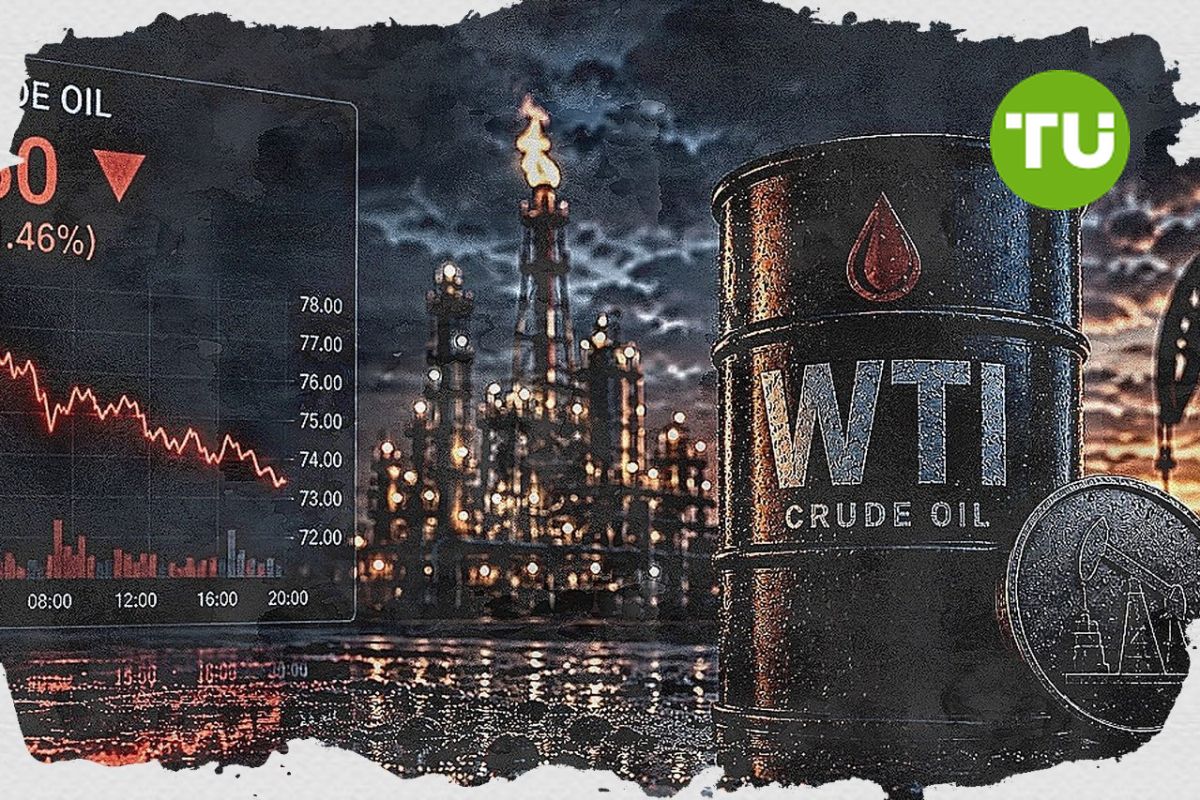
WTI continues to decline following a sharp pullback from recent highs. The main driver has been the market’s reassessment of geopolitical risks in the Middle East after progress in negotiations involving Iran and the gradual normalization of logistics through the Strait of Hormuz.

The reduced likelihood of major supply disruptions has led to a rapid erosion of the risk premium that had previously supported prices above $100 per barrel.
Fundamental backdrop remains mixed
Despite the recent decline, the market cannot yet be described as outright bearish. The latest EIA data showed a draw of 8.3 million barrels in U.S. commercial crude inventories, significantly exceeding market expectations. Inventories remain below seasonal averages, while refinery utilization rates continue to run at elevated levels. However, the positive impact of lower stockpiles is currently being outweighed by expectations of recovering supplies from Gulf producers and a gradual increase in output from OPEC+ members, raising concerns about higher supply in the second half of the year.
Technical picture points to a strengthening downtrend
WTI is currently trading around $74.5 after breaking through several key support levels. The price has firmly moved below the 50-, 100-, and 200-period moving averages, which now form a resistance zone between $78 and $85. Market structure remains clearly bearish, with a series of lower highs and lower lows intact, while downside momentum remains strong. Immediate support is located in the $73–74 area, and a break below could open the door toward $70–72. To ease the current pressure, buyers would need to regain control of the $78–80 zone.
What to watch next
Over the coming weeks, the key market drivers will remain U.S. crude inventory data, the pace of export normalization through the Strait of Hormuz, and further OPEC+ production decisions. Traders will also closely monitor any signals regarding the return of additional Iranian crude volumes to the global market.
For now, fundamental factors continue to point toward a gradual increase in supply, and the base-case scenario remains one of sustained pressure on WTI with the risk of further downside testing, as outlined in the article WTI updates local lows as returning supply and fading geopolitical risk premium weigh on prices, despite ongoing tensions in certain parts of the global oil market.












-
 Afghanistan
-
 Albania
-
 Algeria
-
 Angola
-
 Argentina
-
 Armenia
-
 Australia
-
 Austria
-
 Azerbaijan
-
 Bahamas
-
 Bahrain
-
 Bangladesh
-
 Belarus
-
 Belgium
-
 Bolivia
-
 Botswana
-
 Brazil
-
 Brunei
-
 Bulgaria
-
 Cambodia
-
 Cameroon
-
 Canada
-
 Chile
Chile
-
 China
China
-
 Colombia
-
 Congo
Congo
-
 Costa Rica
-
 Cote d'Ivoire
-
 Croatia
-
 Cuba
Cuba
-
 Cyprus
-
 Czechia
-
 DR Congo
-
 Denmark
-
 Dominican Republic
-
 Ecuador
-
 Egypt
Egypt
-
 El Salvador
-
 Estonia
-
 Eswatini
-
 Ethiopia
-
 Finland
-
 France
-
 Georgia
-
 Germany
-
 Ghana
Ghana
-
 Greece
-
 Haiti
Haiti
-
 Hong Kong
-
 Hungary
-
 India
India
-
 Indonesia
-
 Iran, Islamic republic
-
 Iraq
Iraq
-
 Ireland
-
 Israel
-
 Italy
Italy
-
 Jamaica
-
 Japan
Japan
-
 Jordan
-
 Kazakhstan
-
 Kenya
Kenya
-
 Korea
Korea
-
 Kuwait
-
 Kyrgyzstan
-
 Laos
Laos
-
 Latvia
-
 Lebanon
-
 Lesotho
-
 Libya
Libya
-
 Lithuania
-
 Luxembourg
-
 Madagascar
-
 Malaysia
-
 Malta
Malta
-
 Mauritius
-
 Mexico
-
 Moldova
-
 Mongolia
-
 Montenegro
-
 Morocco
-
 Mozambique
-
 Myanmar
-
 Namibia
-
 Nepal
Nepal
-
 Netherlands
-
 New Zealand
-
 Nigeria
-
 North Macedonia
-
 Norway
-
 Oman
Oman
-
 Pakistan
-
 Palestine
-
 Panama
-
 Papua New Guinea
-
 Paraguay
-
 Peru
Peru
-
 Philippines
-
 Poland
-
 Portugal
-
 Puerto Rico
-
 Qatar
Qatar
-
 Reunion
-
 Romania
-
 Rwanda
-
 Saudi Arabia
-
 Serbia
-
 Singapore
-
 Slovakia
-
 Slovenia
-
 Somalia
-
 South Africa
-
 Spain
Spain
-
 Sri Lanka
-
 Sweden
-
 Switzerland
-
 Syria
Syria
-
 Taiwan
-
 Tajikistan
-
 Tanzania
-
 Thailand
-
 Trinidad and Tobago
-
 Tunisia
-
 Turkey
-
 UAE
UAE
-
 Uganda
-
 Ukraine
-
 United Kingdom
-
United States
-
 Uruguay
-
 Uzbekistan
-
 Venezuela
-
 Vietnam
-
 Yemen
Yemen
-
 Zambia
-
 Zimbabwe
- Forex
- Crypto












