
WTI updates local lows as returning supply and fading geopolitical risk premium weigh on prices
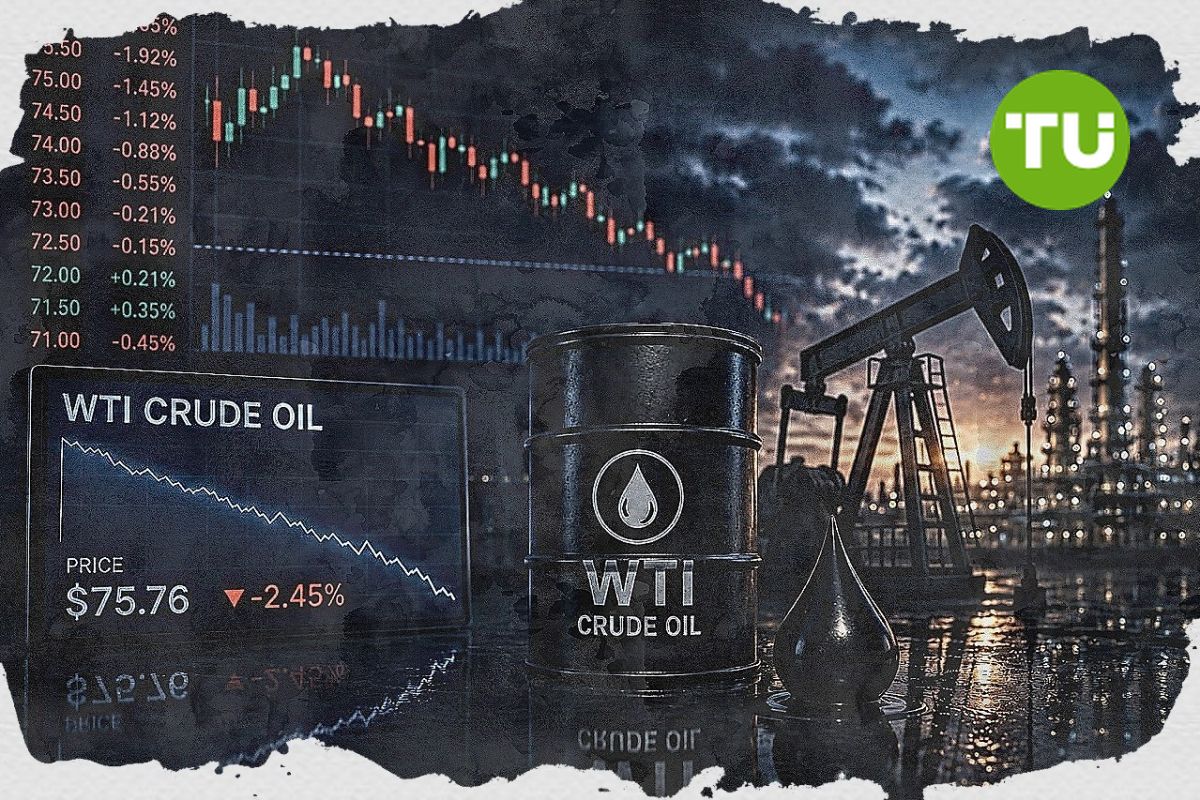
WTI is trading near $75–76 per barrel, remaining under heavy pressure after the sharp selloff seen over recent sessions. The primary catalyst behind the decline has been easing concerns over potential supply disruptions in the Persian Gulf.
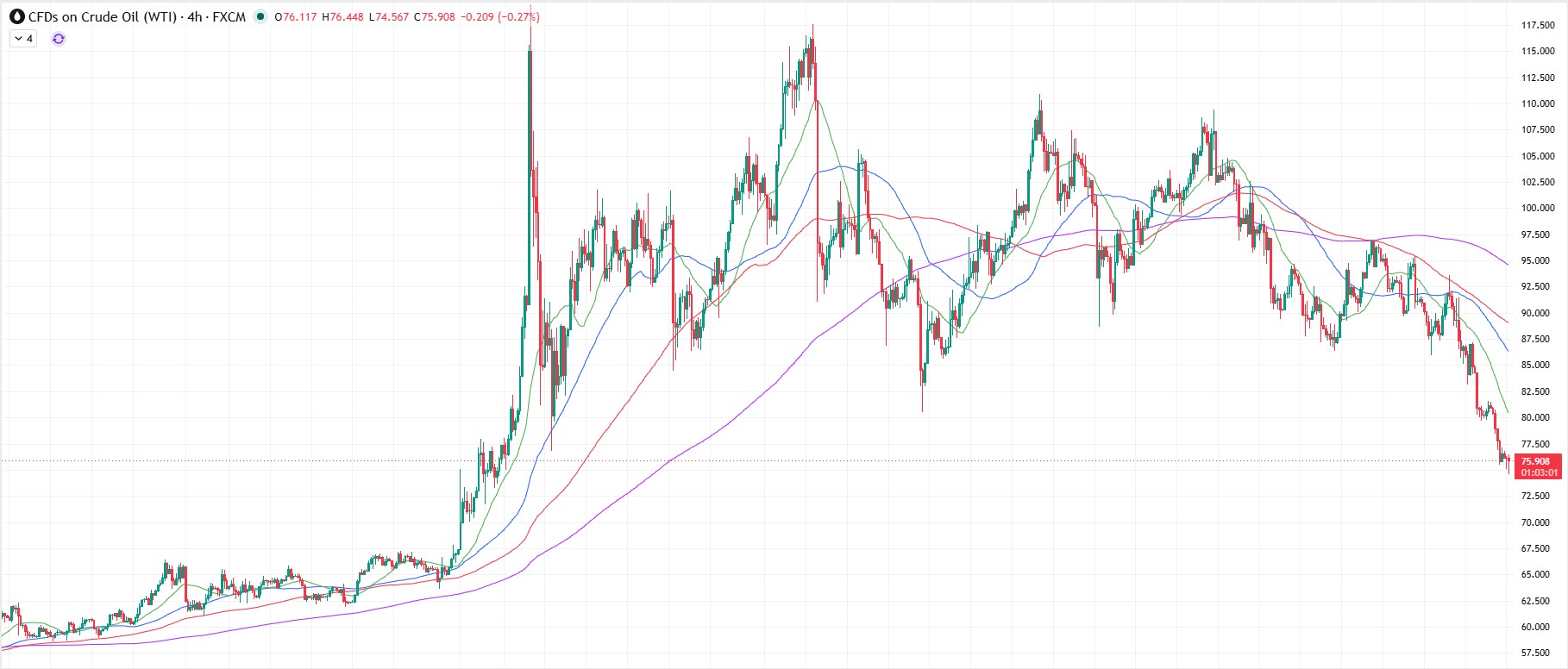
Market participants are reassessing risk following reports of a gradual normalization of the situation surrounding Iran and improving prospects for shipping through the Strait of Hormuz. As a result, WTI has surrendered more than 15% from its recent highs, with investors increasingly pricing in the return of previously disrupted supply volumes.
Supply-demand balance: mixed signals
Despite the recent decline, the fundamental backdrop is not unequivocally bearish. U.S. commercial crude inventories have fallen for several consecutive weeks, indicating that refinery demand remains relatively resilient. At the same time, OPEC continues to project growth in global oil consumption in 2026, although demand forecasts within the organization have been adjusted periodically. In the near term, however, the market appears to be focusing more on the prospect of increasing supply than on supportive inventory data.
Technical outlook: bearish trend remains intact
Based on the 4-hour chart, market structure remains decisively bearish. Prices are trading below all major moving averages, while the averages themselves are aligned in a classic downward configuration. The latest leg lower has been accompanied by accelerating downside momentum and fresh local lows, confirming that sellers remain in control. Immediate support is located in the $74–75 area, with the next downside target seen around $72–73. To alleviate bearish pressure, buyers would need to reclaim the $78–80 zone, which currently represents the first significant resistance area.
Near-term scenario
Unless the market receives confirmation of new supply disruptions or an unexpected production cut from major producers, the base-case scenario remains biased toward further downside pressure and additional tests of lower price levels. That said, volatility is likely to remain elevated, as any developments related to the Strait of Hormuz, Iran, OPEC+, or U.S. inventory data could trigger sharp countertrend rebounds.
In the short term, as highlighted in WTI loses $80 support as geopolitical risk premium eases further, the advantage remains with sellers. However, the $74–75 region could attract increased profit-taking activity from short positions and potentially serve as a platform for a temporary rebound.





Latest WTI News






-
 Afghanistan
-
 Albania
-
 Algeria
-
 Angola
-
 Argentina
-
 Armenia
-
 Australia
-
 Austria
-
 Azerbaijan
-
 Bahamas
-
 Bahrain
-
 Bangladesh
-
 Belarus
-
 Belgium
-
 Bolivia
-
 Botswana
-
 Brazil
-
 Brunei
-
 Bulgaria
-
 Cambodia
-
 Cameroon
-
 Canada
-
 Chile
Chile
-
 China
China
-
 Colombia
-
 Congo
Congo
-
 Costa Rica
-
 Cote d'Ivoire
-
 Croatia
-
 Cuba
Cuba
-
 Cyprus
-
 Czechia
-
 DR Congo
-
 Denmark
-
 Dominican Republic
-
 Ecuador
-
 Egypt
Egypt
-
 El Salvador
-
 Estonia
-
 Eswatini
-
 Ethiopia
-
 Finland
-
 France
-
 Georgia
-
 Germany
-
 Ghana
Ghana
-
 Greece
-
 Haiti
Haiti
-
 Hong Kong
-
 Hungary
-
 India
India
-
 Indonesia
-
 Iran, Islamic republic
-
 Iraq
Iraq
-
 Ireland
-
 Israel
-
 Italy
Italy
-
 Jamaica
-
 Japan
Japan
-
 Jordan
-
 Kazakhstan
-
 Kenya
Kenya
-
 Korea
Korea
-
 Kuwait
-
 Kyrgyzstan
-
 Laos
Laos
-
 Latvia
-
 Lebanon
-
 Lesotho
-
 Libya
Libya
-
 Lithuania
-
 Luxembourg
-
 Madagascar
-
 Malaysia
-
 Malta
Malta
-
 Mauritius
-
 Mexico
-
 Moldova
-
 Mongolia
-
 Montenegro
-
 Morocco
-
 Mozambique
-
 Myanmar
-
 Namibia
-
 Nepal
Nepal
-
 Netherlands
-
 New Zealand
-
 Nigeria
-
 North Macedonia
-
 Norway
-
 Oman
Oman
-
 Pakistan
-
 Palestine
-
 Panama
-
 Papua New Guinea
-
 Paraguay
-
 Peru
Peru
-
 Philippines
-
 Poland
-
 Portugal
-
 Puerto Rico
-
 Qatar
Qatar
-
 Reunion
-
 Romania
-
 Rwanda
-
 Saudi Arabia
-
 Serbia
-
 Singapore
-
 Slovakia
-
 Slovenia
-
 Somalia
-
 South Africa
-
 Spain
Spain
-
 Sri Lanka
-
 Sweden
-
 Switzerland
-
 Syria
Syria
-
 Taiwan
-
 Tajikistan
-
 Tanzania
-
 Thailand
-
 Trinidad and Tobago
-
 Tunisia
-
 Turkey
-
 UAE
UAE
-
 Uganda
-
 Ukraine
-
 United Kingdom
-
United States
-
 Uruguay
-
 Uzbekistan
-
 Venezuela
-
 Vietnam
-
 Yemen
Yemen
-
 Zambia
-
 Zimbabwe
- Forex
- Crypto












