
Amazon stock drops 16% YTD as tariff risks cloud outlook ahead of earnings

Amazon.com Inc. (NASDAQ: AMZN) is trading at $184.42 as of May 1, 2025, reflecting a year-to-date decline of approximately 16%.
The stock has come under renewed selling pressure in recent sessions, driven primarily by investor caution ahead of the company’s first-quarter earnings report and mounting concerns about the implications of escalating U.S. tariffs on Chinese imports.
From a technical perspective, AMZN has broken below its 50-day moving average, which now serves as immediate resistance at around $195. This breach has increased short-term bearish sentiment, with price action also falling below the 20-day moving average. Momentum indicators are trending downward, and the Relative Strength Index (RSI) has dipped below 40, approaching oversold conditions. This could indicate a potential technical rebound if buying interest emerges at key support levels.
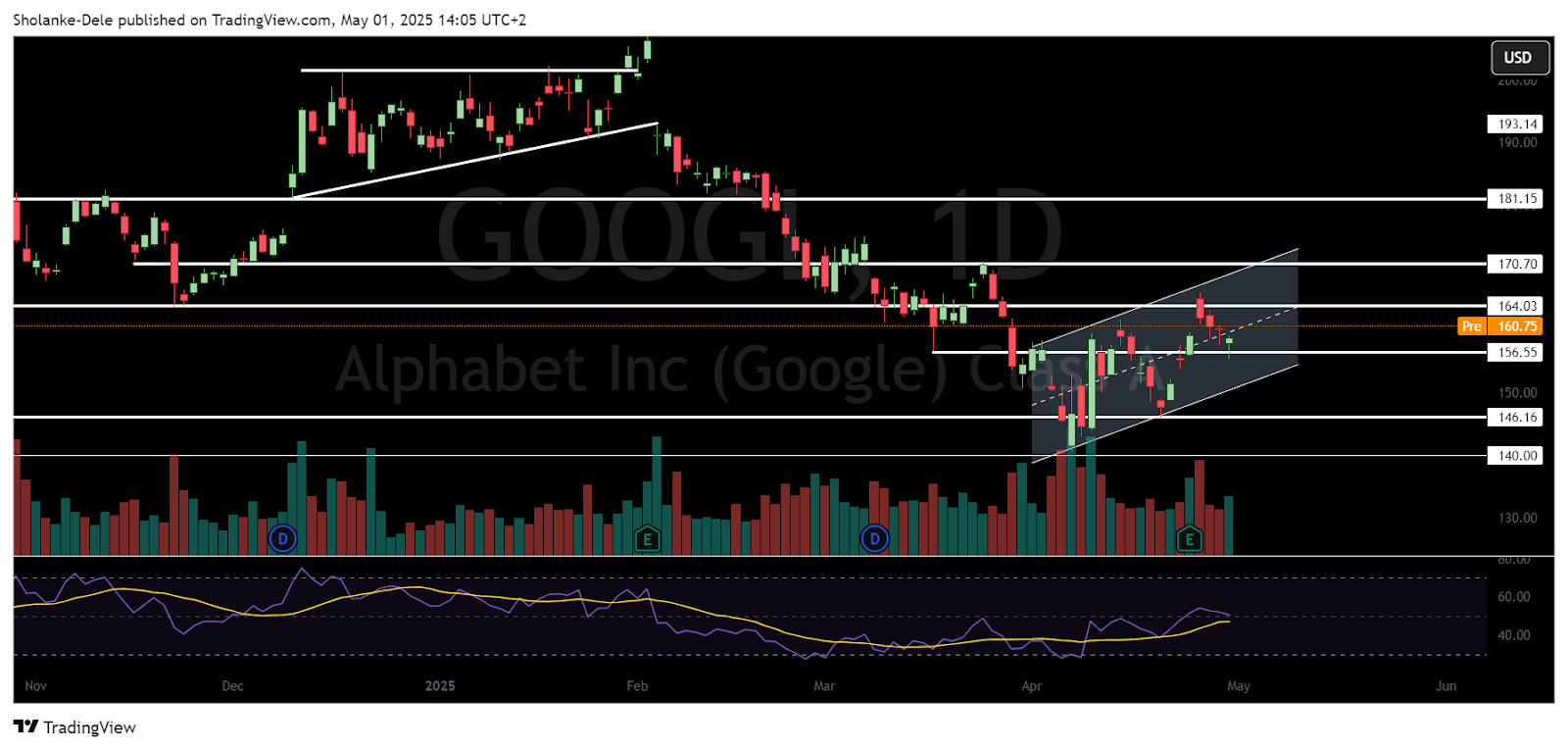
AMZN stock price dynamics (March 2025 - May 2025). Source: TradingView.
Immediate support lies near $180, a psychological and technical threshold tested in previous correction phases. A break below this could open the path toward $175, coinciding with the 100-day moving average. On the upside, bulls would need to recapture $195 to regain short-term control, with further resistance seen at the $203–$205 range, where the stock stalled in March.
Tariffs, third-party exposure, and analyst sentiment
The broader market context remains uncertain, and for Amazon, the macro environment is further complicated by policy developments. The Trump administration’s tightening of trade policy with China is a direct concern for Amazon’s massive e-commerce operations. According to a detailed Investopedia report, around 18% of Amazon's product catalog comprises goods imported directly from China. More significantly, nearly 60% of its third-party sellers—who represent over half of Amazon's marketplace revenue—are dependent on Chinese supply chains. This exposes the company to both cost inflation and potential product availability disruptions.
As tariffs rise, the cost of sourcing goods from China will likely increase. Amazon could either pass these costs on to consumers—potentially weakening demand—or absorb the impact, squeezing margins. Neither option bodes well in the short term. Moreover, investors will be paying close attention to how Amazon navigates this issue in Thursday’s Q1 earnings call, especially given the context of already compressed operating margins in its core e-commerce division.
Despite this overhang, Wall Street analysts remain overwhelmingly bullish on Amazon’s long-term growth trajectory. All 26 analysts tracked by Visible Alpha maintain a "buy" rating on AMZN stock. The consensus 12-month price target stands at approximately $241 per share, suggesting an upside potential of over 30% from current levels. Many analysts are betting on continued strength in Amazon Web Services (AWS), growing profitability in digital advertising, and operational leverage across logistics.
Cautious optimism with potential for short-term rebound
Looking ahead, Amazon’s stock performance in the coming weeks will likely be dictated by the contents of its Q1 2025 earnings release and management commentary. Should the company deliver stronger-than-expected results, particularly in its high-margin AWS and advertising segments, the stock could quickly rebound toward the $195 resistance area and possibly retest $200 in a relief rally. Encouraging guidance for Q2 could extend this move further.
However, if earnings disappoint, or if Amazon reveals substantial exposure to cost pressures from tariffs without a clear mitigation strategy, the stock risks further downside. A close below the $180 level could trigger more selling, especially if broader market sentiment deteriorates.
Investor expectations for Amazon remain high, driven by the strong performance of AWS and its rapidly expanding advertising segment. These high-margin businesses are seen as key to offsetting the lower profitability of Amazon’s retail and logistics operations.















-
 Afghanistan
-
 Albania
-
 Algeria
-
 Angola
-
 Argentina
-
 Armenia
-
 Australia
-
 Austria
-
 Azerbaijan
-
 Bahamas
-
 Bahrain
-
 Bangladesh
-
 Belarus
-
 Belgium
-
 Bolivia
-
 Botswana
-
 Brazil
-
 Brunei
-
 Bulgaria
-
 Cambodia
-
 Cameroon
-
 Canada
-
 Chile
Chile
-
 China
China
-
 Colombia
-
 Congo
Congo
-
 Costa Rica
-
 Cote d'Ivoire
-
 Croatia
-
 Cuba
Cuba
-
 Cyprus
-
 Czechia
-
 DR Congo
-
 Denmark
-
 Dominican Republic
-
 Ecuador
-
 Egypt
Egypt
-
 El Salvador
-
 Estonia
-
 Eswatini
-
 Ethiopia
-
 Finland
-
 France
-
 Georgia
-
 Germany
-
 Ghana
Ghana
-
 Greece
-
 Haiti
Haiti
-
 Hong Kong
-
 Hungary
-
 India
India
-
 Indonesia
-
 Iran, Islamic republic
-
 Iraq
Iraq
-
 Ireland
-
 Israel
-
 Italy
Italy
-
 Jamaica
-
 Japan
Japan
-
 Jordan
-
 Kazakhstan
-
 Kenya
Kenya
-
 Korea
Korea
-
 Kuwait
-
 Kyrgyzstan
-
 Laos
Laos
-
 Latvia
-
 Lebanon
-
 Lesotho
-
 Libya
Libya
-
 Lithuania
-
 Luxembourg
-
 Madagascar
-
 Malaysia
-
 Malta
Malta
-
 Mauritius
-
 Mexico
-
 Moldova
-
 Mongolia
-
 Montenegro
-
 Morocco
-
 Mozambique
-
 Myanmar
-
 Namibia
-
 Nepal
Nepal
-
 Netherlands
-
 New Zealand
-
 Nigeria
-
 North Macedonia
-
 Norway
-
 Oman
Oman
-
 Pakistan
-
 Palestine
-
 Panama
-
 Papua New Guinea
-
 Paraguay
-
 Peru
Peru
-
 Philippines
-
 Poland
-
 Portugal
-
 Puerto Rico
-
 Qatar
Qatar
-
 Reunion
-
 Romania
-
 Rwanda
-
 Saudi Arabia
-
 Serbia
-
 Singapore
-
 Slovakia
-
 Slovenia
-
 Somalia
-
 South Africa
-
 Spain
Spain
-
 Sri Lanka
-
 Sweden
-
 Switzerland
-
 Syria
Syria
-
 Taiwan
-
 Tajikistan
-
 Tanzania
-
 Thailand
-
 Trinidad and Tobago
-
 Tunisia
-
 Turkey
-
 UAE
UAE
-
 Uganda
-
 Ukraine
-
 United Kingdom
-
United States
-
 Uruguay
-
 Uzbekistan
-
 Venezuela
-
 Vietnam
-
 Yemen
Yemen
-
 Zambia
-
 Zimbabwe
- Forex
- Crypto












