
Amazon bets on custom AI chips for consumer devices
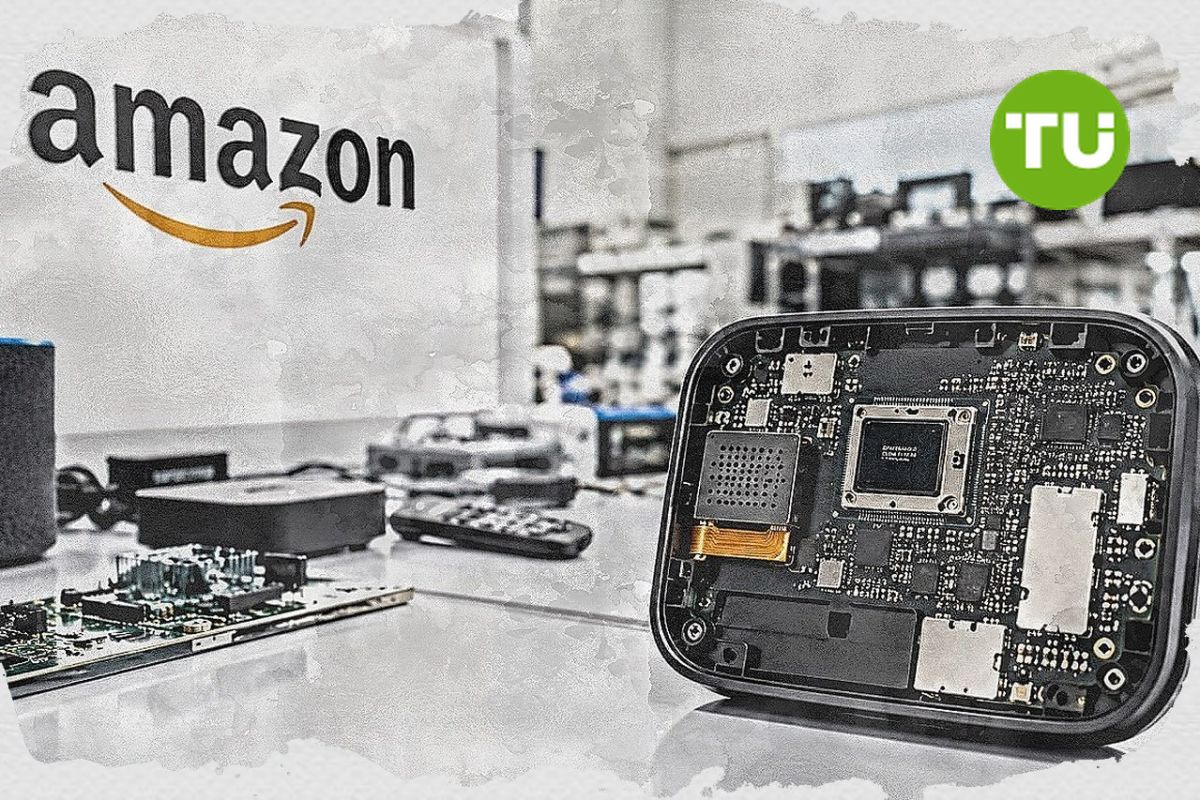
Amazon is putting more of its consumer hardware strategy behind chips it designs itself, aiming to run more artificial intelligence directly on devices such as Echo speakers, smart displays, and Fire TV products. The shift shows how major technology companies are trying to control more of the hardware behind AI assistants as the competition moves from cloud models into homes and personal devices.
Highlights
- Amazon is designing custom AI chips for some consumer devices.
- The chips are already used in Echo Show and Fire TV products.
- AZ3 and AZ3 Pro are built to support on-device AI.
- Alexa+ is central to Amazon’s device ecosystem strategy.
Panos Panay, Amazon’s head of devices and services, told CNBC that the company makes end-to-end silicon for some devices it ships, including the Echo Show 8, Echo Show 11, and Fire TV.
A deeper push into on-device AI
Amazon introduced its AZ3 and AZ3 Pro chips in 2025 as part of a broader refresh of Echo hardware built for Alexa+, its upgraded AI assistant. The chips are designed to support more local AI processing, a direction many device makers see as faster and potentially more private than sending every request to cloud servers. TechCrunch reported at the time that Amazon’s new Echo devices used custom silicon with an AI accelerator for edge models.
The approach mirrors a wider industry pattern. Apple has long used custom chips to tie hardware and software more tightly together. Google and Samsung are also embedding AI features deeper into phones, operating systems, and smart-home products. For Amazon, the goal is to make Alexa+ more responsive across a broad device base, from Echo and Ring to Fire TV.
Amazon is not fully replacing outside suppliers. Panay said the company still uses chips from partners such as Qualcomm. But custom silicon gives Amazon more control over the performance, privacy, and cost of AI features it wants to build into critical devices.
Future devices move beyond screens
The chip strategy is tied to a broader rethink of how users interact with technology. Panay said Amazon is exploring devices built around conversation and context rather than apps and screens. He also said the company has a lab full of experimental AI devices, though the category remains unsettled.
That includes on-the-go hardware. Amazon acquired Bee last year, a maker of $49.99 wristbands that can listen, create lists, answer questions, and draft notes. The purchase points to Amazon’s interest in portable AI devices that stay connected to a user’s home and work context.
The next front in AI hardware
The stakes are high because AI assistants are becoming less about single apps and more about ecosystems. Amazon wants Alexa+ to connect its home devices, entertainment products, shopping services, and future wearables into one persistent assistant.
Custom chips could help Amazon lower latency, improve privacy, and make devices feel more useful without depending only on cloud processing. The challenge is execution. Amazon must prove that smarter hardware can drive demand in categories where consumers have often been slower to upgrade than in smartphones. If it succeeds, the Echo and Fire TV lines could become more than smart-home accessories. They could become the hardware base for Amazon’s next consumer AI platform.
Earlier, we reported that Samsung and SK Hynix plan massive AI chip investments in South Korea.


Latest Amazon News







-
 Afghanistan
-
 Albania
-
 Algeria
-
 Angola
-
 Argentina
-
 Armenia
-
 Australia
-
 Austria
-
 Azerbaijan
-
 Bahamas
-
 Bahrain
-
 Bangladesh
-
 Belarus
-
 Belgium
-
 Bolivia
-
 Botswana
-
 Brazil
-
 Brunei
-
 Bulgaria
-
 Cambodia
-
 Cameroon
-
 Canada
-
 Chile
Chile
-
 China
China
-
 Colombia
-
 Congo
Congo
-
 Costa Rica
-
 Cote d'Ivoire
-
 Croatia
-
 Cuba
Cuba
-
 Cyprus
-
 Czechia
-
 DR Congo
-
 Denmark
-
 Dominican Republic
-
 Ecuador
-
 Egypt
Egypt
-
 El Salvador
-
 Estonia
-
 Eswatini
-
 Ethiopia
-
 Finland
-
 France
-
 Georgia
-
 Germany
-
 Ghana
Ghana
-
 Greece
-
 Haiti
Haiti
-
 Hong Kong
-
 Hungary
-
 India
India
-
 Indonesia
-
 Iran, Islamic republic
-
 Iraq
Iraq
-
 Ireland
-
 Israel
-
 Italy
Italy
-
 Jamaica
-
 Japan
Japan
-
 Jordan
-
 Kazakhstan
-
 Kenya
Kenya
-
 Korea
Korea
-
 Kuwait
-
 Kyrgyzstan
-
 Laos
Laos
-
 Latvia
-
 Lebanon
-
 Lesotho
-
 Libya
Libya
-
 Lithuania
-
 Luxembourg
-
 Madagascar
-
 Malaysia
-
 Malta
Malta
-
 Mauritius
-
 Mexico
-
 Moldova
-
 Mongolia
-
 Montenegro
-
 Morocco
-
 Mozambique
-
 Myanmar
-
 Namibia
-
 Nepal
Nepal
-
 Netherlands
-
 New Zealand
-
 Nigeria
-
 North Macedonia
-
 Norway
-
 Oman
Oman
-
 Pakistan
-
 Palestine
-
 Panama
-
 Papua New Guinea
-
 Paraguay
-
 Peru
Peru
-
 Philippines
-
 Poland
-
 Portugal
-
 Puerto Rico
-
 Qatar
Qatar
-
 Reunion
-
 Romania
-
 Rwanda
-
 Saudi Arabia
-
 Serbia
-
 Singapore
-
 Slovakia
-
 Slovenia
-
 Somalia
-
 South Africa
-
 Spain
Spain
-
 Sri Lanka
-
 Sweden
-
 Switzerland
-
 Syria
Syria
-
 Taiwan
-
 Tajikistan
-
 Tanzania
-
 Thailand
-
 Trinidad and Tobago
-
 Tunisia
-
 Turkey
-
 UAE
UAE
-
 Uganda
-
 Ukraine
-
 United Kingdom
-
United States
-
 Uruguay
-
 Uzbekistan
-
 Venezuela
-
 Vietnam
-
 Yemen
Yemen
-
 Zambia
-
 Zimbabwe
- Forex
- Crypto












