
Tesla stock drops 3.6% as Eberhard warns on leadership and strategy flaws
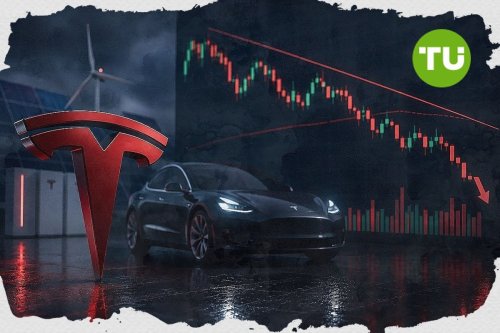
As of August 1, Tesla stock is trading at $306.99, down 3.6% in the past 24 hours.
This marks a continued downtrend after disappointing earnings and weaker-than-expected delivery data.
Highlights
- Tesla stock declined 3.6% as weak Q2 deliveries and revenue missed expectations.
- Technical indicators suggest limited upside without stronger fundamentals or AI-related revenue.
- Cofounder Martin Eberhard’s public criticism of Tesla’s leadership and strategic missteps has reignited concerns over management direction.
Tesla's share price has declined more than 20% year-to-date, erasing much of the recovery it experienced in Q1 2025. The technical setup is leaning bearish. The stock is hovering just above a key support zone at $300–305. This level served as a major pivot point earlier in the year and now functions as a critical psychological threshold.
A breakdown below $300 could trigger a more significant correction toward the $275–285 range, while a sustained bounce could see TSLA test its next resistance band between $320 and $330. Moving averages reinforce this cautious view. The 50-day moving average has turned downward and currently intersects around $315, while the 200-day moving average is positioned closer to $360.

Tesla stock price dynamics (June 2025 - August 2025). Source: TradingView
This wide gap between short- and long-term trends highlights the loss of upward momentum. Technical indicators like RSI are nearing oversold territory, suggesting that a short-term bounce is possible, but unlikely to develop into a strong rally without supportive fundamentals.
Market context and cofounder commentary
Tesla’s recent Q2 2025 results revealed a 23% drop in earnings per share and a 12% decline in revenue year-over-year. Vehicle deliveries rose slightly quarter-over-quarter to 384,122 units, but still fell short of analysts’ expectations. This underperformance, combined with the phase-out of U.S. EV tax credits and rising international tariffs, has significantly impacted investor sentiment.
To counter slowing demand, Tesla is expanding its focus beyond core EV sales. CEO Elon Musk has accelerated development of Tesla’s autonomous ride-hailing network in Austin and hinted at a broader rollout later this year. At the same time, Tesla is investing heavily in AI infrastructure and robotics, including the Optimus humanoid robot project. These initiatives show promise but remain speculative in the absence of meaningful revenue contribution.
Tesla also announced a major $4.3 billion agreement with LG Energy to supply lithium-iron-phosphate (LFP) battery cells for its lower-cost models and energy storage products. In parallel, it secured a multi-year chip supply deal with Samsung’s Texas facility to support its AI compute needs. These supply chain moves suggest Tesla is preparing for scale in both EV and AI segments.
Meanwhile, Tesla cofounder Martin Eberhard, in a recent interview with Business Insider, offered blunt reflections on his time at the company. He advised his younger self to quickly dismiss engineers who demand control without delivering results, warning against managerial drift and bloated decision-making. He also cautioned startups not to imitate Tesla’s multi-model strategy, which he described as a mistake. While Eberhard no longer holds influence within Tesla, his comments highlight ongoing concerns about internal leadership, culture, and focus under Elon Musk.
Price forecast and scenarios
In the short term, Tesla stock is expected to remain within a volatile range. A potential bounce from the $300 support level could lift shares to $320–330 if broader tech sentiment improves and Tesla announces early traction in its robotaxi or energy storage businesses.
However, if Tesla successfully launches its robotaxi network and shows signs of AI monetization, the stock could climb toward $350 in the coming quarter. Investors would need clear data points on user adoption and cost efficiency for this to materialize.
Tesla is restructuring its supply chain to reduce reliance on China, securing a $4.3 billion LFP battery deal with LG Energy and a $16.5 billion AI chip contract with Samsung. These moves aim to mitigate tariff risks and support Tesla’s autonomous driving and robotaxi ambitions.









-
 Afghanistan
-
 Albania
-
 Algeria
-
 Angola
-
 Argentina
-
 Armenia
-
 Australia
-
 Austria
-
 Azerbaijan
-
 Bahamas
-
 Bahrain
-
 Bangladesh
-
 Belarus
-
 Belgium
-
 Bolivia
-
 Botswana
-
 Brazil
-
 Brunei
-
 Bulgaria
-
 Cambodia
-
 Cameroon
-
 Canada
-
 Chile
Chile
-
 China
China
-
 Colombia
-
 Congo
Congo
-
 Costa Rica
-
 Cote d'Ivoire
-
 Croatia
-
 Cuba
Cuba
-
 Cyprus
-
 Czechia
-
 DR Congo
-
 Denmark
-
 Dominican Republic
-
 Ecuador
-
 Egypt
Egypt
-
 El Salvador
-
 Estonia
-
 Eswatini
-
 Ethiopia
-
 Finland
-
 France
-
 Georgia
-
 Germany
-
 Ghana
Ghana
-
 Greece
-
 Haiti
Haiti
-
 Hong Kong
-
 Hungary
-
 India
India
-
 Indonesia
-
 Iran, Islamic republic
-
 Iraq
Iraq
-
 Ireland
-
 Israel
-
 Italy
Italy
-
 Jamaica
-
 Japan
Japan
-
 Jordan
-
 Kazakhstan
-
 Kenya
Kenya
-
 Korea
Korea
-
 Kuwait
-
 Kyrgyzstan
-
 Laos
Laos
-
 Latvia
-
 Lebanon
-
 Lesotho
-
 Libya
Libya
-
 Lithuania
-
 Luxembourg
-
 Madagascar
-
 Malaysia
-
 Malta
Malta
-
 Mauritius
-
 Mexico
-
 Moldova
-
 Mongolia
-
 Montenegro
-
 Morocco
-
 Mozambique
-
 Myanmar
-
 Namibia
-
 Nepal
Nepal
-
 Netherlands
-
 New Zealand
-
 Nigeria
-
 North Macedonia
-
 Norway
-
 Oman
Oman
-
 Pakistan
-
 Palestine
-
 Panama
-
 Papua New Guinea
-
 Paraguay
-
 Peru
Peru
-
 Philippines
-
 Poland
-
 Portugal
-
 Puerto Rico
-
 Qatar
Qatar
-
 Reunion
-
 Romania
-
 Rwanda
-
 Saudi Arabia
-
 Serbia
-
 Singapore
-
 Slovakia
-
 Slovenia
-
 Somalia
-
 South Africa
-
 Spain
Spain
-
 Sri Lanka
-
 Sweden
-
 Switzerland
-
 Syria
Syria
-
 Taiwan
-
 Tajikistan
-
 Tanzania
-
 Thailand
-
 Trinidad and Tobago
-
 Tunisia
-
 Turkey
-
 UAE
UAE
-
 Uganda
-
 Ukraine
-
 United Kingdom
-
United States
-
 Uruguay
-
 Uzbekistan
-
 Venezuela
-
 Vietnam
-
 Yemen
Yemen
-
 Zambia
-
 Zimbabwe
- Forex
- Crypto











