
Tesla stock drops 1.1% as tax credit expiration concerns grow
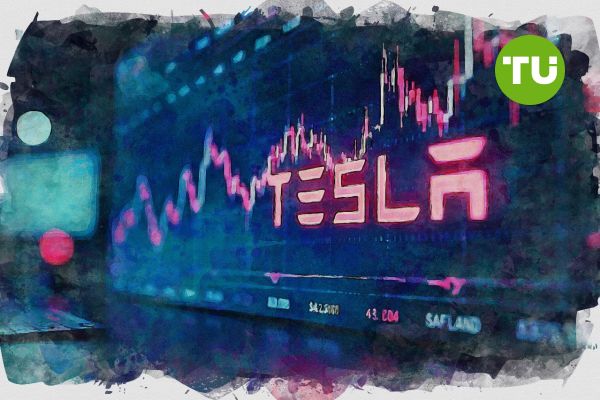
As of August 15, Tesla stock is trading at $335.58, down 1.12% over the past 24 hours. The stock moved between an intraday high of $341.95 and a low of $330.61, reflecting heightened volatility around its robotaxi program.
Highlights
- Tesla declined 1.12% to $335.58 amid rising investor concerns about the looming expiration of the $7,500 EV tax credit.
- Despite record trading volume and optimism surrounding the robotaxi initiative, the stock failed to hold key resistance levels.
- Technical indicators suggest short-term consolidation, with volatility likely to remain elevated.
Tesla recently broke through the $338 resistance level earlier this week, a level flagged by Fundstrat’s Mark Newton as a short-term bullish trigger. However, the stock failed to hold above that threshold, retreating below it on strong volume, suggesting a possible false breakout and the onset of consolidation.
The 50-day moving average is currently hovering around $291, while the 200-day moving average sits near $223, both of which are supportive of a broader bullish structure, though the stock appears technically overbought in the short term. RSI levels remain elevated near 70, indicating some degree of exhaustion after Tesla’s 40% rally since early July. Options activity is skewing bullish with significant open interest in calls above the $350 level for near-term expiries.

Tesla stock price dynamics (June 2025 - August 2025). Source: TradingView
Additionally, Fibonacci retracement levels drawn from the July low near $240 to the recent high around $344 suggest that the key 23.6% retracement zone at approximately $318 could act as first-line support if selling pressure intensifies. A break below that could expose Tesla to further downside toward the psychologically significant $300 level. On the upside, any sustained move above $342 would need to be confirmed by volume expansion and a close above the $350 strike zone to signal renewed momentum.
Robotaxi rollout energizes bulls
The sharp divergence in investor sentiment is rooted in two competing narratives: the promise of autonomous revenue streams and the risk of near-term demand cliffs. Tesla CEO Elon Musk has reignited enthusiasm with a public push for the company’s Full Self-Driving (FSD) platform and robotaxi deployment. The program, which began limited operations in Austin, is reportedly on track for trials in the San Francisco Bay Area and potentially New York City by year-end. Musk claims the service could soon reach “half of the U.S. population,” dependent on local regulatory greenlights.
This optimism is fueling a re-rating of Tesla from a pure-play EV manufacturer to an artificial intelligence and mobility platform company. However, analysts remain cautious. MorningStar’s latest valuation still pegs Tesla at $250, citing concerns about monetization timelines and uncertain margins in autonomous ride-hailing. The stock’s current price implies a strong degree of forward optimism that has yet to be validated through earnings.
Meanwhile, investors are also digesting the implications of the upcoming expiration of the federal $7,500 EV tax credit for Tesla models. The incentive, set to lapse in September for several models due to battery sourcing thresholds, has pulled forward demand into Q3. While this may boost near-term delivery figures, it poses a headwind for Q4 and beyond, particularly in North America where affordability remains a concern amid high interest rates.
Range likely before next catalyst
In the near term, Tesla’s price action is likely to remain within a $320 to $350 consolidation range, as investors weigh the tangible impact of robotaxi progress and delivery metrics ahead of Q3 earnings. The elevated volatility and mixed technical signals suggest the market is awaiting clearer direction before committing to a breakout or breakdown.
The base case scenario anticipates continued sideways movement, with moderate bullish pressure lifting the stock toward the $350–$360 area if there are concrete announcements of regulatory approvals or early adoption in new cities. Positive delivery figures bolstered by tax-credit-driven sales could also sustain this push.
Tesla’s recent gains are fueled more by excitement over its AI-driven robotaxi and FSD programs than traditional EV sales. A key catalyst was the announcement of regulatory approval in Texas, signaling progress toward autonomous vehicle deployment.




Latest Tesla News







-
 Afghanistan
-
 Albania
-
 Algeria
-
 Angola
-
 Argentina
-
 Armenia
-
 Australia
-
 Austria
-
 Azerbaijan
-
 Bahamas
-
 Bahrain
-
 Bangladesh
-
 Belarus
-
 Belgium
-
 Bolivia
-
 Botswana
-
 Brazil
-
 Brunei
-
 Bulgaria
-
 Cambodia
-
 Cameroon
-
 Canada
-
 Chile
Chile
-
 China
China
-
 Colombia
-
 Congo
Congo
-
 Costa Rica
-
 Cote d'Ivoire
-
 Croatia
-
 Cuba
Cuba
-
 Cyprus
-
 Czechia
-
 DR Congo
-
 Denmark
-
 Dominican Republic
-
 Ecuador
-
 Egypt
Egypt
-
 El Salvador
-
 Estonia
-
 Eswatini
-
 Ethiopia
-
 Finland
-
 France
-
 Georgia
-
 Germany
-
 Ghana
Ghana
-
 Greece
-
 Haiti
Haiti
-
 Hong Kong
-
 Hungary
-
 India
India
-
 Indonesia
-
 Iran, Islamic republic
-
 Iraq
Iraq
-
 Ireland
-
 Israel
-
 Italy
Italy
-
 Jamaica
-
 Japan
Japan
-
 Jordan
-
 Kazakhstan
-
 Kenya
Kenya
-
 Korea
Korea
-
 Kuwait
-
 Kyrgyzstan
-
 Laos
Laos
-
 Latvia
-
 Lebanon
-
 Lesotho
-
 Libya
Libya
-
 Lithuania
-
 Luxembourg
-
 Madagascar
-
 Malaysia
-
 Malta
Malta
-
 Mauritius
-
 Mexico
-
 Moldova
-
 Mongolia
-
 Montenegro
-
 Morocco
-
 Mozambique
-
 Myanmar
-
 Namibia
-
 Nepal
Nepal
-
 Netherlands
-
 New Zealand
-
 Nigeria
-
 North Macedonia
-
 Norway
-
 Oman
Oman
-
 Pakistan
-
 Palestine
-
 Panama
-
 Papua New Guinea
-
 Paraguay
-
 Peru
Peru
-
 Philippines
-
 Poland
-
 Portugal
-
 Puerto Rico
-
 Qatar
Qatar
-
 Reunion
-
 Romania
-
 Rwanda
-
 Saudi Arabia
-
 Serbia
-
 Singapore
-
 Slovakia
-
 Slovenia
-
 Somalia
-
 South Africa
-
 Spain
Spain
-
 Sri Lanka
-
 Sweden
-
 Switzerland
-
 Syria
Syria
-
 Taiwan
-
 Tajikistan
-
 Tanzania
-
 Thailand
-
 Trinidad and Tobago
-
 Tunisia
-
 Turkey
-
 UAE
UAE
-
 Uganda
-
 Ukraine
-
 United Kingdom
-
United States
-
 Uruguay
-
 Uzbekistan
-
 Venezuela
-
 Vietnam
-
 Yemen
Yemen
-
 Zambia
-
 Zimbabwe
- Forex
- Crypto












