
LVMH stock rises 1.6% as investors bet on luxury rebound despite China drag

As of August 19, LVMH stock is trading at €483.30, up 1.57% in the past 24 hours. Despite recent volatility across the luxury sector, LVMH has shown moderate strength, rebounding from short-term support levels established in late July.
Highlights
- LVMH stock gained 1.6%, signaling renewed investor confidence amid signs of sector stabilization.
- Technical support near €470 appears solid, with potential upside toward €530 if momentum continues.
- Despite macro headwinds, LVMH’s diversified brand portfolio and resilient earnings position it ahead of struggling peers.
From a trend perspective, LVMH remains below its 50-day and 200-day moving averages, which currently hover near €520 and €590 respectively. This downtrend reflects the broader market correction in European luxury, particularly since the second quarter of 2024. The relative strength index (RSI) is currently hovering around the 45 mark, indicating that the stock is neither oversold nor overbought, but still operating in a cautious range-bound pattern.
Support lies near €465, which marks a triple bottom tested in June and July. Resistance is seen at €510, with a break above that level potentially triggering a short-term rally toward the €550–€570 zone. Until that breakout, the technical setup remains neutral to slightly bullish due to the current uptick in volume and momentum indicators.
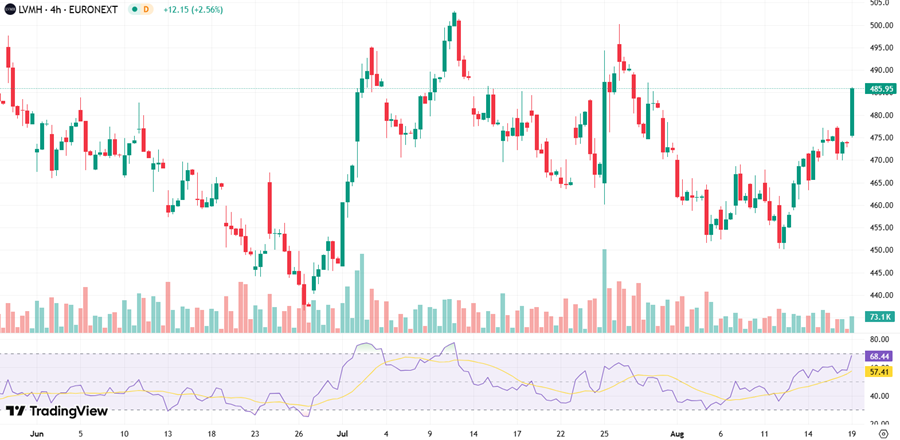
LVMH stock price dynamics (June 2025 - August 2025). Source: TradingView
Valuation-wise, LVMH trades at a forward P/E of around 20x, in line with luxury peers like Hermès and Richemont, but still at a discount to Hermès’ premium valuation. Price-to-book remains at approximately 3.5x, which reflects the brand equity inherent in Louis Vuitton, Dior, and the broader portfolio.
Luxury sector under pressure amid slowing demand
The luxury market has faced headwinds throughout 2024 and 2025, with slower-than-expected sales in key regions like China and the United States. Even dominant names like Gucci, Dior, and Louis Vuitton have turned to offering discreet discounts, pop-up events, and loyalty perks—tactics rarely seen in the sector’s high-margin past.
This shift suggests that aspirational consumers are pulling back. While ultra-high-net-worth individuals continue to spend, the mid-tier luxury buyer is more selective, especially amid persistent inflation and tighter credit conditions globally. LVMH has not been immune. Despite its unmatched portfolio of fashion, cosmetics, and jewelry brands—including Tiffany & Co., Fendi, and TAG Heuer—the company has posted slower growth in key categories like wines and spirits, which saw a decline of 7% in the most recent quarterly report.
Still, LVMH remains fundamentally stronger than peers such as Kering, which has struggled with brand revitalization and slumping Gucci sales. LVMH’s strategy of balancing heritage houses like Louis Vuitton with more contemporary lines like Fenty and Off-White continues to shield it from the worst of the downturn. The group also benefits from geographic diversification: while Asia ex-Japan saw softening, Europe and Japan showed stable year-over-year growth.
Short-term forecast and price scenarios
LVMH appears to be entering a short-term stabilization phase. If current momentum holds and macroeconomic signals such as consumer confidence and inflation expectations continue to improve, shares could rebound toward the €510–€530 range over the next four to six weeks. A decisive break above €530 would likely set the stage for a re-test of the €570 level by Q4 2025.
In the base case, where the macro environment remains fragile but stable, LVMH is expected to trade sideways between €470 and €510, supported by its diversified portfolio and ongoing cost discipline. In a bearish scenario—where geopolitical tensions escalate or demand in China continues to deteriorate—shares could retest the €450–€460 zone, with a deeper drop possible only if earnings guidance is revised downward or margins compress significantly.
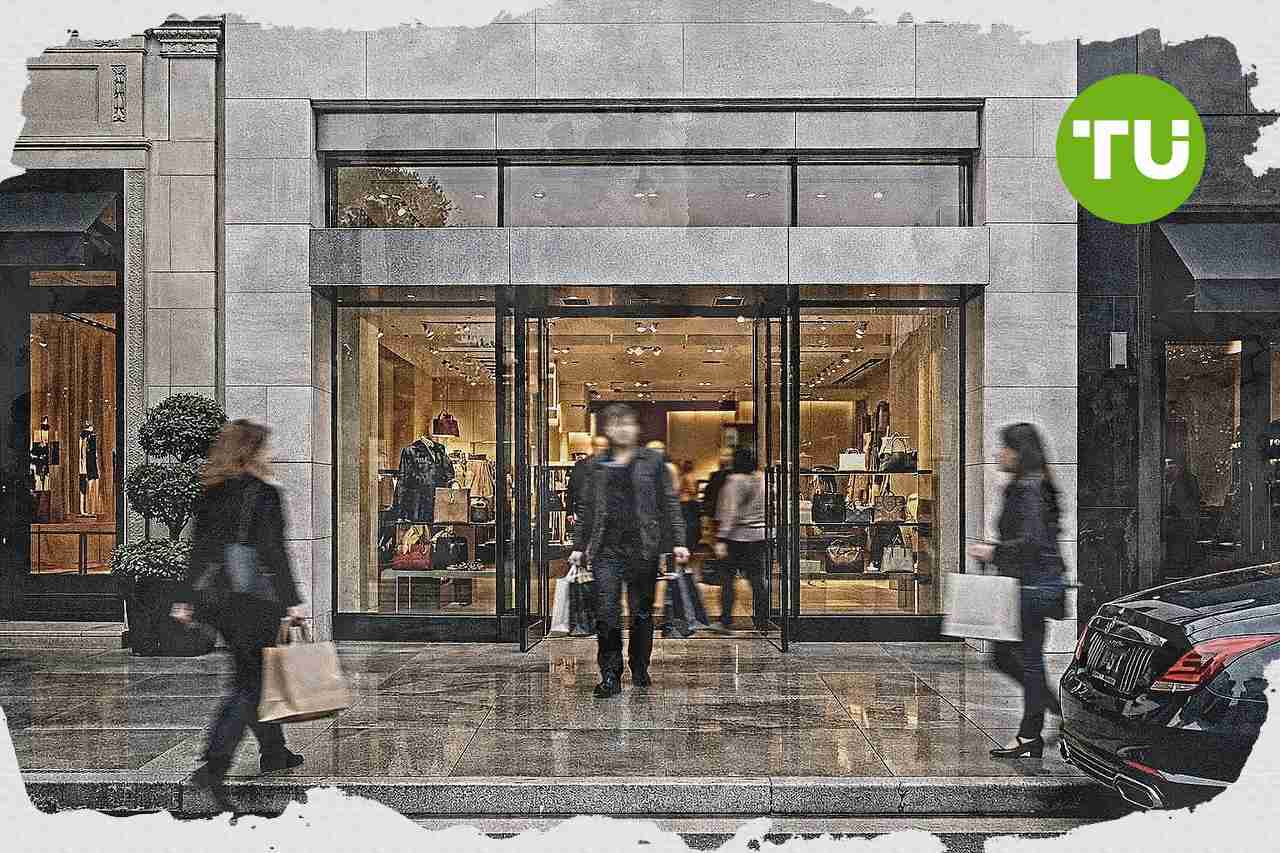
Investor sentiment on LVMH is shaped by strong demand for experiential luxury and stable growth in its core Fashion & Leather Goods division. High-net-worth consumer resilience and innovative retail expansions, like the new Louis Vuitton flagship in Shanghai, continue to support brand strength and pricing power.












-
 Afghanistan
-
 Albania
-
 Algeria
-
 Angola
-
 Argentina
-
 Armenia
-
 Australia
-
 Austria
-
 Azerbaijan
-
 Bahamas
-
 Bahrain
-
 Bangladesh
-
 Belarus
-
 Belgium
-
 Bolivia
-
 Botswana
-
 Brazil
-
 Brunei
-
 Bulgaria
-
 Cambodia
-
 Cameroon
-
 Canada
-
 Chile
Chile
-
 China
China
-
 Colombia
-
 Congo
Congo
-
 Costa Rica
-
 Cote d'Ivoire
-
 Croatia
-
 Cuba
Cuba
-
 Cyprus
-
 Czechia
-
 DR Congo
-
 Denmark
-
 Dominican Republic
-
 Ecuador
-
 Egypt
Egypt
-
 El Salvador
-
 Estonia
-
 Eswatini
-
 Ethiopia
-
 Finland
-
 France
-
 Georgia
-
 Germany
-
 Ghana
Ghana
-
 Greece
-
 Haiti
Haiti
-
 Hong Kong
-
 Hungary
-
 India
India
-
 Indonesia
-
 Iran, Islamic republic
-
 Iraq
Iraq
-
 Ireland
-
 Israel
-
 Italy
Italy
-
 Jamaica
-
 Japan
Japan
-
 Jordan
-
 Kazakhstan
-
 Kenya
Kenya
-
 Korea
Korea
-
 Kuwait
-
 Kyrgyzstan
-
 Laos
Laos
-
 Latvia
-
 Lebanon
-
 Lesotho
-
 Libya
Libya
-
 Lithuania
-
 Luxembourg
-
 Madagascar
-
 Malaysia
-
 Malta
Malta
-
 Mauritius
-
 Mexico
-
 Moldova
-
 Mongolia
-
 Montenegro
-
 Morocco
-
 Mozambique
-
 Myanmar
-
 Namibia
-
 Nepal
Nepal
-
 Netherlands
-
 New Zealand
-
 Nigeria
-
 North Macedonia
-
 Norway
-
 Oman
Oman
-
 Pakistan
-
 Palestine
-
 Panama
-
 Papua New Guinea
-
 Paraguay
-
 Peru
Peru
-
 Philippines
-
 Poland
-
 Portugal
-
 Puerto Rico
-
 Qatar
Qatar
-
 Reunion
-
 Romania
-
 Rwanda
-
 Saudi Arabia
-
 Serbia
-
 Singapore
-
 Slovakia
-
 Slovenia
-
 Somalia
-
 South Africa
-
 Spain
Spain
-
 Sri Lanka
-
 Sweden
-
 Switzerland
-
 Syria
Syria
-
 Taiwan
-
 Tajikistan
-
 Tanzania
-
 Thailand
-
 Trinidad and Tobago
-
 Tunisia
-
 Turkey
-
 UAE
UAE
-
 Uganda
-
 Ukraine
-
 United Kingdom
-
United States
-
 Uruguay
-
 Uzbekistan
-
 Venezuela
-
 Vietnam
-
 Yemen
Yemen
-
 Zambia
-
 Zimbabwe
- Forex
- Crypto












