Graeme Hart Net Worth, Biography and Key Insights



Graeme Hart’s Profile Summary
|
Company
|
Rank Group Limited |
|---|---|
|
Position
|
Owner |
|
Source of wealth
|
Investments in the packaging industry through leveraged buyouts |
|
Also known as
|
New Zealand's richest person |
|
Age
|
71 |
|
Education
|
MBA, University of Otago |
|
Citizenship
|
New Zealand |
|
Residence
|
Auckland, New Zealand |
|
Family
|
Married, two children |
|
Website, Social Media
|
https://www.reynoldsgroupholdings.com |
Biography
Graeme Richard Hart, born in 1955 in New Zealand, is a self-made billionaire renowned for his expertise in leveraged buyouts and transforming underperforming companies into profitable ventures. After leaving Mount Roskill Grammar School at 16, Hart worked as a panel beater and tow-truck driver. In 1987, he earned an MBA from the University of Otago, where his thesis focused on expanding Rank Group Limited, then a small party hire company.Hart's business acumen became evident in 1990 when he acquired the New Zealand Government Printing Office for less than its capital value, a deal facilitated by favorable payment terms. This acquisition was followed by the purchase of Whitcoulls Group in 1991, encompassing a retail chain of bookstores and office stationery supplies. He later divested these interests to focus on larger ventures.
Through Rank Group Limited, Hart executed significant acquisitions, notably in the packaging industry. In 2006, he purchased Carter Holt Harvey, a leading timber and paper company, for NZ$3.3 billion. He further expanded his packaging empire by acquiring International Paper's drinks packaging business, Evergreen Packaging, in 2006, and Swiss company SIG in 2007. His largest acquisition was Alcoa's Packaging & Consumer group in 2008 for US$2.7 billion, later renamed Reynolds Packaging Group.
Hart's investment strategy focuses on acquiring undervalued companies with steady cash flows, implementing cost-cutting measures, and restructuring to enhance profitability. Despite his immense wealth, estimated at US$10.5 billion as of January 2025, Hart maintains a low public profile, rarely engaging with the media. In recognition of his contributions to business, he was inducted into the New Zealand Business Hall of Fame in 2022.
-
How did Graeme Hart make money?
Graeme Hart built his fortune through strategic leveraged buyouts and investments in the global packaging industry. His journey to becoming New Zealand's wealthiest individual began after earning an MBA from the University of Otago in 1987. His MBA thesis focused on expansion strategies for Rank Group Limited, a small party hire company he later acquired and transformed into a major investment vehicle.
In 1990, Hart made his first significant acquisition by purchasing the New Zealand Government Printing Office for less than its capital value. He secured favorable payment terms that allowed him to acquire the business without upfront capital, marking the start of his career in acquiring undervalued assets. In 1991, he acquired the Whitcoulls Group, a chain of bookstores and office supply stores, which he later sold to focus on larger, more profitable ventures.
Hart’s most significant success came in the packaging industry. Through Rank Group Limited, he began acquiring companies with stable cash flows and strong market positions. In 2006, he purchased Carter Holt Harvey, a leading timber and packaging company in New Zealand, for NZ$3.3 billion. That same year, he acquired International Paper's beverage packaging business, Evergreen Packaging, followed by Swiss-based SIG Combibloc in 2007.
His largest acquisition was in 2008, when he purchased Alcoa's Packaging & Consumer Group for US$2.7 billion, which he rebranded as Reynolds Packaging Group. These acquisitions made Hart a dominant player in the global packaging industry, with Reynolds becoming one of the world's largest producers of aluminum foil and related products.
Hart’s investment strategy is centered around identifying undervalued companies, implementing cost-cutting measures, and restructuring operations to boost profitability. His packaging empire generates billions in annual revenue, and his business acumen has solidified his net worth, estimated at US$10.5 billion as of 2025. -
What is Graeme Hart net worth?
As of 2026, Graeme Hart’s net worth is estimated to be 10.6 billion USD.
What is Graeme Hart also known as?
Graeme Hart is recognized as New Zealand's wealthiest individual, primarily due to his strategic investments in the packaging industry and his expertise in leveraged buyouts.Prominent achievements
Graeme Hart has built a multi-billion dollar fortune through strategic investments in the packaging industry, becoming New Zealand's wealthiest person. His notable acquisitions include Carter Holt Harvey and Reynolds Packaging Group. In recognition of his contributions to business, he was inducted into the New Zealand Business Hall of Fame in 2022.What are Graeme Hart’s key insights?
Hart's business strategy centers on acquiring undervalued companies with steady cash flows, implementing cost-cutting measures, and restructuring operations to enhance profitability. He focuses on industries where he can apply his expertise to drive growth and value creation.
Personal life
Graeme Hart is married to Robyn Jessie Hart, and they have two children. The family maintains a low public profile, with limited information available about their personal lives.
Useful insights
Fundamental principles of investing

As someone deeply immersed in the world of finance, I firmly believe that learning the fundamental principles of investing is the cornerstone of financial literacy. The books I recommend here have shaped modern investment strategies, offering timeless wisdom that can benefit both beginners and seasoned investors. These are not just texts, but essential tools to help you navigate the complexities of the financial markets with confidence and insight.
-
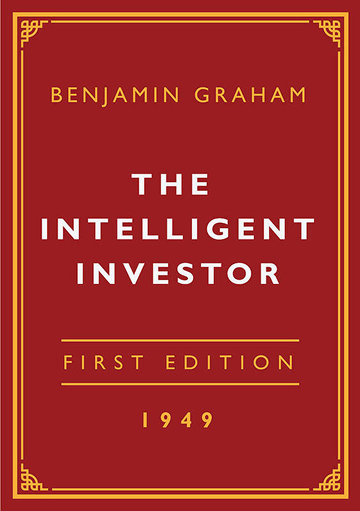
Benjamin Graham - "The Intelligent Investor"
-
Summary:
Written by one of the most influential investment thinkers, this book outlines the principles of value investing. Graham emphasizes the importance of analyzing a company’s intrinsic value, long-term investment strategies, and avoiding emotional decisions driven by market fluctuations. The book also discusses defensive investing, focusing on preservation of capital and minimizing risk.
-
Why read it:
This is a must-read for anyone looking to understand the core philosophy behind successful long-term investing. Graham’s principles influenced generations of investors, including Warren Buffett, making it an essential guide to navigating stock market risks with a focus on minimizing losses.
-
-
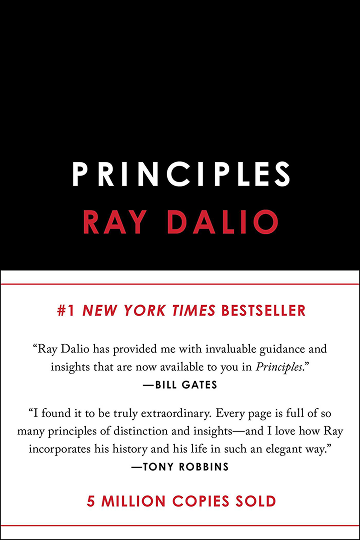
Ray Dalio - "Principles"
-
Summary:
Ray Dalio, founder of one of the world’s largest hedge funds, shares the life and work principles that led to his immense success. The book covers Dalio’s unique management and investment strategies, focusing on radical transparency, truth-seeking, and the importance of learning from mistakes. It also provides practical insights into organizational behavior and personal growth, making it valuable beyond just investing.
-
Why read it:
Dalio's "Principles" is a treasure trove of wisdom for investors and business leaders who wish to improve their decision-making. It’s a guide on how to align personal and professional life through well-defined, actionable rules.
-
Other profiles in category
Popular Financial Guides
Editors' Top Picks and Insights

Blockchain nation in crisis: How a power struggle split Liberland

Shifting priorities: Governments back mining as businesses turn to AI
Intel's comeback: Apple, Trump and the AI bet

Bitcoin price prediction based on RSI: Is BTC poised for a new rally?

Toncoin becomes Gram: Why Durov restored token's original name
Why Tether flipping Ethereum is a pivotal moment for crypto
Latest Financial News

CFPB survives latest Trump shutdown bid after D.C. Circuit order

Labour leadership crisis deepens as MPs push Starmer to set exit timetable

U.S. budget airline model loses ground as premium demand lifts major carriers

-
 Afghanistan
-
 Albania
-
 Algeria
-
 Angola
-
 Argentina
-
 Armenia
-
 Australia
-
 Austria
-
 Azerbaijan
-
 Bahamas
-
 Bahrain
-
 Bangladesh
-
 Belarus
-
 Belgium
-
 Bolivia
-
 Botswana
-
 Brazil
-
 Brunei
-
 Bulgaria
-
 Cambodia
-
 Cameroon
-
 Canada
-
 Chile
Chile
-
 China
China
-
 Colombia
-
 Congo
Congo
-
 Costa Rica
-
 Cote d'Ivoire
-
 Croatia
-
 Cuba
Cuba
-
 Cyprus
-
 Czechia
-
 DR Congo
-
 Denmark
-
 Dominican Republic
-
 Ecuador
-
 Egypt
Egypt
-
 El Salvador
-
 Estonia
-
 Eswatini
-
 Ethiopia
-
 Finland
-
 France
-
 Georgia
-
 Germany
-
 Ghana
Ghana
-
 Greece
-
 Haiti
Haiti
-
 Hong Kong
-
 Hungary
-
 India
India
-
 Indonesia
-
 Iran, Islamic republic
-
 Iraq
Iraq
-
 Ireland
-
 Israel
-
 Italy
Italy
-
 Jamaica
-
 Japan
Japan
-
 Jordan
-
 Kazakhstan
-
 Kenya
Kenya
-
 Korea
Korea
-
 Kuwait
-
 Kyrgyzstan
-
 Laos
Laos
-
 Latvia
-
 Lebanon
-
 Lesotho
-
 Libya
Libya
-
 Lithuania
-
 Luxembourg
-
 Madagascar
-
 Malaysia
-
 Malta
Malta
-
 Mauritius
-
 Mexico
-
 Moldova
-
 Mongolia
-
 Montenegro
-
 Morocco
-
 Mozambique
-
 Myanmar
-
 Namibia
-
 Nepal
Nepal
-
 Netherlands
-
 New Zealand
-
 Nigeria
-
 North Macedonia
-
 Norway
-
 Oman
Oman
-
 Pakistan
-
 Palestine
-
 Panama
-
 Papua New Guinea
-
 Paraguay
-
 Peru
Peru
-
 Philippines
-
 Poland
-
 Portugal
-
 Puerto Rico
-
 Qatar
Qatar
-
 Reunion
-
 Romania
-
 Rwanda
-
 Saudi Arabia
-
 Serbia
-
 Singapore
-
 Slovakia
-
 Slovenia
-
 Somalia
-
 South Africa
-
 Spain
Spain
-
 Sri Lanka
-
 Sweden
-
 Switzerland
-
 Syria
Syria
-
 Taiwan
-
 Tajikistan
-
 Tanzania
-
 Thailand
-
 Trinidad and Tobago
-
 Tunisia
-
 Turkey
-
 UAE
UAE
-
 Uganda
-
 Ukraine
-
 United Kingdom
-
United States
-
 Uruguay
-
 Uzbekistan
-
 Venezuela
-
 Vietnam
-
 Yemen
Yemen
-
 Zambia
-
 Zimbabwe
- Forex
- Crypto












