

Best Buy bets on smaller stores as incoming CEO targets growth

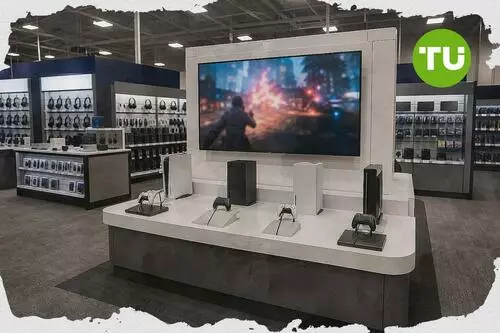
Best Buy is reshaping its store strategy as incoming chief executive Jason Bonfig prepares to take over during a prolonged period of uneven sales and margin pressure. The retailer is using smaller-format locations to enter markets that cannot support its traditional footprint while also pushing AI tools and product upgrades to lift customer engagement.
Highlights
- Best Buy is expanding with smaller-format stores of 12,000–15,000 square feet in underserved markets, reopening in Jonesboro and launching a 28,000-square-foot location in Cape Cod.
- Incoming CEO Damian Bonfig emphasizes AI integration through tools for shoppers and partnerships with Meta, OpenAI, and Google to drive engagement and complement staff.
- Best Buy's stock remains down about 20% from its late-2021 peak of $138 a share, with fiscal-year comparable sales guidance between minus 1% and plus 1%.
Smaller-format expansion plan takes shape
As reported by CNBC, Bonfig says expanding Best Buy's reach is a central part of his plan as he prepares to succeed Corie Barry this fall. He says the company is opening smaller stores in markets where a full-sized Best Buy does not make economic sense but where customer demand for the brand remains strong.This week, Best Buy opens new stores in Jonesboro, Arkansas, and Cape Cod, Massachusetts, as examples of that approach. Bonfig says the smaller-format model generally ranges from 12,000 to 15,000 square feet, compared with medium-format stores of 20,000 to 25,000 square feet, while some larger locations, including its New York flagship, exceed 40,000 square feet.
He says the strategy is not meant to replace standard stores but to extend the chain's presence into underserved communities. In Jonesboro, Best Buy is returning after a tornado destroyed its previous location, and Bonfig says a smaller footprint still allows the retailer to cover its major product categories while matching local demand more closely.
The Cape Cod opening is larger, at 28,000 square feet, but Bonfig describes it as another example of fitting the store size to the market. He also points to Best Buy Canada, which he says has already seen success with stores as small as 7,000 square feet.
AI push and customer focus aim to revive performance
Bonfig says his leadership plan centers on four pillars, strengthening Best Buy as a retail and technology company, widening its reach, improving the customer experience and keeping the business human-powered. He adds that the company wants to build on the AI boom both through customer-facing tools and internal corporate uses.Best Buy is actively investing in products such as Meta's glasses and already offers an AI tool for shoppers, alongside partnerships with OpenAI and Google. Bonfig says AI-driven commerce is already generating traffic and that the company wants to ensure the Best Buy experience is visible across those platforms, while still treating AI as a complement to staff rather than a substitute.
The strategy comes as Best Buy works through several years of sluggish sales, pressure from tariffs and higher memory-chip costs. Over the past five years, the company's stock has fallen about 20% from its late-2021 peak of $138 a share, and for the current fiscal year it expects comparable sales to range from a 1% decline to a 1% increase.
Bonfig argues the retailer's recent stagnation reflects demand that was pulled forward during Covid, when consumers accelerated spending on home and technology upgrades. He says that shift reset replacement cycles for many shoppers and pushed vendors toward production over innovation, leaving Best Buy focused now on refreshing product assortments, including televisions, and improving how customers shop across stores, apps and other digital channels.
Our earlier article on CDSL’s Q1 FY27 results covered how the depository expanded its operational footprint as India’s securities market grew, reporting 15% year-on-year gains in both total income and net profit. It also noted a sharp rise in market participation, with demat accounts reaching 185.9 million after nearly 5.8 million new accounts were added in the quarter, alongside a strategic investment aimed at strengthening India’s financial data-sharing framework.






Latest Best Buy Co News




-
 Afghanistan
-
 Albania
-
 Algeria
-
 Angola
-
 Argentina
-
 Armenia
-
 Australia
-
 Austria
-
 Azerbaijan
-
 Bahamas
-
 Bahrain
-
 Bangladesh
-
 Belarus
-
 Belgium
-
 Bolivia
-
 Botswana
-
 Brazil
-
 Brunei
-
 Bulgaria
-
 Cambodia
-
 Cameroon
-
 Canada
-
 Chile
-
 China
-
 Colombia
-
 Congo
-
 Costa Rica
-
 Cote d'Ivoire
-
 Croatia
-
 Cuba
-
 Cyprus
-
 Czechia
-
 DR Congo
-
 Denmark
-
 Dominican Republic
-
 Ecuador
-
 Egypt
-
 El Salvador
-
 Estonia
-
 Eswatini
-
 Ethiopia
-
 Finland
-
 France
-
 Georgia
-
 Germany
-
 Ghana
-
 Greece
-
 Haiti
-
 Hong Kong
-
 Hungary
-
 India
-
 Indonesia
-
 Iran, Islamic republic
-
 Iraq
-
 Ireland
-
 Israel
-
 Italy
-
 Jamaica
-
 Japan
-
 Jordan
-
 Kazakhstan
-
 Kenya
-
 Korea
-
 Kuwait
-
 Kyrgyzstan
-
 Laos
-
 Latvia
-
 Lebanon
-
 Lesotho
-
 Libya
-
 Lithuania
-
 Luxembourg
-
 Madagascar
-
 Malaysia
-
 Malta
-
 Mauritius
-
 Mexico
-
 Moldova
-
 Mongolia
-
 Montenegro
-
 Morocco
-
 Mozambique
-
 Myanmar
-
 Namibia
-
 Nepal
-
 Netherlands
-
 New Zealand
-
 Nigeria
-
 North Macedonia
-
 Norway
-
 Oman
-
 Pakistan
-
 Palestine
-
 Panama
-
 Papua New Guinea
-
 Paraguay
-
 Peru
-
 Philippines
-
 Poland
-
 Portugal
-
 Puerto Rico
-
 Qatar
-
 Reunion
-
 Romania
-
 Rwanda
-
 Saudi Arabia
-
 Serbia
-
 Singapore
-
 Slovakia
-
 Slovenia
-
 Somalia
-
 South Africa
-
 Spain
-
 Sri Lanka
-
 Sweden
-
 Switzerland
-
 Syria
-
 Taiwan
-
 Tajikistan
-
 Tanzania
-
 Thailand
-
 Trinidad and Tobago
-
 Tunisia
-
 Turkey
-
 UAE
-
 Uganda
-
 Ukraine
-
 United Kingdom
-
United States
-
 Uruguay
-
 Uzbekistan
-
 Venezuela
-
 Vietnam
-
 Yemen
-
 Zambia
-
 Zimbabwe
- Forex
- Crypto












