
UNI jumps 15% ahead of key governance vote on fee distribution
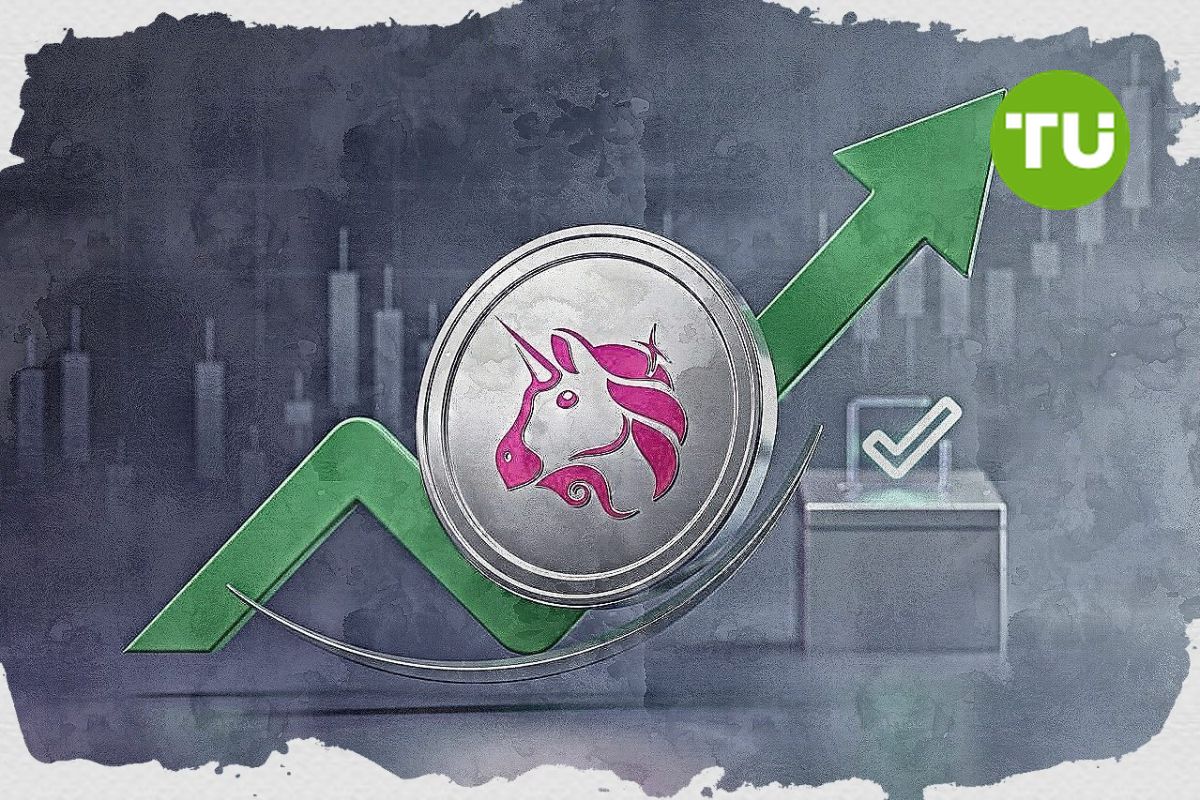
The Uniswap community is set to launch a vote on the second phase of expanding its fee distribution mechanism from February 27 to March 1. The proposal calls for activating the so-called fee switch across the protocol’s multichain deployments.
If approved, fees would be distributed from eight layer-2 networks, including Base, OP Mainnet, Arbitrum, Celo, Soneium, Worldchain, X Layer, and Zora, according to Cryptopolitan.
Estimates suggest the move could add up to $27 million in additional value for UNI holders. The revenue distribution mechanism has long been viewed as a key driver of interest in the UNI token and has previously sparked rallies. Uniswap is now extending this approach to additional networks, strengthening the token’s role within the ecosystem.
Protocol financials bolster the case for UNI
According to DeFiLlama, Uniswap generates more than $938 million in annual fees, remaining one of the largest DeFi protocols by trading volume. In the first quarter of 2026, the protocol reported net profit of $2.75 million after several loss-making quarters. This has reinforced the narrative that Uniswap is evolving into a sustainable platform with recurring revenue.
Following the voting announcement, UNI surged more than 15% in 24 hours, breaking above the $4 level and reaching a weekly high of around $4.04. However, liquidity remains concentrated, with more than 61% of trading volume coming from USDT pairs on Binance and MEXC, potentially amplifying short-term price swings.
Expanding UNI burns through L2 fees
Under the proposal, fees collected on L2 networks would be directed to TokenJar contracts on the respective blockchains and then bridged to the Uniswap main network for UNI burning. The mechanism would apply to V2 and V3 fees generated on new L2 deployments.
Previously, the protocol gradually introduced the fee switch starting with select V3 pools on Ethereum. Additional token burns could reduce circulating supply and enhance UNI’s role as a value-capture asset. Uniswap can also convert fees collected in various tokens into UNI before burning, potentially increasing the impact on market dynamics.
Revenue scale and L2 impact on UNI economics
The layer-2 sector continues to gain traction. According to L2Beat, total value locked across L2 networks exceeds $30 billion, while transaction activity is increasingly shifting from Ethereum’s mainnet to scalable solutions. This suggests that extending the fee switch to L2s could significantly increase fee flows into the Uniswap ecosystem.
If the current $938 million in annual fees is maintained or grows alongside L2 activity, even allocating a portion of that revenue toward UNI burns could alter the token’s supply-demand dynamics. In an environment of limited supply and high trading concentration on centralized exchanges, expanding the burn mechanism may amplify short-term volatility while strengthening UNI’s long-term value accrual model.
Recently we wrote that the crypto market is showing a strong rebound, pushing total capitalization to $2.35 trillion (+5.1% over 24 hours), with key growth drivers linked to news surrounding Ethereum and earnings from USDC issuer Circle. BTC is trading around $68,232, up 4.94% over 24 hours and 1.66% over the past week.





Latest Uniswap (UNI) News





-
 Afghanistan
-
 Albania
-
 Algeria
-
 Angola
-
 Argentina
-
 Armenia
-
 Australia
-
 Austria
-
 Azerbaijan
-
 Bahamas
-
 Bahrain
-
 Bangladesh
-
 Belarus
-
 Belgium
-
 Bolivia
-
 Botswana
-
 Brazil
-
 Brunei
-
 Bulgaria
-
 Cambodia
-
 Cameroon
-
 Canada
-
 Chile
Chile
-
 China
China
-
 Colombia
-
 Congo
Congo
-
 Costa Rica
-
 Cote d'Ivoire
-
 Croatia
-
 Cuba
Cuba
-
 Cyprus
-
 Czechia
-
 DR Congo
-
 Denmark
-
 Dominican Republic
-
 Ecuador
-
 Egypt
Egypt
-
 El Salvador
-
 Estonia
-
 Eswatini
-
 Ethiopia
-
 Finland
-
 France
-
 Georgia
-
 Germany
-
 Ghana
Ghana
-
 Greece
-
 Haiti
Haiti
-
 Hong Kong
-
 Hungary
-
 India
India
-
 Indonesia
-
 Iran, Islamic republic
-
 Iraq
Iraq
-
 Ireland
-
 Israel
-
 Italy
Italy
-
 Jamaica
-
 Japan
Japan
-
 Jordan
-
 Kazakhstan
-
 Kenya
Kenya
-
 Korea
Korea
-
 Kuwait
-
 Kyrgyzstan
-
 Laos
Laos
-
 Latvia
-
 Lebanon
-
 Lesotho
-
 Libya
Libya
-
 Lithuania
-
 Luxembourg
-
 Madagascar
-
 Malaysia
-
 Malta
Malta
-
 Mauritius
-
 Mexico
-
 Moldova
-
 Mongolia
-
 Montenegro
-
 Morocco
-
 Mozambique
-
 Myanmar
-
 Namibia
-
 Nepal
Nepal
-
 Netherlands
-
 New Zealand
-
 Nigeria
-
 North Macedonia
-
 Norway
-
 Oman
Oman
-
 Pakistan
-
 Palestine
-
 Panama
-
 Papua New Guinea
-
 Paraguay
-
 Peru
Peru
-
 Philippines
-
 Poland
-
 Portugal
-
 Puerto Rico
-
 Qatar
Qatar
-
 Reunion
-
 Romania
-
 Rwanda
-
 Saudi Arabia
-
 Serbia
-
 Singapore
-
 Slovakia
-
 Slovenia
-
 Somalia
-
 South Africa
-
 Spain
Spain
-
 Sri Lanka
-
 Sweden
-
 Switzerland
-
 Syria
Syria
-
 Taiwan
-
 Tajikistan
-
 Tanzania
-
 Thailand
-
 Trinidad and Tobago
-
 Tunisia
-
 Turkey
-
 UAE
UAE
-
 Uganda
-
 Ukraine
-
 United Kingdom
-
United States
-
 Uruguay
-
 Uzbekistan
-
 Venezuela
-
 Vietnam
-
 Yemen
Yemen
-
 Zambia
-
 Zimbabwe
- Forex
- Crypto












