
CLARITY Act faces 100-plus amendments before key vote
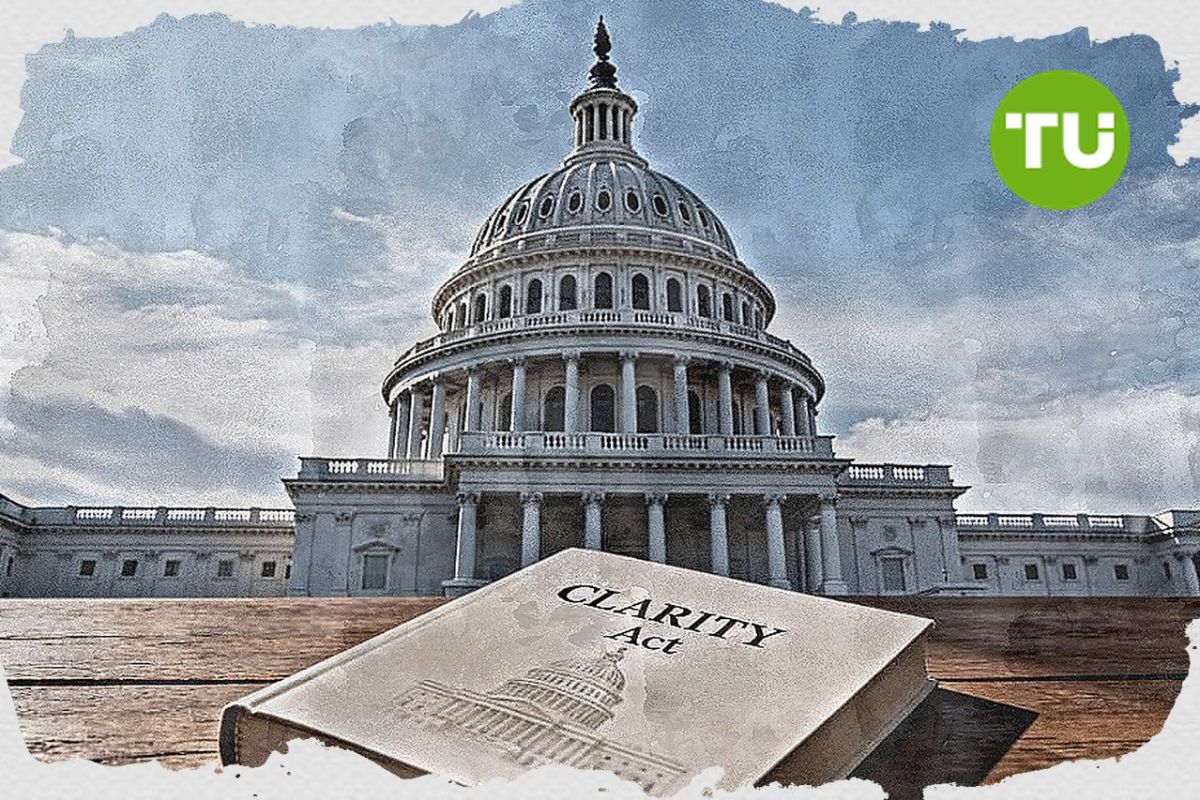
The Senate CLARITY Act, intended to set rules for the US digital asset market, has reached the committee review stage amid intense political bargaining. By Thursday, senators had filed more than 100 amendments, leaving the bill’s fate dependent not only on the crypto industry, but also on disputes over banks, ethics, and the powers of law enforcement.
Highlights
- More than 100 amendments have been filed to the bill, most of them from Democrats.
- The main conflict centers on stablecoin yield and competition with bank deposits.
- Democrats are demanding conflict-of-interest rules for officials and their families.
- Developers are seeking protection from criminal liability if they do not control customer funds.
- Even after committee approval, the bill will need 60 votes in the Senate.
Main dispute: Stablecoins and yield
Most of the amendments, according to Crypto News, came from Democrats. Republicans proposed a narrower set of changes focused on sections that had already been discussed during months of closed-door negotiations. The Senate Banking Committee is expected to review the amendments and decide whether to advance the bill to a vote by the full Senate.
The updated draft of the CLARITY Act was released on Monday and effectively restarted talks that had stalled earlier after Coinbase withdrew from the discussions. The company objected to restrictions on stablecoin rewards programs. That issue remains central: Senators Jack Reed and Tina Smith are proposing to replace the current functional equivalence test tied to bank deposits with a stricter substantial similarity standard.
Banking groups argue that even the revised language leaves a loophole for products that could compete with savings accounts by offering payments similar to interest. For crypto companies, by contrast, such programs are an important part of user economics and a source of activity on their platforms.
Ethics, developers, and criminal liability
The debate has moved well beyond stablecoins. Senator Chris Van Hollen proposed a measure that would prohibit the president, vice president, members of Congress, senior executive branch officials, and their families from owning or promoting crypto-related businesses. Democrats have already warned that their support will be in doubt without conflict-of-interest provisions.
Another section concerns developers. An amendment from Senator Catherine Cortez Masto would create a safe harbor for software developers who do not control customer funds and should not automatically be treated as money transmitters. The official description of the CLARITY Act also emphasizes the idea of regulating control over funds rather than the code itself.
The battle over digital asset market rules
The CLARITY Act is intended to draw a clearer line between the powers of the SEC and the CFTC, strengthen disclosure requirements, preserve regulators’ anti-fraud authority and give the market a single set of rules instead of regulation through lawsuits. For the industry, it is one of the most important bills in recent years, but for banks and some Democrats, it risks creating a regulatory regime that is too lenient for crypto products.
Even if the Banking Committee approves the bill, the work will not be over. Senators will still need to merge it with a separate version previously approved by the Agriculture Committee. Passage in the Senate will require at least 60 votes, meaning Republican sponsors will have to reach an agreement with Democrats. In its current form, the bill has become more than an attempt to regulate the crypto market. It is also a test of whether Congress can agree on rules for an industry where the interests of banks, exchanges, developers and law enforcement regularly collide.
In addition, we wrote that CLARITY Act heads to Senate Banking Committee markup.









-
 Afghanistan
-
 Albania
-
 Algeria
-
 Angola
-
 Argentina
-
 Armenia
-
 Australia
-
 Austria
-
 Azerbaijan
-
 Bahamas
-
 Bahrain
-
 Bangladesh
-
 Belarus
-
 Belgium
-
 Bolivia
-
 Botswana
-
 Brazil
-
 Brunei
-
 Bulgaria
-
 Cambodia
-
 Cameroon
-
 Canada
-
 Chile
Chile
-
 China
China
-
 Colombia
-
 Congo
Congo
-
 Costa Rica
-
 Cote d'Ivoire
-
 Croatia
-
 Cuba
Cuba
-
 Cyprus
-
 Czechia
-
 DR Congo
-
 Denmark
-
 Dominican Republic
-
 Ecuador
-
 Egypt
Egypt
-
 El Salvador
-
 Estonia
-
 Eswatini
-
 Ethiopia
-
 Finland
-
 France
-
 Georgia
-
 Germany
-
 Ghana
Ghana
-
 Greece
-
 Haiti
Haiti
-
 Hong Kong
-
 Hungary
-
 India
India
-
 Indonesia
-
 Iran, Islamic republic
-
 Iraq
Iraq
-
 Ireland
-
 Israel
-
 Italy
Italy
-
 Jamaica
-
 Japan
Japan
-
 Jordan
-
 Kazakhstan
-
 Kenya
Kenya
-
 Korea
Korea
-
 Kuwait
-
 Kyrgyzstan
-
 Laos
Laos
-
 Latvia
-
 Lebanon
-
 Lesotho
-
 Libya
Libya
-
 Lithuania
-
 Luxembourg
-
 Madagascar
-
 Malaysia
-
 Malta
Malta
-
 Mauritius
-
 Mexico
-
 Moldova
-
 Mongolia
-
 Montenegro
-
 Morocco
-
 Mozambique
-
 Myanmar
-
 Namibia
-
 Nepal
Nepal
-
 Netherlands
-
 New Zealand
-
 Nigeria
-
 North Macedonia
-
 Norway
-
 Oman
Oman
-
 Pakistan
-
 Palestine
-
 Panama
-
 Papua New Guinea
-
 Paraguay
-
 Peru
Peru
-
 Philippines
-
 Poland
-
 Portugal
-
 Puerto Rico
-
 Qatar
Qatar
-
 Reunion
-
 Romania
-
 Rwanda
-
 Saudi Arabia
-
 Serbia
-
 Singapore
-
 Slovakia
-
 Slovenia
-
 Somalia
-
 South Africa
-
 Spain
Spain
-
 Sri Lanka
-
 Sweden
-
 Switzerland
-
 Syria
Syria
-
 Taiwan
-
 Tajikistan
-
 Tanzania
-
 Thailand
-
 Trinidad and Tobago
-
 Tunisia
-
 Turkey
-
 UAE
UAE
-
 Uganda
-
 Ukraine
-
 United Kingdom
-
United States
-
 Uruguay
-
 Uzbekistan
-
 Venezuela
-
 Vietnam
-
 Yemen
Yemen
-
 Zambia
-
 Zimbabwe
- Forex
- Crypto












