

Base tests new token standard for issuing stablecoins
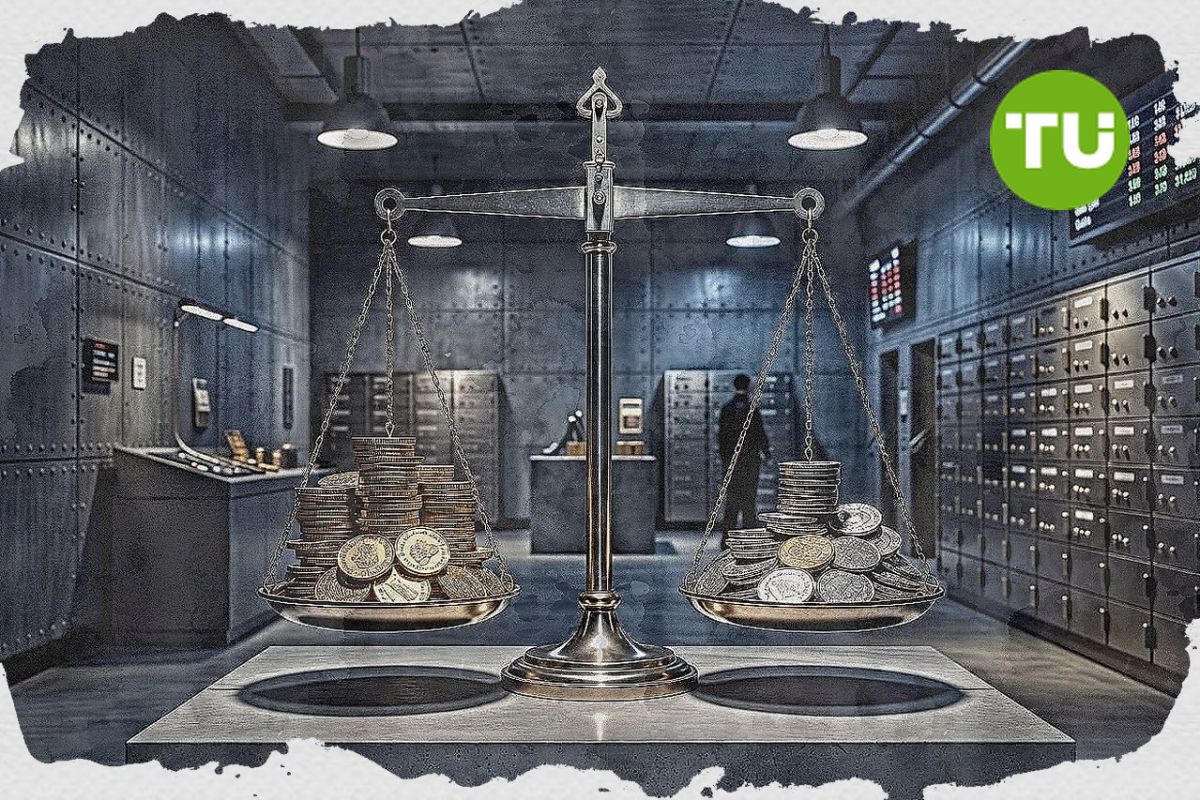
Base, the Ethereum Layer 2 network created by Coinbase, has deployed its second upgrade, Beryl, on the Base Sepolia testnet. Mainnet activation is scheduled for June 25.
According to a post by Base’s engineering team, Beryl introduces B20, a native token standard for issuing stablecoins and other assets directly within Base’s node software. The upgrade also reduces the standard withdrawal delay from Base to Ethereum from seven days to five.
What is B20?
B20 fully implements the ERC-20 specification and includes support for ERC-2612 permit. This allows token holders to approve access to funds with a signature instead of a separate transaction. As a result, the standard can be used as a replacement for ERC-20 without requiring changes to existing wallet, exchange, and indexer infrastructure.
Instead of operating as a conventional smart contract, a B20 token is implemented as a precompiled contract. This means its logic is written in Rust and executed directly inside the node software, rather than as on-chain EVM bytecode.
The standard comes with an Issuer Toolkit, a set of tools for issuers. It includes role-based access control, minting and burning functions with optional supply caps, flexible transfer policies, and a freeze-and-seize mechanism designed for regulated issuers.
At launch, two B20 versions are available: a general-purpose asset version and a stablecoin version with fixed six-decimal precision and an issuer-defined currency code.
Base said the toolkit is built on code audited by the company and Spearbit. In future updates, the team plans to add the ability for issuers to pay gas fees in their own B20 tokens instead of ETH.
Faster withdrawals
Beryl also reduces the standard delay for withdrawing assets from Base to Ethereum. For the route used by most bridge providers, the waiting time will be cut from seven days to five.
The change builds on Multiproofs, a system Base introduced as part of Azul, the network’s first independent upgrade. It was activated on mainnet in May.
Multiproofs has already created a faster one-day finalization path for withdrawals when both a TEE and a zero-knowledge proof confirm the legitimacy of a transaction. However, this option is rarely used in practice because generating a ZK proof remains expensive.
That is why Beryl targets the slower but much more widely used single-proof route. The seven-day window dates back to Base’s earlier fault-proof system, where the long delay was needed so participants could challenge a withdrawal.
After the introduction of Multiproofs, the purpose of this delay narrowed to detecting and disabling a faulty prover. According to Base, this is what allows the waiting window to be gradually reduced.
Scaling and upgrades
The upgrade also includes Reth V2, the latest version of the Rust-based execution client, which became Base’s only client after Azul.
Reth V2 reduces disk usage for full, minimal, and archive nodes. In addition, the update allows Base to raise block gas targets without overloading its sequencer and RPC nodes. This expands the available blockspace for developers.
Beryl is being released roughly four weeks after Azul was activated on mainnet. Base attributes this pace to its February move away from a shared dependency on Optimism’s OP Stack and toward its own unified technology stack.
Base’s next upgrade, Cobalt, is scheduled for September. It is expected to add native account abstraction, making smart accounts a protocol-level feature. This should enable built-in gas sponsorship and transaction batching.
In addition, Cobalt is expected to expand B20’s capabilities and add a unified node binary combining the network’s consensus client and execution client.
Segment leaders
In the crypto industry, stablecoins are usually issued on top of existing token standards of specific blockchains. The most common option is ERC-20 on Ethereum and EVM-compatible networks. Many of the largest stablecoins, including USDT, USDC, and DAI, operate under this model. Other ecosystems use their own standards, such as SPL on Solana, TRC-20 on Tron, BEP-20 on BNB Chain, as well as various token versions on networks like Polygon, Avalanche, and Arbitrum.
However, most popular standards were originally created as a universal foundation for any type of token, not specifically for regulated stablecoins. As a result, issuers often add extra functions on top of them, including token minting and burning, address freezing, blacklists, supply controls, upgradeable contracts, and regulatory compliance mechanisms.
As a reminder, Base considered launching its own token last year.





-
 Afghanistan
-
 Albania
-
 Algeria
-
 Angola
-
 Argentina
-
 Armenia
-
 Australia
-
 Austria
-
 Azerbaijan
-
 Bahamas
-
 Bahrain
-
 Bangladesh
-
 Belarus
-
 Belgium
-
 Bolivia
-
 Botswana
-
 Brazil
-
 Brunei
-
 Bulgaria
-
 Cambodia
-
 Cameroon
-
 Canada
-
 Chile
Chile
-
 China
China
-
 Colombia
-
 Congo
Congo
-
 Costa Rica
-
 Cote d'Ivoire
-
 Croatia
-
 Cuba
Cuba
-
 Cyprus
-
 Czechia
-
 DR Congo
-
 Denmark
-
 Dominican Republic
-
 Ecuador
-
 Egypt
Egypt
-
 El Salvador
-
 Estonia
-
 Eswatini
-
 Ethiopia
-
 Finland
-
 France
-
 Georgia
-
 Germany
-
 Ghana
Ghana
-
 Greece
-
 Haiti
Haiti
-
 Hong Kong
-
 Hungary
-
 India
India
-
 Indonesia
-
 Iran, Islamic republic
-
 Iraq
Iraq
-
 Ireland
-
 Israel
-
 Italy
Italy
-
 Jamaica
-
 Japan
Japan
-
 Jordan
-
 Kazakhstan
-
 Kenya
Kenya
-
 Korea
Korea
-
 Kuwait
-
 Kyrgyzstan
-
 Laos
Laos
-
 Latvia
-
 Lebanon
-
 Lesotho
-
 Libya
Libya
-
 Lithuania
-
 Luxembourg
-
 Madagascar
-
 Malaysia
-
 Malta
Malta
-
 Mauritius
-
 Mexico
-
 Moldova
-
 Mongolia
-
 Montenegro
-
 Morocco
-
 Mozambique
-
 Myanmar
-
 Namibia
-
 Nepal
Nepal
-
 Netherlands
-
 New Zealand
-
 Nigeria
-
 North Macedonia
-
 Norway
-
 Oman
Oman
-
 Pakistan
-
 Palestine
-
 Panama
-
 Papua New Guinea
-
 Paraguay
-
 Peru
Peru
-
 Philippines
-
 Poland
-
 Portugal
-
 Puerto Rico
-
 Qatar
Qatar
-
 Reunion
-
 Romania
-
 Rwanda
-
 Saudi Arabia
-
 Serbia
-
 Singapore
-
 Slovakia
-
 Slovenia
-
 Somalia
-
 South Africa
-
 Spain
Spain
-
 Sri Lanka
-
 Sweden
-
 Switzerland
-
 Syria
Syria
-
 Taiwan
-
 Tajikistan
-
 Tanzania
-
 Thailand
-
 Trinidad and Tobago
-
 Tunisia
-
 Turkey
-
 UAE
UAE
-
 Uganda
-
 Ukraine
-
 United Kingdom
-
United States
-
 Uruguay
-
 Uzbekistan
-
 Venezuela
-
 Vietnam
-
 Yemen
Yemen
-
 Zambia
-
 Zimbabwe
- Forex
- Crypto












