The tweet was deleted by the author.
But we saved everything 🙂.
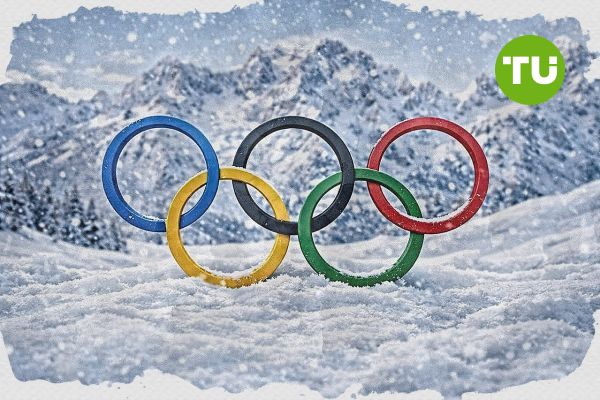
The Olympic Games are not just about sport—they are a global multibillion-dollar commercial project encompassing media rights, sponsorships, infrastructure, and the fan economy. That is why, ahead of the 2026 Olympics, tokens, NFTs, and crypto projects have begun to emerge, promising a «new sports economy.» Yet the key question remains unanswered: why does the crypto industry still orbit the Games instead of becoming part of them?
The budget of the Milan–Cortina Winter Olympic Games is estimated at $3–$4 billion. The main source of revenue for the International Olympic Committee (IOC) does not come from ticket sales or tourism but from the sale of television broadcasting rights. At the Tokyo Olympics, this source generated more than $3 billion, accounting for roughly 60% of the IOC’s total revenue. The remainder is made up of global sponsorships, brand licensing, and official merchandise.
This model has remained largely unchanged for decades because it is predictable and tightly controlled. For the IOC, financial stability matters more than experimentation—especially when it comes to technologies associated with high volatility and regulatory risk. This is precisely why crypto projects have so far failed to become a full-fledged part of the Olympic Games.
There is a widespread misconception that the Olympic Committee pays prize money for medals. In reality, the IOC does not pay athletes at all. Financial rewards come from national Olympic committees and governments, and the amounts vary widely. In the United States, a gold medal earns about $37,500 under the Operation Gold program run by the U.S. Olympic & Paralympic Committee. In 2021, Singapore paid its Olympic swimming champion around 1 million Singapore dollars (approximately $740,000) for gold, although such large payouts are rare due to the infrequency of victories.
There is also private support for Olympic athletes. In the United States, billionaire Ross Stevens has long supported Olympic sports. Beginning with the upcoming Games in Milan and Cortina, he will pay $200,000 to every American Olympic and Paralympic athlete—regardless of results—to help ensure their financial stability.
At the athlete reward stage, ideas about tokenized incentives, digital bonuses, and NFTs for achievements often surface. In theory, such a model appears logical. In practice, however, it requires coordination among governments, sports federations, and regulators. So far, no country has chosen to implement these tools officially within the Olympic framework.
Before every Olympics, the crypto market experiences a surge in activity. Tokens and NFTs appear featuring Olympic-style aesthetics, references to medals, victories, and the «spirit of the Games». Formally, these projects have no connection to the Olympics, but for a broad audience, the distinction between an official product and a marketing surrogate is often unclear. This is where the core conflict arises.
For the International Olympic Committee, the key value is control over the brand. The Olympics are a reputational asset built over more than a century and directly tied to governments, national federations, and multibillion-dollar contracts. Any financial instrument that can collapse in value automatically becomes a threat, even if it is unlicensed. If a token associated with the Olympics loses 80%–90% of its value, the damage in the public eye affects not the project but the Olympics themselves.
At the same time, it is important to understand that the IOC does not reject digital technology outright. The committee has already taken steps toward Web3 by releasing licensed digital collectibles—such as Olympic NFT pins and projects like the Olympic Heritage Collection.
These initiatives, however, are fundamentally different from crypto tokens. They do not promise returns, are not embedded in financial markets, and are closer in nature to digital merchandise than to investment assets. This distinction defines the boundary. Anything that can be perceived as a financial product—a fan token, a cryptocurrency, or a reward mechanism—remains outside the official Olympics. Anything that carries no investment risk and is fully controlled by the IOC may be allowed inside the ecosystem.
The 2022 Winter Olympics in Beijing were particularly illustrative. The Games officially featured no cryptocurrency sponsors, no blockchain projects, and no NFTs. Instead, China used the event as a platform to promote the digital yuan—the country’s central bank digital currency.
Foreign visitors were able to pay with e-CNY for transportation and goods, and the project became one of the largest CBDC experiments in the world. It sent a clear signal: digital finance is possible — but only under full state control. Traditional cryptocurrencies and decentralization did not fit into this model.
The Tokyo Olympics were the first to feature official Olympic NFTs. These were licensed digital collectibles tied to key moments of the Games. The project was careful and limited in scale.
From a marketing perspective, it worked: fans gained a new way to engage with the Olympics, and the IOC gained experience working with digital assets. Economically, however, the project had little impact. NFTs did not become a mass-market tool, failed to develop an active secondary market, and remained closer to souvenirs than to financial products.
The experiences of China and Tokyo point to a fairly clear сценарio for Milan–Cortina 2026. Most likely, we will see licensed NFTs, digital merchandise, and fan content without an investment component. Official tokens, DeFi mechanisms, or crypto payments within the Games should not be expected.
At the same time, crypto companies will be highly visible around the Olympics through advertising campaigns, branding efforts in Italy, and unofficial projects capitalizing on global attention. This is an attempt to leverage the Games’ visibility—not to integrate into their financial system.



 Afghanistan
 Albania
 Algeria
 Angola
 Argentina
 Armenia
 Australia
 Austria
 Azerbaijan
 Bahamas
 Bahrain
 Bangladesh
 Belarus
 Belgium
 Bolivia
 Botswana
 Brazil
 Brunei
 Bulgaria
 Cambodia
 Cameroon
 Canada
 Chile
Chile
 China
China
 Colombia
 Congo
Congo
 Costa Rica
 Cote d'Ivoire
 Croatia
 Cuba
Cuba
 Cyprus
 Czechia
 DR Congo
 Denmark
 Dominican Republic
 Ecuador
 Egypt
Egypt
 El Salvador
 Estonia
 Eswatini
 Ethiopia
 Finland
 France
 Georgia
 Germany
 Ghana
Ghana
 Greece
 Haiti
Haiti
 Hong Kong
 Hungary
 India
India
 Indonesia
 Iran, Islamic republic
 Iraq
Iraq
 Ireland
 Israel
 Italy
Italy
 Jamaica
 Japan
Japan
 Jordan
 Kazakhstan
 Kenya
Kenya
 Korea
Korea
 Kuwait
 Kyrgyzstan
 Laos
Laos
 Latvia
 Lebanon
 Lesotho
 Libya
Libya
 Lithuania
 Luxembourg
 Madagascar
 Malaysia
 Malta
Malta
 Mauritius
 Mexico
 Moldova
 Mongolia
 Montenegro
 Morocco
 Mozambique
 Myanmar
 Namibia
 Nepal
Nepal
 Netherlands
 New Zealand
 Nigeria
 North Macedonia
 Norway
 Oman
Oman
 Pakistan
 Palestine
 Panama
 Papua New Guinea
 Paraguay
 Peru
Peru
 Philippines
 Poland
 Portugal
 Puerto Rico
 Qatar
Qatar
 Reunion
 Romania
 Rwanda
 Saudi Arabia
 Serbia
 Singapore
 Slovakia
 Slovenia
 Somalia
 South Africa
 Spain
Spain
 Sri Lanka
 Sweden
 Switzerland
 Syria
Syria
 Taiwan
 Tajikistan
 Tanzania
 Thailand
 Trinidad and Tobago
 Tunisia
 Turkey
 UAE
UAE
 Uganda
 Ukraine
 United Kingdom
United States
United Kingdom
United States
 Uruguay
 Uzbekistan
 Venezuela
 Vietnam
 Yemen
Yemen
 Zambia
 Zimbabwe