
Nvidia stock consolidates as US refunds $166B Trump-era tariffs
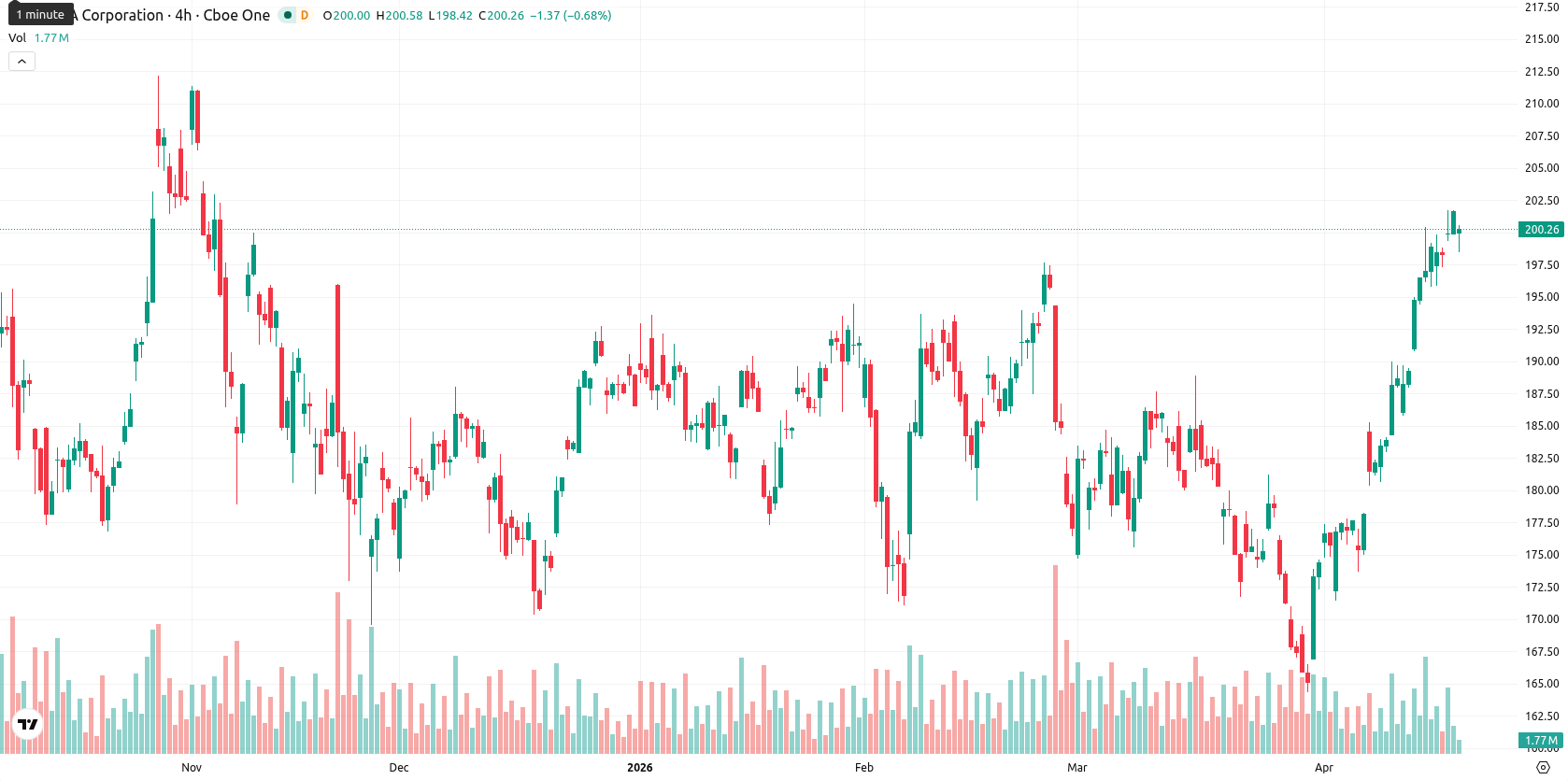
Nvidia Corporation (NVDA) is trading at $199.86, down 0.79% on the day. The price remains well above its key moving averages, indicating resilience despite today’s modest decline.
 199.66
213.99
199.66
213.99
Highlights
- The US refunded $166 billion in Trump-era tariffs following a Supreme Court decision, easing global trade tensions.
- EU retaliatory tariffs have dropped to 0.8% and require new escalation triggers before September 30, reducing short-term risk.
- Nvidia is technically bullish with strong momentum and overbought signals, likely trading between $194.00 and $204.00 next week.
Trade tension relief as US refunds tariffs and EU threat recedes
The United States has refunded $166 billion in Trump-era tariffs after a Supreme Court ruling, reducing trade tensions that previously impacted sectors reliant on global supply chains. EU retaliatory tariffs, formerly tied to these US actions, now stand at 0.8% and require a new geopolitical trigger for escalation by September 30, though price action has remained under broader selling pressure.
Overbought signals emerge as NVDA trades above all support levels
NVDA trades well above the SMA-20 ($181.45), SMA-50 ($183.30), and SMA-200 ($181.77). The Ichimoku Kijun level at $182.98 now acts as immediate support. Momentum signals are positive: the MACD shows a buy signal, and the ADX at 15.28 indicates a weak but persistent trend. RSI is elevated at 71.19; CCI is 156.30; Stoch RSI is at 100; BBP stands at 12.44 — all flagging overbought conditions and potential buyer exhaustion. The Awesome Oscillator remains supportive, but the stock is trading near the low end of today's tight range, suggesting low volatility and mild early-session pressure.
Sideways price scenario as volatility bands define breakout risk
Over the coming week, the typical volatility band is expected between $194.00 and $204.00. The price is likely to move sideways within this corridor, with an over 80% chance of further gains. A push above $204.00 could trigger new upside momentum, while a break below $194.00 could lead to a deeper pullback, though current conditions make the latter less probable.
Earlier, analysts noted that Nvidia’s sustained strength and expanding strategic partnerships were driving a broadly bullish outlook for the stock. The current setup not only reinforces this positive momentum despite short-term volatility, but also highlights that a decisive move above $204.00 could renew upside acceleration for NVDA in the coming week.















-
 Afghanistan
-
 Albania
-
 Algeria
-
 Angola
-
 Argentina
-
 Armenia
-
 Australia
-
 Austria
-
 Azerbaijan
-
 Bahamas
-
 Bahrain
-
 Bangladesh
-
 Belarus
-
 Belgium
-
 Bolivia
-
 Botswana
-
 Brazil
-
 Brunei
-
 Bulgaria
-
 Cambodia
-
 Cameroon
-
 Canada
-
 Chile
Chile
-
 China
China
-
 Colombia
-
 Congo
Congo
-
 Costa Rica
-
 Cote d'Ivoire
-
 Croatia
-
 Cuba
Cuba
-
 Cyprus
-
 Czechia
-
 DR Congo
-
 Denmark
-
 Dominican Republic
-
 Ecuador
-
 Egypt
Egypt
-
 El Salvador
-
 Estonia
-
 Eswatini
-
 Ethiopia
-
 Finland
-
 France
-
 Georgia
-
 Germany
-
 Ghana
Ghana
-
 Greece
-
 Haiti
Haiti
-
 Hong Kong
-
 Hungary
-
 India
India
-
 Indonesia
-
 Iran, Islamic republic
-
 Iraq
Iraq
-
 Ireland
-
 Israel
-
 Italy
Italy
-
 Jamaica
-
 Japan
Japan
-
 Jordan
-
 Kazakhstan
-
 Kenya
Kenya
-
 Korea
Korea
-
 Kuwait
-
 Kyrgyzstan
-
 Laos
Laos
-
 Latvia
-
 Lebanon
-
 Lesotho
-
 Libya
Libya
-
 Lithuania
-
 Luxembourg
-
 Madagascar
-
 Malaysia
-
 Malta
Malta
-
 Mauritius
-
 Mexico
-
 Moldova
-
 Mongolia
-
 Montenegro
-
 Morocco
-
 Mozambique
-
 Myanmar
-
 Namibia
-
 Nepal
Nepal
-
 Netherlands
-
 New Zealand
-
 Nigeria
-
 North Macedonia
-
 Norway
-
 Oman
Oman
-
 Pakistan
-
 Palestine
-
 Panama
-
 Papua New Guinea
-
 Paraguay
-
 Peru
Peru
-
 Philippines
-
 Poland
-
 Portugal
-
 Puerto Rico
-
 Qatar
Qatar
-
 Reunion
-
 Romania
-
 Rwanda
-
 Saudi Arabia
-
 Serbia
-
 Singapore
-
 Slovakia
-
 Slovenia
-
 Somalia
-
 South Africa
-
 Spain
Spain
-
 Sri Lanka
-
 Sweden
-
 Switzerland
-
 Syria
Syria
-
 Taiwan
-
 Tajikistan
-
 Tanzania
-
 Thailand
-
 Trinidad and Tobago
-
 Tunisia
-
 Turkey
-
 UAE
UAE
-
 Uganda
-
 Ukraine
-
 United Kingdom
-
United States
-
 Uruguay
-
 Uzbekistan
-
 Venezuela
-
 Vietnam
-
 Yemen
Yemen
-
 Zambia
-
 Zimbabwe
- Forex
- Crypto











