

EUR/USD still retains bullish potential, but the current move is being capped by the U.S. dollar’s role as a safe-haven asset. Tensions in the Middle East and unstable energy prices are supporting demand for the dollar, preventing the pair from breaking higher in a sustained way. Even so, the broader weakening trend in the dollar that began in 2025 remains intact, and the market structure is gradually shifting in favor of the euro.
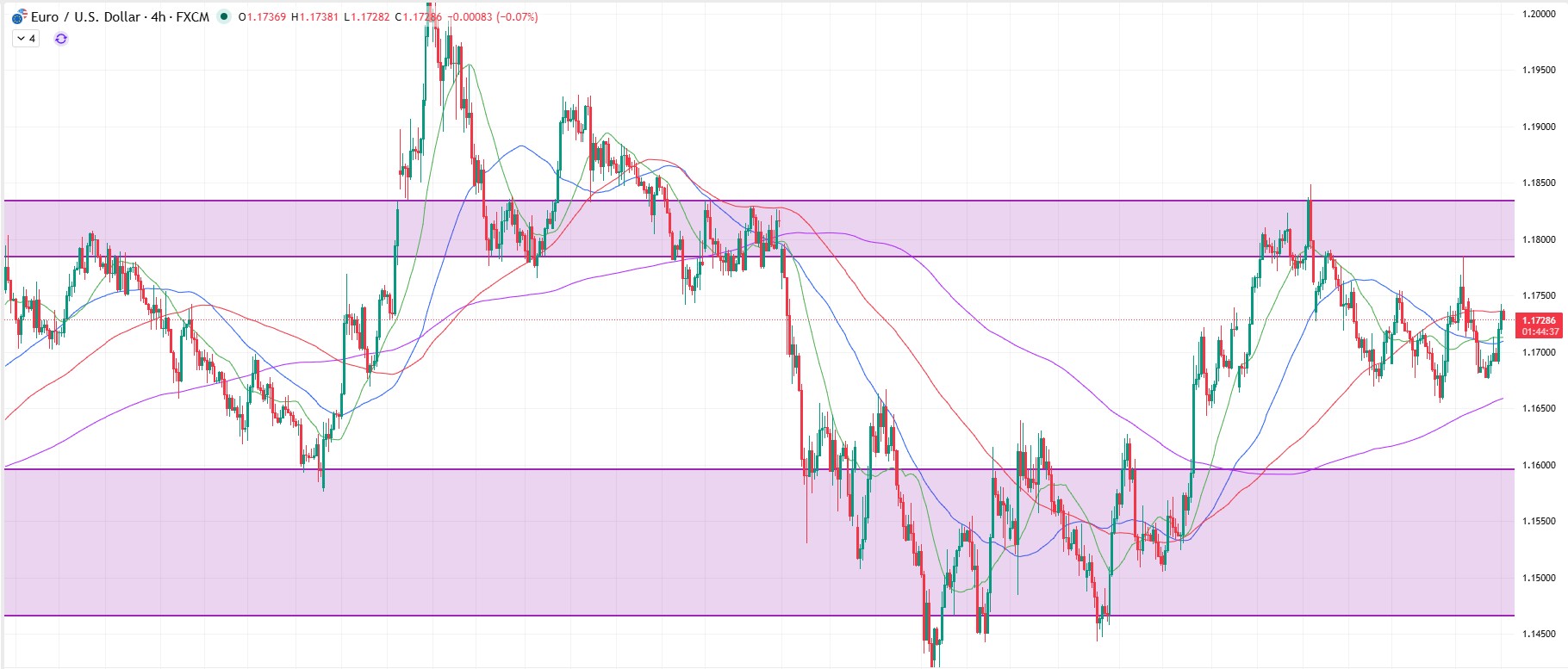
The European Central Bank is showing determination to fight inflation, which has accelerated to 3%. At its April meeting, the ECB confirmed that a June rate hike is now a highly likely scenario. Comments from Governing Council members, including Nagel and Kazimir, suggest readiness for further tightening steps to contain a second wave of inflation driven by energy prices. This creates a strong fundamental backdrop for euro strength in the near term.
At the same time, the Fed remains cautious, keeping rates elevated despite signs of slowing in the U.S. economy. March inflation data in the U.S. came in unexpectedly higher, limiting market expectations for aggressive easing by the Fed. With the Fed still hesitating to signal a clear rate-cut cycle, the dollar remains resilient and is preventing EUR/USD from consolidating above 1.18.
Technically, the pair is in a consolidation zone, with 1.1680–1.1660 acting as support and 1.1740–1.1780 serving as fairly strong resistance. The market is watching the ECB’s June meeting as the key trigger that could push the pair toward 1.1900 and higher if a rate hike materializes. Until then, volatility and the current range are likely to persist.
In yesterday’s article, EUR/USD under pressure as situation in the Middle East weighs, I already noted that although the pair is under moderate pressure, it may stay range-bound in the short term, but downside risks will remain until conditions in the Middle East improve.











-
 Afghanistan
-
 Albania
-
 Algeria
-
 Angola
-
 Argentina
-
 Armenia
-
 Australia
-
 Austria
-
 Azerbaijan
-
 Bahamas
-
 Bahrain
-
 Bangladesh
-
 Belarus
-
 Belgium
-
 Bolivia
-
 Botswana
-
 Brazil
-
 Brunei
-
 Bulgaria
-
 Cambodia
-
 Cameroon
-
 Canada
-
 Chile
Chile
-
 China
China
-
 Colombia
-
 Congo
Congo
-
 Costa Rica
-
 Cote d'Ivoire
-
 Croatia
-
 Cuba
Cuba
-
 Cyprus
-
 Czechia
-
 DR Congo
-
 Denmark
-
 Dominican Republic
-
 Ecuador
-
 Egypt
Egypt
-
 El Salvador
-
 Estonia
-
 Eswatini
-
 Ethiopia
-
 Finland
-
 France
-
 Georgia
-
 Germany
-
 Ghana
Ghana
-
 Greece
-
 Haiti
Haiti
-
 Hong Kong
-
 Hungary
-
 India
India
-
 Indonesia
-
 Iran, Islamic republic
-
 Iraq
Iraq
-
 Ireland
-
 Israel
-
 Italy
Italy
-
 Jamaica
-
 Japan
Japan
-
 Jordan
-
 Kazakhstan
-
 Kenya
Kenya
-
 Korea
Korea
-
 Kuwait
-
 Kyrgyzstan
-
 Laos
Laos
-
 Latvia
-
 Lebanon
-
 Lesotho
-
 Libya
Libya
-
 Lithuania
-
 Luxembourg
-
 Madagascar
-
 Malaysia
-
 Malta
Malta
-
 Mauritius
-
 Mexico
-
 Moldova
-
 Mongolia
-
 Montenegro
-
 Morocco
-
 Mozambique
-
 Myanmar
-
 Namibia
-
 Nepal
Nepal
-
 Netherlands
-
 New Zealand
-
 Nigeria
-
 North Macedonia
-
 Norway
-
 Oman
Oman
-
 Pakistan
-
 Palestine
-
 Panama
-
 Papua New Guinea
-
 Paraguay
-
 Peru
Peru
-
 Philippines
-
 Poland
-
 Portugal
-
 Puerto Rico
-
 Qatar
Qatar
-
 Reunion
-
 Romania
-
 Rwanda
-
 Saudi Arabia
-
 Serbia
-
 Singapore
-
 Slovakia
-
 Slovenia
-
 Somalia
-
 South Africa
-
 Spain
Spain
-
 Sri Lanka
-
 Sweden
-
 Switzerland
-
 Syria
Syria
-
 Taiwan
-
 Tajikistan
-
 Tanzania
-
 Thailand
-
 Trinidad and Tobago
-
 Tunisia
-
 Turkey
-
 UAE
UAE
-
 Uganda
-
 Ukraine
-
 United Kingdom
-
United States
-
 Uruguay
-
 Uzbekistan
-
 Venezuela
-
 Vietnam
-
 Yemen
Yemen
-
 Zambia
-
 Zimbabwe
- Forex
- Crypto












