
EU prepares new cloud rules for Amazon, Microsoft, and Google
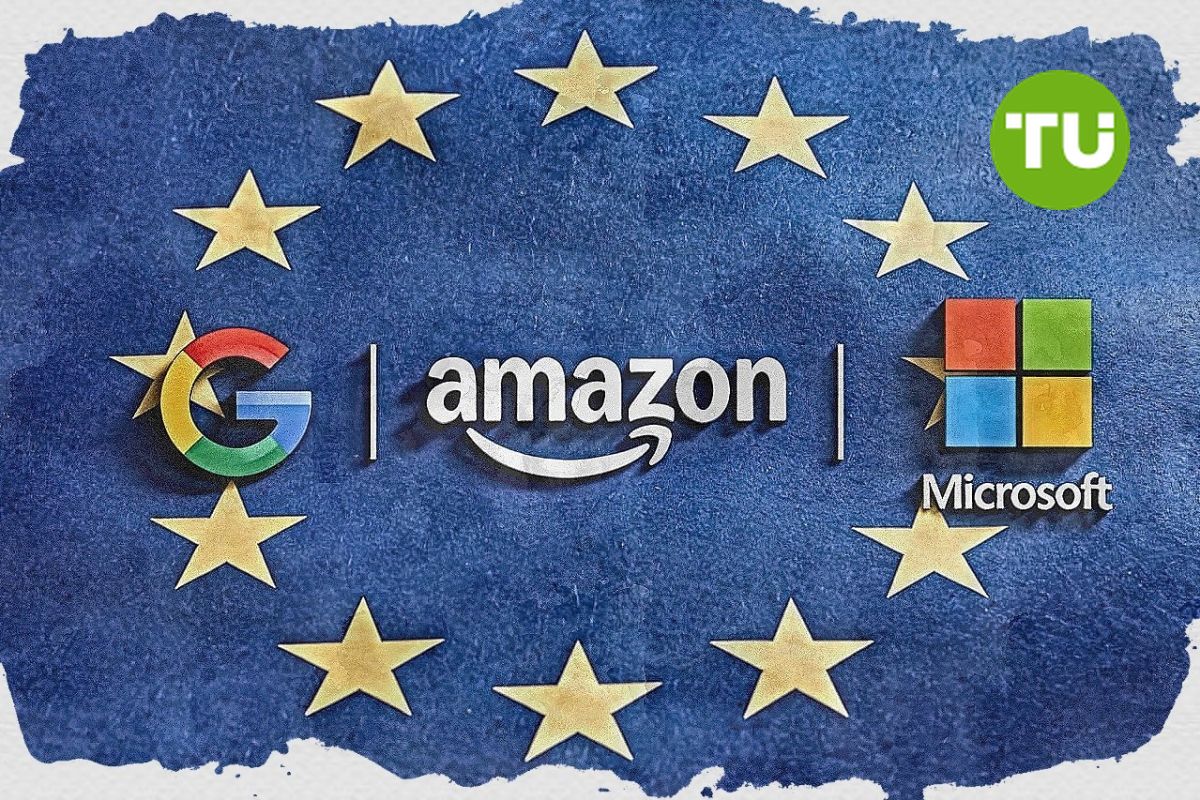
The European Union is preparing a decision that could weaken the position of Amazon, Microsoft, and Google in the cloud services market, especially in public procurement and projects involving sensitive data. Brussels is trying to strengthen technological sovereignty, but is not ready to fully close the market to U.S. companies.
Highlights
- The EU is expected to present rules for cloud services and AI infrastructure on June 3.
- Amazon, Microsoft and Google may face restrictions in public procurement.
- A full ban on U.S. companies operating in the EU is not expected.
Limit, but not block
According to Reuters, the draft EU legislation on cloud technology and artificial intelligence development is expected to be presented on June 3. It is expected to restrict the access of major U.S. cloud providers to certain tenders, but not impose a full ban on their operations in Europe.
The focus is on Amazon Web Services, Microsoft Azure, and Google Cloud. According to Statista, Amazon holds about 28% of the global cloud infrastructure market, followed by Microsoft Azure with 21% and Google Cloud with 14%. Together, these companies control about 63% of the global market, making them key providers of computing power for businesses, government agencies, and AI companies.
The European Commission is already increasing its focus on the cloud sector: regulators have previously said that EU rules aimed at curbing Big Tech’s influence will also apply to cloud services and AI infrastructure. The Commission has also examined whether Amazon and Microsoft should receive additional oversight status under the Digital Markets Act.
Internal debate in Europe
The idea of limiting the role of U.S. providers is linked to concerns that sensitive European data could be vulnerable because of dependence on external infrastructure. European cloud companies have long called on Brussels to reserve part of public procurement for local players and introduce stricter requirements for data control, governance, and legal protection.
However, there is no unity within the EU. Some officials support rapid and tough measures to reduce dependence on the U.S. and China. Others warn that Europe cannot yet fully replace American cloud platforms and risks provoking a response from Washington. The investment gap between the EU and the U.S. is estimated at around €1 trillion.
A similar compromise is being discussed in satellite communications: the EU may reserve most of the mobile satellite spectrum for European companies while still leaving access for Elon Musk’s Starlink and Amazon Leo.
Technological sovereignty without a break with the U.S.
For the EU, this is an attempt to balance data security with practical dependence on American infrastructure. Cloud capacity has become the foundation for artificial intelligence, public services, banks, defense, and critical businesses, so the issue has moved beyond ordinary competition.
If the new rules are too soft, European providers will see them as symbolic. If they are too strict, the EU could face capacity shortages, higher costs, and tension with the U.S. That is why the June 3 decision will be a test of how far Brussels is prepared to go in its push for digital autonomy.
It was earlier reported that EU advances U.S. trade deal after Trump tariff threats.





Latest Microsoft News








-
 Afghanistan
-
 Albania
-
 Algeria
-
 Angola
-
 Argentina
-
 Armenia
-
 Australia
-
 Austria
-
 Azerbaijan
-
 Bahamas
-
 Bahrain
-
 Bangladesh
-
 Belarus
-
 Belgium
-
 Bolivia
-
 Botswana
-
 Brazil
-
 Brunei
-
 Bulgaria
-
 Cambodia
-
 Cameroon
-
 Canada
-
 Chile
Chile
-
 China
China
-
 Colombia
-
 Congo
Congo
-
 Costa Rica
-
 Cote d'Ivoire
-
 Croatia
-
 Cuba
Cuba
-
 Cyprus
-
 Czechia
-
 DR Congo
-
 Denmark
-
 Dominican Republic
-
 Ecuador
-
 Egypt
Egypt
-
 El Salvador
-
 Estonia
-
 Eswatini
-
 Ethiopia
-
 Finland
-
 France
-
 Georgia
-
 Germany
-
 Ghana
Ghana
-
 Greece
-
 Haiti
Haiti
-
 Hong Kong
-
 Hungary
-
 India
India
-
 Indonesia
-
 Iran, Islamic republic
-
 Iraq
Iraq
-
 Ireland
-
 Israel
-
 Italy
Italy
-
 Jamaica
-
 Japan
Japan
-
 Jordan
-
 Kazakhstan
-
 Kenya
Kenya
-
 Korea
Korea
-
 Kuwait
-
 Kyrgyzstan
-
 Laos
Laos
-
 Latvia
-
 Lebanon
-
 Lesotho
-
 Libya
Libya
-
 Lithuania
-
 Luxembourg
-
 Madagascar
-
 Malaysia
-
 Malta
Malta
-
 Mauritius
-
 Mexico
-
 Moldova
-
 Mongolia
-
 Montenegro
-
 Morocco
-
 Mozambique
-
 Myanmar
-
 Namibia
-
 Nepal
Nepal
-
 Netherlands
-
 New Zealand
-
 Nigeria
-
 North Macedonia
-
 Norway
-
 Oman
Oman
-
 Pakistan
-
 Palestine
-
 Panama
-
 Papua New Guinea
-
 Paraguay
-
 Peru
Peru
-
 Philippines
-
 Poland
-
 Portugal
-
 Puerto Rico
-
 Qatar
Qatar
-
 Reunion
-
 Romania
-
 Rwanda
-
 Saudi Arabia
-
 Serbia
-
 Singapore
-
 Slovakia
-
 Slovenia
-
 Somalia
-
 South Africa
-
 Spain
Spain
-
 Sri Lanka
-
 Sweden
-
 Switzerland
-
 Syria
Syria
-
 Taiwan
-
 Tajikistan
-
 Tanzania
-
 Thailand
-
 Trinidad and Tobago
-
 Tunisia
-
 Turkey
-
 UAE
UAE
-
 Uganda
-
 Ukraine
-
 United Kingdom
-
United States
-
 Uruguay
-
 Uzbekistan
-
 Venezuela
-
 Vietnam
-
 Yemen
Yemen
-
 Zambia
-
 Zimbabwe
- Forex
- Crypto












