
At its annual Build 2026 developer conference in San Francisco, Microsoft introduced a family of seven proprietary artificial intelligence models under the MAI brand, signaling a strategic move to reduce dependence on partners such as OpenAI and Anthropic, both of which are reportedly preparing record-breaking IPOs. The flagship release, MAI-Thinking-1, is Microsoft's first reasoning model trained entirely from scratch on commercially licensed data without distillation from third-party systems.

The model features 35 billion active parameters and a context window of 256,000 tokens. Microsoft also launched MAI-Code-1-Flash, a code-generation model designed to transform natural language prompts into software code, with integration already underway in GitHub Copilot and Visual Studio Code. According to the company, customized versions of the models developed for McKinsey have outperformed GPT-5.5 in quality while delivering up to ten times greater cost efficiency.
Majorana 2 marks a significant leap in quantum computing
Microsoft also unveiled the second-generation Majorana 2 quantum processor. The company claims the new architecture delivers qubits that are approximately 1,000 times more reliable than those in the previous generation, largely due to replacing aluminum with lead in the superconducting layer. Average qubit coherence time has reportedly increased from milliseconds to roughly 20 seconds — an improvement Microsoft compares to moving from a device that requires daily charging to one that can operate for years without recharging. Zulfi Alam, Corporate Vice President of Microsoft Quantum, stated that the company expects to have a commercially meaningful quantum computer by 2029. While the current chip contains 12 qubits, scaling to millions of qubits will ultimately be required to unlock practical large-scale quantum applications.
Shares down 24% year-to-date amid concerns over AI spending
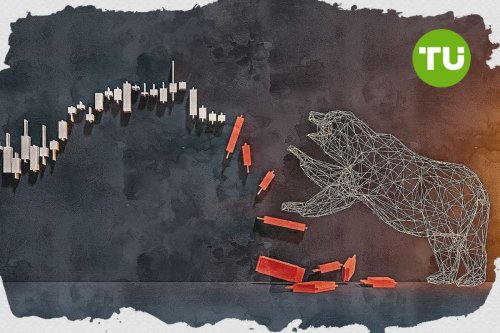
Despite the technological achievements, Microsoft shares have come under significant pressure in 2026. The stock has fallen 24.33% year-to-date, putting it on track for its worst quarterly performance since the 2008 financial crisis. By March 27, shares had dropped to approximately $359, making Microsoft the weakest performer among the U.S. technology "Magnificent Seven," while the Bloomberg Magnificent 7 Index declined 14% over the same period. Investors remain concerned about the scale of the company's AI-related capital expenditures, which reached $37.5 billion during the quarter, up 66% year-over-year. Additional pressure has come from Azure revenue growth slowing to 38%, slightly below market expectations of 39.4%, and broader skepticism regarding the pace at which AI investments will generate meaningful returns. On June 2, the stock fell another 3.61% amid reports of an FTC investigation into Microsoft's cloud services and AI bundling practices.
Analysts remain bullish despite the correction
Wall Street's long-term outlook remains overwhelmingly positive. Of the 64 analysts covering Microsoft, 62 currently rate the stock as a "Buy," while the remaining two recommend "Hold." No analyst currently recommends selling the shares. The consensus price target stands at $623, implying upside potential of approximately 29.3% from levels preceding the recent decline. Goldman Sachs recently lowered its target price to $500 from $515, citing revised free cash flow expectations and higher projected capital expenditures for 2026–2027, but maintained its Buy rating.
As previously noted in Microsoft remains under pressure as investors demand returns on massive AI investments, the current selloff appears to reflect a correction from elevated expectations rather than a deterioration in Microsoft's underlying business. The long-term investment case continues to be supported by Azure's market leadership, the expansion of Microsoft's AI ecosystem, and the company's growing portfolio of proprietary AI technologies.




Latest Microsoft News



-
 Afghanistan
-
 Albania
-
 Algeria
-
 Angola
-
 Argentina
-
 Armenia
-
 Australia
-
 Austria
-
 Azerbaijan
-
 Bahamas
-
 Bahrain
-
 Bangladesh
-
 Belarus
-
 Belgium
-
 Bolivia
-
 Botswana
-
 Brazil
-
 Brunei
-
 Bulgaria
-
 Cambodia
-
 Cameroon
-
 Canada
-
 Chile
Chile
-
 China
China
-
 Colombia
-
 Congo
Congo
-
 Costa Rica
-
 Cote d'Ivoire
-
 Croatia
-
 Cuba
Cuba
-
 Cyprus
-
 Czechia
-
 DR Congo
-
 Denmark
-
 Dominican Republic
-
 Ecuador
-
 Egypt
Egypt
-
 El Salvador
-
 Estonia
-
 Eswatini
-
 Ethiopia
-
 Finland
-
 France
-
 Georgia
-
 Germany
-
 Ghana
Ghana
-
 Greece
-
 Haiti
Haiti
-
 Hong Kong
-
 Hungary
-
 India
India
-
 Indonesia
-
 Iran, Islamic republic
-
 Iraq
Iraq
-
 Ireland
-
 Israel
-
 Italy
Italy
-
 Jamaica
-
 Japan
Japan
-
 Jordan
-
 Kazakhstan
-
 Kenya
Kenya
-
 Korea
Korea
-
 Kuwait
-
 Kyrgyzstan
-
 Laos
Laos
-
 Latvia
-
 Lebanon
-
 Lesotho
-
 Libya
Libya
-
 Lithuania
-
 Luxembourg
-
 Madagascar
-
 Malaysia
-
 Malta
Malta
-
 Mauritius
-
 Mexico
-
 Moldova
-
 Mongolia
-
 Montenegro
-
 Morocco
-
 Mozambique
-
 Myanmar
-
 Namibia
-
 Nepal
Nepal
-
 Netherlands
-
 New Zealand
-
 Nigeria
-
 North Macedonia
-
 Norway
-
 Oman
Oman
-
 Pakistan
-
 Palestine
-
 Panama
-
 Papua New Guinea
-
 Paraguay
-
 Peru
Peru
-
 Philippines
-
 Poland
-
 Portugal
-
 Puerto Rico
-
 Qatar
Qatar
-
 Reunion
-
 Romania
-
 Rwanda
-
 Saudi Arabia
-
 Serbia
-
 Singapore
-
 Slovakia
-
 Slovenia
-
 Somalia
-
 South Africa
-
 Spain
Spain
-
 Sri Lanka
-
 Sweden
-
 Switzerland
-
 Syria
Syria
-
 Taiwan
-
 Tajikistan
-
 Tanzania
-
 Thailand
-
 Trinidad and Tobago
-
 Tunisia
-
 Turkey
-
 UAE
UAE
-
 Uganda
-
 Ukraine
-
 United Kingdom
-
United States
-
 Uruguay
-
 Uzbekistan
-
 Venezuela
-
 Vietnam
-
 Yemen
Yemen
-
 Zambia
-
 Zimbabwe
- Forex
- Crypto











