The tweet was deleted by the author.
But we saved everything 🙂.
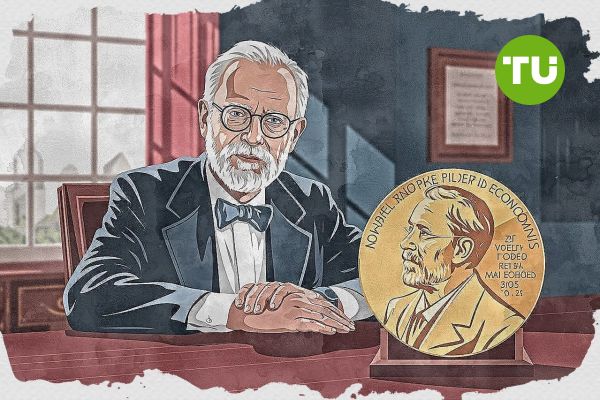
On 13 October 2025, the Royal Swedish Academy of Sciences awarded the Sveriges Riksbank Prize in Economic Sciences in Memory of Alfred Nobel to Joel Mokyr, Philippe Aghion, and Peter Howitt.
The prize citation states they are honored “for having explained innovation-driven economic growth.” Joel Mokyr receives one half of the prize “for having identified the prerequisites for sustained growth through technological progress”, while Philippe Aghion and Peter Howitt share the other half for their work on “the theory of sustained growth through creative destruction.” The award underscores how technological innovation and the replacement of older methods by newer ones are central to long-term prosperity. The laureates’ theories emphasize that growth isn’t automatic — it depends on institutions and incentives that allow innovation to flourish.
The Sveriges Riksbank Prize in Economic Sciences in Memory of Alfred Nobel, often informally called the “Nobel Prize in Economics,” was established in 1968 by Sweden’s central bank, Sveriges Riksbank, in commemoration of the bank’s 300th anniversary. Although not part of Alfred Nobel’s original set of prizes, it is awarded by the Royal Swedish Academy of Sciences in the same tradition and timing as the other Nobel Prizes.
Recipients are selected for contributions that deepen our understanding of economic processes, institutions, growth, welfare, markets, and policy. The prize amount in 2025 totals 11 million Swedish kronor, with half going to Mokyr and the other half shared by Aghion and Howitt. Through such recognition, the award aims to highlight research that has both theoretical depth and relevance to real-world economic and social challenges.
Joel Mokyr’s contribution lies in historical analysis: he investigated how, over time, societies came to adopt scientific reasoning and credible explanations, creating the conditions for innovation to build on previous advances. He argued that innovations succeed when societies not only know that something works but also understand why — fostering a cumulative process of technological progress. On the other hand, Philippe Aghion and Peter Howitt developed formal models of creative destruction — the idea that economic growth is sustained when new, better technologies continually replace older ones, pushing the frontier forward.
Their work also highlights that the process involves conflicts (e.g. between incumbents and disruptors) and that institutions must manage these tensions so innovation isn’t blocked. Together, the laureates provide a coherent framework showing that long-run economic growth depends on both technological dynamism and institutional design that allows innovation to thrive.
Recently we wrote that global markets on October 9 balanced between geopolitical shifts, currency interventions, and the threat of an energy deficit.



 Afghanistan
 Albania
 Algeria
 Angola
 Argentina
 Armenia
 Australia
 Austria
 Azerbaijan
 Bahamas
 Bahrain
 Bangladesh
 Belarus
 Belgium
 Bolivia
 Botswana
 Brazil
 Brunei
 Bulgaria
 Cambodia
 Cameroon
 Canada
 Chile
Chile
 China
China
 Colombia
 Congo
Congo
 Costa Rica
 Cote d'Ivoire
 Croatia
 Cuba
Cuba
 Cyprus
 Czechia
 DR Congo
 Denmark
 Dominican Republic
 Ecuador
 Egypt
Egypt
 El Salvador
 Estonia
 Eswatini
 Ethiopia
 Finland
 France
 Georgia
 Germany
 Ghana
Ghana
 Greece
 Haiti
Haiti
 Hong Kong
 Hungary
 India
India
 Indonesia
 Iran, Islamic republic
 Iraq
Iraq
 Ireland
 Israel
 Italy
Italy
 Jamaica
 Japan
Japan
 Jordan
 Kazakhstan
 Kenya
Kenya
 Korea
Korea
 Kuwait
 Kyrgyzstan
 Laos
Laos
 Latvia
 Lebanon
 Lesotho
 Libya
Libya
 Lithuania
 Luxembourg
 Madagascar
 Malaysia
 Malta
Malta
 Mauritius
 Mexico
 Moldova
 Mongolia
 Montenegro
 Morocco
 Mozambique
 Myanmar
 Namibia
 Nepal
Nepal
 Netherlands
 New Zealand
 Nigeria
 North Macedonia
 Norway
 Oman
Oman
 Pakistan
 Palestine
 Panama
 Papua New Guinea
 Paraguay
 Peru
Peru
 Philippines
 Poland
 Portugal
 Puerto Rico
 Qatar
Qatar
 Reunion
 Romania
 Rwanda
 Saudi Arabia
 Serbia
 Singapore
 Slovakia
 Slovenia
 Somalia
 South Africa
 Spain
Spain
 Sri Lanka
 Sweden
 Switzerland
 Syria
Syria
 Taiwan
 Tajikistan
 Tanzania
 Thailand
 Trinidad and Tobago
 Tunisia
 Turkey
 UAE
UAE
 Uganda
 Ukraine
 United Kingdom
United States
United Kingdom
United States
 Uruguay
 Uzbekistan
 Venezuela
 Vietnam
 Yemen
Yemen
 Zambia
 Zimbabwe