
Tesla stock down 3.6% amid mounting doubts over robotaxi timeline
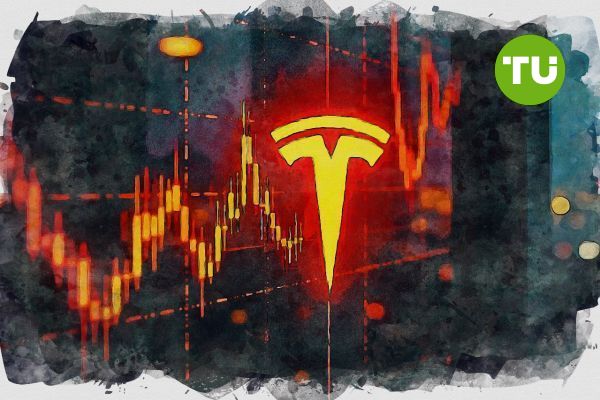
Tesla stock down 3.6% amid mounting doubts over robotaxi timelineAs of October 31, Tesla stock is trading at $444.71, down 3.6% in the past 24 hours. The technical picture now suggests a cooling of momentum, with the price approaching a critical support zone.
Highlights
- Tesla shares dropped 3.6% to $444.71 amid broader tech weakness and delays in its robotaxi rollout.- The company has not applied for key permits in several states, casting doubt on its near-term autonomy plans.
- With high valuation and fading momentum, Tesla faces growing execution and regulatory risks.
The primary short-term support lies between $430 and $440—a range that aligns with previous consolidation in mid-October and near the 50-day moving average, currently hovering close to $439. A decisive break below this band would indicate weakening bullish control and increase the likelihood of a further correction. The next level of support is located around $415, followed by more substantial buying interest near the $390–400 zone, which corresponds with the 200-day moving average.Momentum indicators, including the RSI, have retreated from overbought conditions above 70 earlier in October to more neutral levels near 55. This indicates that bullish momentum is fading, but not entirely reversed. Meanwhile, MACD has begun to roll over, hinting at a potential bearish crossover in the sessions ahead. Volume during the recent sell-off has increased slightly, which adds to the credibility of the decline.

Tesla stock price dynamics (August 2025 - October 2025). Source: TradingView.
Tesla’s beta remains high at approximately 2.09, making it particularly sensitive to broader market swings—especially tech sector volatility. The stock’s trailing P/E ratio of 322 and forward P/E still above 170 underscore its premium valuation, which leaves little margin for execution errors or macroeconomic shocks. In this environment, even minor disappointments in growth or guidance can trigger disproportionately sharp sell-offs.
Robotaxi delays raise doubts amid regulatory setbacks
Tesla stock declined in response to growing concerns that the company is quietly scaling back its timeline for launching a commercial robotaxi service. According to The Information, Elon Musk has tempered expectations internally, reducing earlier promises that the autonomous ride-hailing platform would reach half the U.S. population by the end of 2025. This shift comes amid broader weakness in the tech sector, compounding investor unease.Tesla has reportedly failed to submit the required regulatory applications to begin robotaxi operations in Arizona and Nevada—two of the three states where Musk had indicated service would be available before year-end. California, where Tesla is currently testing with safety drivers, remains another key market without a formal application. Although Florida could allow for a limited early rollout due to looser AV rules, the absence of visible progress in the regulatory process casts doubt on the viability of Tesla’s revised goal to launch in 8–10 metro areas “within the next two months.”
These developments highlight the deeper structural challenge facing Tesla: autonomous vehicles remain subject to a patchwork of state-level rules, making broad deployment difficult. While Musk has framed autonomy as central to Tesla’s future value, the lack of tangible progress—both technical and regulatory—continues to erode investor confidence. The market is beginning to question not only the feasibility of Tesla’s robotaxi vision, but also management’s credibility in setting and meeting strategic milestones.
Range-bound outlook with downside risk if support breaks
In the base case, Tesla stabilizes near current support at $440, consolidating in a sideways pattern between $430 and $480 through November. If sentiment around autonomy improves, and macro conditions do not deteriorate further, TSLA could retest the $475–$490 level. However, significant upside appears capped without fresh catalysts. A better-than-expected update on Q4 deliveries or progress on regulatory approvals for robotaxi deployment could provide the needed boost to break above resistance.In the bear case, if Tesla breaks below $430 and market sentiment remains weak—particularly in tech—the stock could correct further toward $390–400. A failure to provide clear updates on robotaxi progress, combined with soft Q4 delivery guidance, would increase downside risk substantially. Further deterioration in margins or pricing pressure from Chinese EV competitors could accelerate the downside move.
BofA analyst Federico Merendi raised Tesla’s price target from $340 to $471, highlighting its growing position in "physical AI" through robotics, FSD, and automation. However, he maintained a Neutral rating, cautioning that much of Tesla’s future potential is already priced in.










-
 Afghanistan
-
 Albania
-
 Algeria
-
 Angola
-
 Argentina
-
 Armenia
-
 Australia
-
 Austria
-
 Azerbaijan
-
 Bahamas
-
 Bahrain
-
 Bangladesh
-
 Belarus
-
 Belgium
-
 Bolivia
-
 Botswana
-
 Brazil
-
 Brunei
-
 Bulgaria
-
 Cambodia
-
 Cameroon
-
 Canada
-
 Chile
Chile
-
 China
China
-
 Colombia
-
 Congo
Congo
-
 Costa Rica
-
 Cote d'Ivoire
-
 Croatia
-
 Cuba
Cuba
-
 Cyprus
-
 Czechia
-
 DR Congo
-
 Denmark
-
 Dominican Republic
-
 Ecuador
-
 Egypt
Egypt
-
 El Salvador
-
 Estonia
-
 Eswatini
-
 Ethiopia
-
 Finland
-
 France
-
 Georgia
-
 Germany
-
 Ghana
Ghana
-
 Greece
-
 Haiti
Haiti
-
 Hong Kong
-
 Hungary
-
 India
India
-
 Indonesia
-
 Iran, Islamic republic
-
 Iraq
Iraq
-
 Ireland
-
 Israel
-
 Italy
Italy
-
 Jamaica
-
 Japan
Japan
-
 Jordan
-
 Kazakhstan
-
 Kenya
Kenya
-
 Korea
Korea
-
 Kuwait
-
 Kyrgyzstan
-
 Laos
Laos
-
 Latvia
-
 Lebanon
-
 Lesotho
-
 Libya
Libya
-
 Lithuania
-
 Luxembourg
-
 Madagascar
-
 Malaysia
-
 Malta
Malta
-
 Mauritius
-
 Mexico
-
 Moldova
-
 Mongolia
-
 Montenegro
-
 Morocco
-
 Mozambique
-
 Myanmar
-
 Namibia
-
 Nepal
Nepal
-
 Netherlands
-
 New Zealand
-
 Nigeria
-
 North Macedonia
-
 Norway
-
 Oman
Oman
-
 Pakistan
-
 Palestine
-
 Panama
-
 Papua New Guinea
-
 Paraguay
-
 Peru
Peru
-
 Philippines
-
 Poland
-
 Portugal
-
 Puerto Rico
-
 Qatar
Qatar
-
 Reunion
-
 Romania
-
 Rwanda
-
 Saudi Arabia
-
 Serbia
-
 Singapore
-
 Slovakia
-
 Slovenia
-
 Somalia
-
 South Africa
-
 Spain
Spain
-
 Sri Lanka
-
 Sweden
-
 Switzerland
-
 Syria
Syria
-
 Taiwan
-
 Tajikistan
-
 Tanzania
-
 Thailand
-
 Trinidad and Tobago
-
 Tunisia
-
 Turkey
-
 UAE
UAE
-
 Uganda
-
 Ukraine
-
 United Kingdom
-
United States
-
 Uruguay
-
 Uzbekistan
-
 Venezuela
-
 Vietnam
-
 Yemen
Yemen
-
 Zambia
-
 Zimbabwe
- Forex
- Crypto











