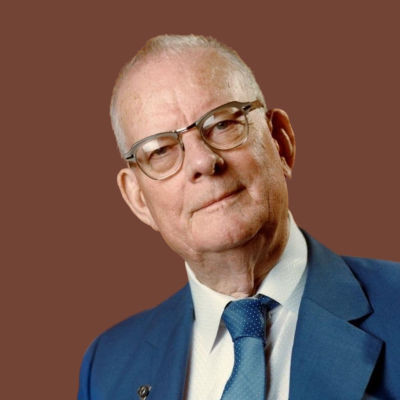
W. Edwards Deming Biography, Career, Net Worth, and Key Insight



W. Edwards Deming’s Profile Summary
|
Company
|
Self-employed |
|---|---|
|
Position
|
W. Edwards Deming is primarily known as a consultant and statistician, renowned for his work in quality management and business process improvement. |
|
Source of wealth
|
Consulting fees from quality management and business process improvement, fees from lectures and seminars, book royalties. |
|
Also known as
|
Author, Professor, Consultant. |
|
Years of life
|
14.10.1900 - 20.12.1993 |
|
Education
|
University of Wyoming – Bachelor's in Electrical Engineering, University of Colorado – Master's in Mathematics and Physics, Yale University – Ph.D. in Mathematical Physics. |
|
Citizenship
|
United States |
|
Residence
|
Washington, D.C., United States |
|
Family
|
W. Edwards Deming's family included his wife, Lola Elizabeth Shupe, and their three children. |
|
Website, Social Media
|
https://deming.org/ |
Biography
W. Edwards Deming (1900–1993) was an American engineer, statistician, professor, author, and consultant, best known for his pioneering work in the field of quality management. He was instrumental in introducing statistical process control to industries and is credited with significantly improving manufacturing processes, particularly in post-war Japan. Born in Sioux City, Iowa, Deming initially studied electrical engineering and later earned a Ph.D. in mathematical physics from Yale University. His early career included work at the U.S. Department of Agriculture and the Bureau of the Census, but it was his work in Japan after World War II that cemented his legacy. Invited to Japan by Japanese industrial leaders, Deming introduced his quality control methods, which led to the country's remarkable industrial growth. His principles were encapsulated in what became known as the "Deming Cycle" or "PDCA" (Plan-Do-Check-Act) and the "14 Points for Management," which laid the foundation for Total Quality Management (TQM). Deming's influence was not confined to Japan, as he later became a key figure in the U.S. management and quality revolution, consulting with major corporations. His impact is often measured by his contributions to modern quality assurance and his role in shaping the global management philosophies of efficiency and continuous improvement.-
How did W. Edwards Deming make money?
W. Edwards Deming makes money in the following areas:
Consulting fees from quality management and business process improvement, fees from lectures and seminars, book royalties.
-
What is W. Edwards Deming net worth?
As of 2026, there is no publicly available and reliable information regarding W. Edwards Deming’s net worth.
What is W. Edwards Deming also known as?
In addition to his work as a consultant, W. Edwards Deming was a prolific author, penning several influential books on management and quality control, including Out of the Crisis and The New Economics for Industry, Government, and Education. He was also a professor who taught at institutions such as New York University, where he lectured on statistics and quality control. As a consultant, he was widely sought after by industries and governments for his expertise in improving business processes and production efficiency.Prominent achievements
Awarded Japan's Order of the Sacred Treasure, recognized for contributions to Japan's post-war industrial success, authored several foundational books on quality management, received the National Medal of Technology and Innovation in the U.S., developed the "Deming Cycle" (PDCA), ranked as one of the most influential thinkers in management, numerous honorary doctorates from universities worldwide.What are W. Edwards Deming’s key insights?
Deming's business philosophy centered around continuous improvement and quality management. He emphasized the importance of understanding systems, fostering leadership that encourages innovation, and empowering workers by providing the right tools and training. His "14 Points for Management" advocated for long-term planning over short-term gains and aimed to instill quality from the top down. He believed that focusing on quality would naturally improve productivity and lower costs, leading to sustainable success.
Personal life
Deming was married to Lola Elizabeth Shupe in 1922, and they had three daughters: Dorothy, Diana, and Linda. He was known to be deeply dedicated to his family, balancing his career with family responsibilities. His daughters were also involved in preserving his legacy after his passing.
Useful insights
Fundamental principles of investing

As someone deeply immersed in the world of finance, I firmly believe that learning the fundamental principles of investing is the cornerstone of financial literacy. The books I recommend here have shaped modern investment strategies, offering timeless wisdom that can benefit both beginners and seasoned investors. These are not just texts, but essential tools to help you navigate the complexities of the financial markets with confidence and insight.
-
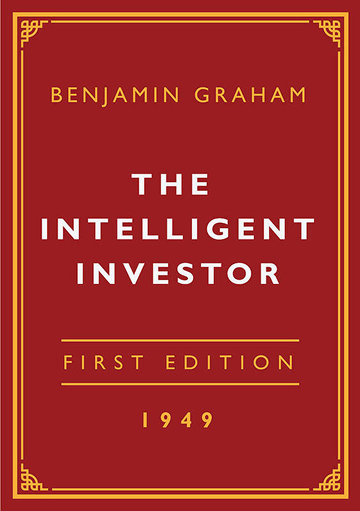
Benjamin Graham - "The Intelligent Investor"
-
Summary:
Written by one of the most influential investment thinkers, this book outlines the principles of value investing. Graham emphasizes the importance of analyzing a company’s intrinsic value, long-term investment strategies, and avoiding emotional decisions driven by market fluctuations. The book also discusses defensive investing, focusing on preservation of capital and minimizing risk.
-
Why read it:
This is a must-read for anyone looking to understand the core philosophy behind successful long-term investing. Graham’s principles influenced generations of investors, including Warren Buffett, making it an essential guide to navigating stock market risks with a focus on minimizing losses.
-
-
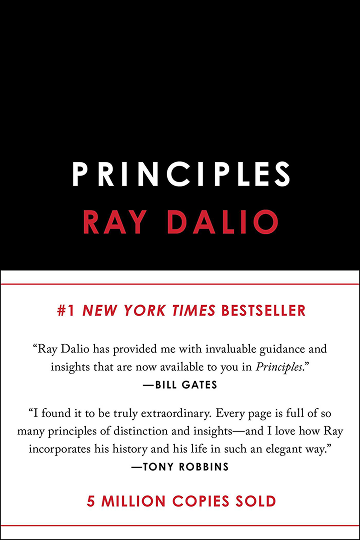
Ray Dalio - "Principles"
-
Summary:
Ray Dalio, founder of one of the world’s largest hedge funds, shares the life and work principles that led to his immense success. The book covers Dalio’s unique management and investment strategies, focusing on radical transparency, truth-seeking, and the importance of learning from mistakes. It also provides practical insights into organizational behavior and personal growth, making it valuable beyond just investing.
-
Why read it:
Dalio's "Principles" is a treasure trove of wisdom for investors and business leaders who wish to improve their decision-making. It’s a guide on how to align personal and professional life through well-defined, actionable rules.
-
Other profiles in category
Popular Financial Guides
Editors' Top Picks and Insights
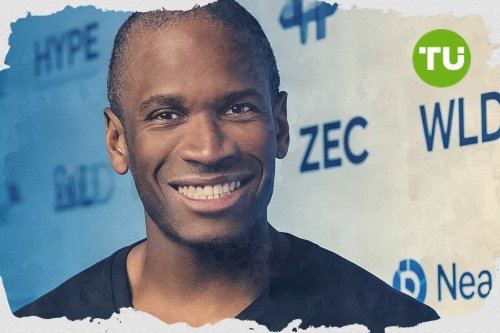
From “Holy Trinity” to WLD crash: How Arthur Hayes became a market-moving seller

The world's first trillionaire: How Musk built his fortune on electric cars, space and AI

How precious-metals mining revival is reshaping portfolios in 2026

Bitcoin price prediction after CPI rise: Is BTC headed for deeper losses?

Five years with Bitcoin: How El Salvador changed after legalizing BTC

Crypto on the court: How NBA Finals became a showcase for Ledger
Latest Financial News

SpaceX IPO pressures Wall Street to rethink Magnificent Seven tech-stock label

Dollar General expands $1-item push to lift sales and budget shopper traffic

New York City efficiency hearings draw calls for service reforms over budget cuts

-
 Afghanistan
-
 Albania
-
 Algeria
-
 Angola
-
 Argentina
-
 Armenia
-
 Australia
-
 Austria
-
 Azerbaijan
-
 Bahamas
-
 Bahrain
-
 Bangladesh
-
 Belarus
-
 Belgium
-
 Bolivia
-
 Botswana
-
 Brazil
-
 Brunei
-
 Bulgaria
-
 Cambodia
-
 Cameroon
-
 Canada
-
 Chile
Chile
-
 China
China
-
 Colombia
-
 Congo
Congo
-
 Costa Rica
-
 Cote d'Ivoire
-
 Croatia
-
 Cuba
Cuba
-
 Cyprus
-
 Czechia
-
 DR Congo
-
 Denmark
-
 Dominican Republic
-
 Ecuador
-
 Egypt
Egypt
-
 El Salvador
-
 Estonia
-
 Eswatini
-
 Ethiopia
-
 Finland
-
 France
-
 Georgia
-
 Germany
-
 Ghana
Ghana
-
 Greece
-
 Haiti
Haiti
-
 Hong Kong
-
 Hungary
-
 India
India
-
 Indonesia
-
 Iran, Islamic republic
-
 Iraq
Iraq
-
 Ireland
-
 Israel
-
 Italy
Italy
-
 Jamaica
-
 Japan
Japan
-
 Jordan
-
 Kazakhstan
-
 Kenya
Kenya
-
 Korea
Korea
-
 Kuwait
-
 Kyrgyzstan
-
 Laos
Laos
-
 Latvia
-
 Lebanon
-
 Lesotho
-
 Libya
Libya
-
 Lithuania
-
 Luxembourg
-
 Madagascar
-
 Malaysia
-
 Malta
Malta
-
 Mauritius
-
 Mexico
-
 Moldova
-
 Mongolia
-
 Montenegro
-
 Morocco
-
 Mozambique
-
 Myanmar
-
 Namibia
-
 Nepal
Nepal
-
 Netherlands
-
 New Zealand
-
 Nigeria
-
 North Macedonia
-
 Norway
-
 Oman
Oman
-
 Pakistan
-
 Palestine
-
 Panama
-
 Papua New Guinea
-
 Paraguay
-
 Peru
Peru
-
 Philippines
-
 Poland
-
 Portugal
-
 Puerto Rico
-
 Qatar
Qatar
-
 Reunion
-
 Romania
-
 Rwanda
-
 Saudi Arabia
-
 Serbia
-
 Singapore
-
 Slovakia
-
 Slovenia
-
 Somalia
-
 South Africa
-
 Spain
Spain
-
 Sri Lanka
-
 Sweden
-
 Switzerland
-
 Syria
Syria
-
 Taiwan
-
 Tajikistan
-
 Tanzania
-
 Thailand
-
 Trinidad and Tobago
-
 Tunisia
-
 Turkey
-
 UAE
UAE
-
 Uganda
-
 Ukraine
-
 United Kingdom
-
United States
-
 Uruguay
-
 Uzbekistan
-
 Venezuela
-
 Vietnam
-
 Yemen
Yemen
-
 Zambia
-
 Zimbabwe
- Forex
- Crypto












