
Vitalik Buterin urges DAOs to focus on infrastructure, not endless voting and optics
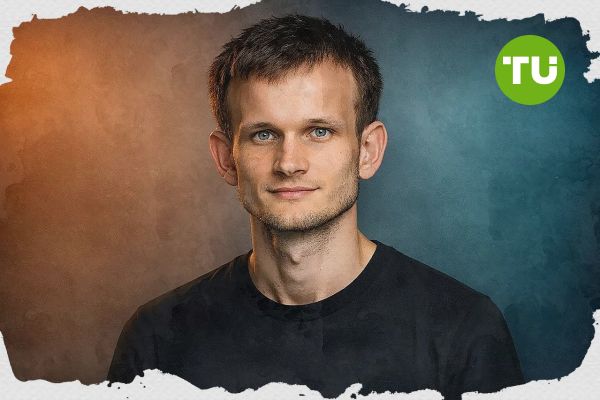
Ethereum co-founder Vitalik Buterin is pushing the industry to rethink how decentralized autonomous organizations are built, warning that most DAOs today are not meaningfully better than traditional governance structures.
In a Monday post on X, he argued that the standard blueprint has degraded into little more than “a treasury controlled by token holder voting”, reports Cointelegraph.
That approach, he said, is widely copied but ultimately inefficient, vulnerable to capture, and incapable of solving the real problems DAOs were supposed to address. Instead of optimizing for endless votes and token-weighted polls, Buterin believes DAOs should be designed around specific infrastructure goals. He pointed to practical needs like improved oracles, onchain dispute resolution, and long-term project stewardship as more urgent than treasury management optics. If DAOs can’t evolve beyond their current format, he implied, they risk becoming just another inefficient political layer onchain.
“Concave vs. convex” governance: different DAOs for different decisions
Buterin framed the issue through his “concave vs. convex” governance lens, suggesting that different categories of decisions need fundamentally different structures. For “concave” problems—where compromise is better than a coin-flip outcome—DAOs should prioritize robustness and aggregate input from many sources to reach stable consensus. For “convex” problems that require bold, decisive bets, he argued that strong leadership can actually be more effective, with decentralization used primarily as a check on power rather than a replacement for it.
In other words, DAOs shouldn’t pretend every decision benefits from the same level of decentralization. Buterin also warned that governance systems must fight two structural weaknesses: privacy failures and decision fatigue. Without privacy, governance becomes a social influence game where reputation, pressure, and coordination dominate outcomes. And when users are asked to vote endlessly, engagement predictably collapses after the initial hype cycle.
Privacy tech, AI delegation and DAOs that actually do infrastructure work
To solve privacy and participation issues, Buterin pointed to tools like zero-knowledge proofs, along with more advanced options such as secure multi-party computation and fully homomorphic encryption. These techniques could make governance more resistant to manipulation by reducing social signaling and coercion. He also suggested that AI could help reduce decision fatigue by assisting analysis or enabling users to delegate voting to locally-controlled models—while emphasizing that DAOs should not be run directly by AI systems.
The comments land as DAO ecosystems continue to expand, but struggle with low turnout and whale dominance, especially in token-weighted governance. DAO tokens have grown into a sizable sector, with a total market capitalization of at least $17.5 billion, yet many still fail the test of real decentralization. Buterin argues the next wave of DAOs must focus on subjective dispute resolution, anti-scam registries, and modular short-lived funding vehicles that can keep projects alive even after founding teams disappear. His broader message is that DAO design isn’t a minor feature—it’s the core infrastructure layer, and builders need to treat it like half the job, not an afterthought.
Recently we wrote that Ethereum has seen regulatory milestones recently with the approval of spot Ethereum ETFs in the US in July 2024, which has driven increased institutional investment and new fund inflows, including products such as BlackRock's ETHA and Grayscale’s Ethereum Mini Trust.




Latest Crypto News







-
 Afghanistan
-
 Albania
-
 Algeria
-
 Angola
-
 Argentina
-
 Armenia
-
 Australia
-
 Austria
-
 Azerbaijan
-
 Bahamas
-
 Bahrain
-
 Bangladesh
-
 Belarus
-
 Belgium
-
 Bolivia
-
 Botswana
-
 Brazil
-
 Brunei
-
 Bulgaria
-
 Cambodia
-
 Cameroon
-
 Canada
-
 Chile
Chile
-
 China
China
-
 Colombia
-
 Congo
Congo
-
 Costa Rica
-
 Cote d'Ivoire
-
 Croatia
-
 Cuba
Cuba
-
 Cyprus
-
 Czechia
-
 DR Congo
-
 Denmark
-
 Dominican Republic
-
 Ecuador
-
 Egypt
Egypt
-
 El Salvador
-
 Estonia
-
 Eswatini
-
 Ethiopia
-
 Finland
-
 France
-
 Georgia
-
 Germany
-
 Ghana
Ghana
-
 Greece
-
 Haiti
Haiti
-
 Hong Kong
-
 Hungary
-
 India
India
-
 Indonesia
-
 Iran, Islamic republic
-
 Iraq
Iraq
-
 Ireland
-
 Israel
-
 Italy
Italy
-
 Jamaica
-
 Japan
Japan
-
 Jordan
-
 Kazakhstan
-
 Kenya
Kenya
-
 Korea
Korea
-
 Kuwait
-
 Kyrgyzstan
-
 Laos
Laos
-
 Latvia
-
 Lebanon
-
 Lesotho
-
 Libya
Libya
-
 Lithuania
-
 Luxembourg
-
 Madagascar
-
 Malaysia
-
 Malta
Malta
-
 Mauritius
-
 Mexico
-
 Moldova
-
 Mongolia
-
 Montenegro
-
 Morocco
-
 Mozambique
-
 Myanmar
-
 Namibia
-
 Nepal
Nepal
-
 Netherlands
-
 New Zealand
-
 Nigeria
-
 North Macedonia
-
 Norway
-
 Oman
Oman
-
 Pakistan
-
 Palestine
-
 Panama
-
 Papua New Guinea
-
 Paraguay
-
 Peru
Peru
-
 Philippines
-
 Poland
-
 Portugal
-
 Puerto Rico
-
 Qatar
Qatar
-
 Reunion
-
 Romania
-
 Rwanda
-
 Saudi Arabia
-
 Serbia
-
 Singapore
-
 Slovakia
-
 Slovenia
-
 Somalia
-
 South Africa
-
 Spain
Spain
-
 Sri Lanka
-
 Sweden
-
 Switzerland
-
 Syria
Syria
-
 Taiwan
-
 Tajikistan
-
 Tanzania
-
 Thailand
-
 Trinidad and Tobago
-
 Tunisia
-
 Turkey
-
 UAE
UAE
-
 Uganda
-
 Ukraine
-
 United Kingdom
-
United States
-
 Uruguay
-
 Uzbekistan
-
 Venezuela
-
 Vietnam
-
 Yemen
Yemen
-
 Zambia
-
 Zimbabwe
- Forex
- Crypto












