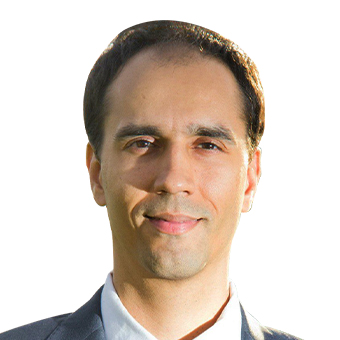
Vitalik Buterin proposes new model for memory efficiency

Ethereum co-founder Vitalik Buterin has published a new article titled “Memory Access is O(N^(1/3))”, challenging one of the long-standing assumptions in computer science about how memory access is measured. Traditionally, memory operations have been treated as constant-time, or O(1), in algorithmic complexity. Buterin argues this model is flawed and that both theoretical and practical evidence suggest memory access should be considered O(N^(1/3)), meaning access time increases with the cube root of memory size.
According to Buterin, understanding this could change how developers approach algorithm design and performance optimization, especially in areas like cryptography, where memory access speed plays a crucial role.
Theoretical and empirical basis for O(N^(1/3)) model
In his analysis, Buterin explains that the limitation arises from physical constraints, particularly the speed of light and spatial distribution of memory. He uses a simple model: doubling the physical distance from a processor allows for eight times more memory but doubles the time it takes to access it. This relationship supports the cube-root scaling.
He extends this reasoning to parallel access, where even if multiple memory units can be accessed simultaneously, physical and energy constraints still apply. In real-world computing, different memory tiers—from CPU registers to caches and RAM—exhibit latency patterns that closely follow this cube-root relationship.
Empirical data further supports the theory. When comparing access times across memory types in typical systems, latency grows approximately with the cube root of the memory size, validating Buterin’s proposed model.
Impact on algorithm design and optimization
Buterin highlights that this shift in perspective is crucial for optimizing algorithms that rely on precomputation. In cryptographic procedures like elliptic curve operations or binary field arithmetic, developers often store precomputed tables to speed up computations. Under the old O(1) model, expanding these tables seemed always beneficial.
However, if memory access is O(N^(1/3)), there’s a point where larger tables become counterproductive due to slower access. In one of Buterin’s experiments, an 8-bit precomputed table stored in cache outperformed a larger 16-bit table stored in RAM—demonstrating that faster access outweighs larger storage in many cases.
This has further implications for ASIC and GPU design, where local memory access can be optimized for constant time, but global access remains constrained by physical principles.
Implications for the crypto industry
Buterin’s findings could significantly influence blockchain and cryptographic engineering. Many crypto algorithms, from hashing functions to zk-SNARKs and signature schemes, depend on memory-intensive operations. By rethinking memory complexity, developers may achieve more efficient cryptographic protocols, faster blockchain validation, and optimized hardware implementations.
As the industry moves toward high-performance computing and modular blockchain architectures, Buterin’s model provides a new lens for innovation—emphasizing locality, memory efficiency, and realistic performance modeling in next-generation crypto infrastructure.
Read also: Vitalik Buterin comments on the vulnerability that occurred after the Chat GPT update





Latest Crypto News










-
 Afghanistan
-
 Albania
-
 Algeria
-
 Angola
-
 Argentina
-
 Armenia
-
 Australia
-
 Austria
-
 Azerbaijan
-
 Bahamas
-
 Bahrain
-
 Bangladesh
-
 Belarus
-
 Belgium
-
 Bolivia
-
 Botswana
-
 Brazil
-
 Brunei
-
 Bulgaria
-
 Cambodia
-
 Cameroon
-
 Canada
-
 Chile
Chile
-
 China
China
-
 Colombia
-
 Congo
Congo
-
 Costa Rica
-
 Cote d'Ivoire
-
 Croatia
-
 Cuba
Cuba
-
 Cyprus
-
 Czechia
-
 DR Congo
-
 Denmark
-
 Dominican Republic
-
 Ecuador
-
 Egypt
Egypt
-
 El Salvador
-
 Estonia
-
 Eswatini
-
 Ethiopia
-
 Finland
-
 France
-
 Georgia
-
 Germany
-
 Ghana
Ghana
-
 Greece
-
 Haiti
Haiti
-
 Hong Kong
-
 Hungary
-
 India
India
-
 Indonesia
-
 Iran, Islamic republic
-
 Iraq
Iraq
-
 Ireland
-
 Israel
-
 Italy
Italy
-
 Jamaica
-
 Japan
Japan
-
 Jordan
-
 Kazakhstan
-
 Kenya
Kenya
-
 Korea
Korea
-
 Kuwait
-
 Kyrgyzstan
-
 Laos
Laos
-
 Latvia
-
 Lebanon
-
 Lesotho
-
 Libya
Libya
-
 Lithuania
-
 Luxembourg
-
 Madagascar
-
 Malaysia
-
 Malta
Malta
-
 Mauritius
-
 Mexico
-
 Moldova
-
 Mongolia
-
 Montenegro
-
 Morocco
-
 Mozambique
-
 Myanmar
-
 Namibia
-
 Nepal
Nepal
-
 Netherlands
-
 New Zealand
-
 Nigeria
-
 North Macedonia
-
 Norway
-
 Oman
Oman
-
 Pakistan
-
 Palestine
-
 Panama
-
 Papua New Guinea
-
 Paraguay
-
 Peru
Peru
-
 Philippines
-
 Poland
-
 Portugal
-
 Puerto Rico
-
 Qatar
Qatar
-
 Reunion
-
 Romania
-
 Rwanda
-
 Saudi Arabia
-
 Serbia
-
 Singapore
-
 Slovakia
-
 Slovenia
-
 Somalia
-
 South Africa
-
 Spain
Spain
-
 Sri Lanka
-
 Sweden
-
 Switzerland
-
 Syria
Syria
-
 Taiwan
-
 Tajikistan
-
 Tanzania
-
 Thailand
-
 Trinidad and Tobago
-
 Tunisia
-
 Turkey
-
 UAE
UAE
-
 Uganda
-
 Ukraine
-
 United Kingdom
-
United States
-
 Uruguay
-
 Uzbekistan
-
 Venezuela
-
 Vietnam
-
 Yemen
Yemen
-
 Zambia
-
 Zimbabwe
- Forex
- Crypto











