The tweet was deleted by the author.
But we saved everything 🙂.
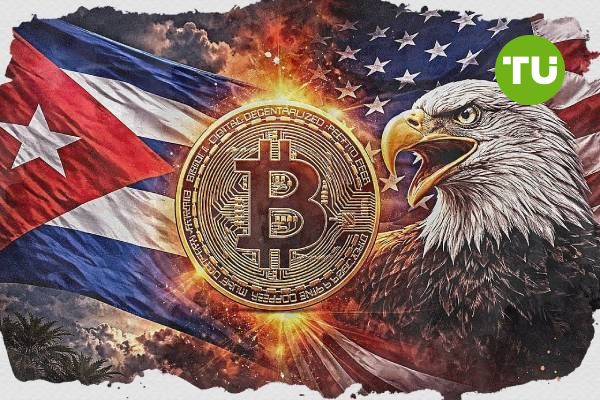
The United States may take an unprecedented step by confiscating Venezuela’s bitcoins and adding them to its strategic reserve. But Venezuela is not the only country that has drawn Donald Trump’s attention. Cuba could very well become the next target of the U.S. president.
Cuba has lived under financial isolation for so long that, for several generations, it has become part of everyday reality. Frozen accounts, inaccessible payment systems, restrictions on currency operations, and a persistent shortage of hard currency have fostered deep distrust toward any forms of savings that depend on the state or international institutions.
In this context, Bitcoin emerged not as a speculative asset but as a practical tool. It is a way to receive money from abroad, preserve value, or simply bypass a system that has failed to work in the interests of citizens for years.
However, alongside the spread of cryptocurrencies, a key question has emerged, one that is increasingly being asked both inside and outside Cuba. Can Bitcoin, used by Cubans or even potentially accumulated by the state, be confiscated by the United States? In the same way that bank accounts, gold and foreign currency reserves, or other assets of sanctioned regimes have been confiscated in the past.
The experience of Venezuela and discussions around so-called shadow crypto reserves create the impression that such a threat is quite real. But Bitcoin is neither a bank nor a reserve fund, and the mechanisms of control over it function very differently.
To understand where fear ends and reality begins, it is first necessary to examine how cryptocurrencies actually function in the Cuban context.
Cuba’s crypto reality has very little in common with state-led experiments in other countries. Although in 2021 the Central Bank of Cuba officially recognized the use of virtual assets and introduced a licensing system for crypto service providers, Bitcoin and stablecoins have not become part of a full-fledged financial infrastructure. Formal legalization did not turn cryptocurrencies into an element of public economic strategy. Instead, it created a framework for control that, in practice, barely covers the real market.
Actual cryptocurrency usage in Cuba remains largely informal and decentralized, tied to the needs of individual people rather than institutions. The main driver of adoption has been remittances from the Cuban diaspora. Due to sanctions and restrictions, traditional remittance channels either function unreliably or are entirely unavailable. Under these conditions, digital assets allow value to be transferred directly, bypassing banks and payment systems.
These transactions typically take place through personal contacts, messengers, and local arrangements, often without the involvement of licensed services and without any visible public infrastructure. As a result, Cuba’s crypto ecosystem largely lacks major centralized platforms that could become obvious targets for external pressure. This fragmentation and semi-shadow nature simultaneously complicate life for users and reduce the scope for large-scale external intervention.
Examples of Venezuela are typically cited as proof that the United States is capable of confiscating crypto assets from any sanctioned regime. Yet even in this case, it is important to distinguish confirmed data from assumptions. Public blockchain data, which provides a transparent but incomplete ledger, indicates that wallets linked to the Venezuelan state contain approximately 240 bitcoins. This amount is estimated at 22 million dollars, a figure that sharply contrasts with widespread claims about so-called shadow reserves allegedly reaching up to 60 billion dollars.
Experts suggest several possible explanations for this discrepancy. Some assets may be stored in heavily obfuscated wallets, dispersed across various custodial services, or held in private permissioned ledgers that are inaccessible to public analysis. At the same time, it cannot be ruled out that the 60 billion dollar figure is a significant exaggeration that combines assets of various state, quasi-state, and private entities without clear evidence of their connection to official reserves.
For this reason, the Venezuelan case cannot be mechanically applied to the Cuban context. Confiscations that occurred in Venezuela were associated with centralized structures, large volumes of funds, and the use of services that fell under the jurisdiction of the United States or its allies. These factors created specific points of vulnerability through which external control became possible. Cuba’s crypto reality is structured differently, making a direct repetition of this scenario unlikely.
At the same time, it would be a mistake to assume that the United States has no leverage at all. Its influence manifests not through the direct seizure of Bitcoin, but through restrictions on the environment in which it is used. Sanctions complicate access to exchanges, increase legal risks for intermediaries, and render any financial operations connected to Cuba toxic for international services.For ordinary users, this does not mean immediate confiscation but rather constant pressure that raises both the cost and the risk of using cryptocurrencies. Bitcoin remains accessible, but every transaction exists in a state of legal uncertainty.
Popular notions of Bitcoin confiscation often rely on analogies with fiat money and state reserves. But this analogy is flawed. The United States does not possess a technical instrument that would allow it to seize bitcoins altogether in the same way it freezes accounts or arrests assets moving through the banking system. Without access to private keys, Bitcoin remains beyond the direct control of any state, regardless of its military or political power.
This does not mean, however, that U.S. influence is zero. Sanctions, legal pressure, and the fear of criminalization shape an environment in which using Bitcoin becomes more complex, more expensive, and riskier.
In Cuban realities, Bitcoin is not an element of state strategy or reserve policy. It exists at the level of private decisions and personal necessity as a fragile mechanism of financial autonomy. It is precisely this fragility, rather than scenarios of direct seizure, that defines its real future on the island.



 Afghanistan
 Albania
 Algeria
 Angola
 Argentina
 Armenia
 Australia
 Austria
 Azerbaijan
 Bahamas
 Bahrain
 Bangladesh
 Belarus
 Belgium
 Bolivia
 Botswana
 Brazil
 Brunei
 Bulgaria
 Cambodia
 Cameroon
 Canada
 Chile
Chile
 China
China
 Colombia
 Congo
Congo
 Costa Rica
 Cote d'Ivoire
 Croatia
 Cuba
Cuba
 Cyprus
 Czechia
 DR Congo
 Denmark
 Dominican Republic
 Ecuador
 Egypt
Egypt
 El Salvador
 Estonia
 Eswatini
 Ethiopia
 Finland
 France
 Georgia
 Germany
 Ghana
Ghana
 Greece
 Haiti
Haiti
 Hong Kong
 Hungary
 India
India
 Indonesia
 Iran, Islamic republic
 Iraq
Iraq
 Ireland
 Israel
 Italy
Italy
 Jamaica
 Japan
Japan
 Jordan
 Kazakhstan
 Kenya
Kenya
 Korea
Korea
 Kuwait
 Kyrgyzstan
 Laos
Laos
 Latvia
 Lebanon
 Lesotho
 Libya
Libya
 Lithuania
 Luxembourg
 Madagascar
 Malaysia
 Malta
Malta
 Mauritius
 Mexico
 Moldova
 Mongolia
 Montenegro
 Morocco
 Mozambique
 Myanmar
 Namibia
 Nepal
Nepal
 Netherlands
 New Zealand
 Nigeria
 North Macedonia
 Norway
 Oman
Oman
 Pakistan
 Palestine
 Panama
 Papua New Guinea
 Paraguay
 Peru
Peru
 Philippines
 Poland
 Portugal
 Puerto Rico
 Qatar
Qatar
 Reunion
 Romania
 Rwanda
 Saudi Arabia
 Serbia
 Singapore
 Slovakia
 Slovenia
 Somalia
 South Africa
 Spain
Spain
 Sri Lanka
 Sweden
 Switzerland
 Syria
Syria
 Taiwan
 Tajikistan
 Tanzania
 Thailand
 Trinidad and Tobago
 Tunisia
 Turkey
 UAE
UAE
 Uganda
 Ukraine
 United Kingdom
United States
United Kingdom
United States
 Uruguay
 Uzbekistan
 Venezuela
 Vietnam
 Yemen
Yemen
 Zambia
 Zimbabwe