The tweet was deleted by the author.
But we saved everything 🙂.

Everyone knows Dell as a maker of monitors and computers. But today, the company is increasingly associated with infrastructure for artificial intelligence. Demand for AI servers has pushed its share price higher and given Dell a chance to redefine its place in the technology industry.
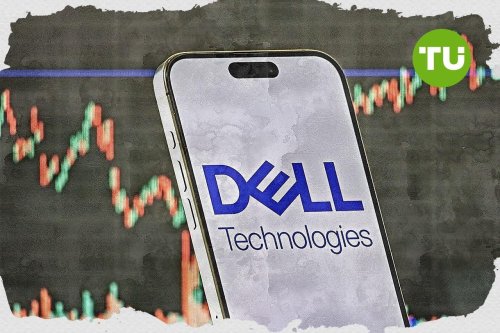
Dell shares jumped after the company published a quarterly report showing one of its strongest results in years. In after-hours trading, the stock rose nearly 40% to $444 after closing at $317. Since the start of the year, Dell shares have gained more than 150%, CNBC reported.
For the quarter ended May 1, Dell’s revenue rose 88% to $43.8 billion. Analysts had expected only about $35.4 billion.
The main growth driver was AI servers. Revenue from their sales jumped 757% to $16.1 billion for the quarter. Dell also received $24.4 billion in orders for such systems.
Against this backdrop, the company raised its forecasts. Dell now expects about $60 billion in revenue from AI servers in fiscal 2027, compared with its previous forecast of $50 billion. Its overall revenue forecast was raised to $165 billion-$169 billion, while Dell had previously expected $138 billion-$142 billion.
Dell also drew additional attention because of the political context. In February, Donald Trump bought between $1 million and $5 million worth of the company’s shares. In addition, Dell received a $9.7 billion Pentagon contract, while Michael and Susan Dell had earlier announced a $6.25 billion donation to Trump Accounts — investment accounts for American children.
These factors increased attention on Dell, but they do not fully explain the shift in how the market sees the company. For a long time, Dell was considered one of the symbols of the PC industry. The company became known for personal computers, enterprise hardware and office equipment.
But Dell moved beyond the business of making laptops and PCs long ago. In 2016, the company acquired EMC, a major producer of data storage systems and corporate infrastructure solutions. In 2018, Dell returned to the public market after several years as a private company.
Now, infrastructure is giving the company its main momentum. In the latest quarter, revenue at Infrastructure Solutions Group, which includes servers, storage systems and other data center equipment, rose 181% to $29 billion. By comparison, Client Solutions Group, which includes PCs, laptops and accessories, also grew, but at a much slower pace — up 17% to $14.6 billion.
The growth of Dell’s infrastructure business is tied to how quickly companies are expanding capacity for artificial intelligence. Models need not only to be trained, but also to run inside real products: chatbots, enterprise assistants, analytics systems and automation services. This requires servers with powerful graphics processors, storage systems, networking equipment and data centers.
Dell found itself in one of the fastest-growing parts of the market. The company builds AI servers based on Nvidia chips and supplies them to customers that need ready-made systems for heavy workloads. Dell’s customers include CoreWeave, Honeywell, Samsung, neocloud providers, enterprise clients and major AI companies.
One recent example is a deal with data center operator IREN. On May 26, the company announced that it would buy air-cooled Nvidia Blackwell systems from Dell for about $1.6 billion. IREN needs the equipment to expand capacity for AI services, and the deal is connected to a previously announced five-year, $3.4 billion contract with Dell.
The AI boom is changing how investors view not only model developers, but also the companies that supply the “hardware” behind the industry. Investors are looking not only at OpenAI or Anthropic, but also at those building the physical foundation for their growth: chipmakers, memory suppliers, data center operators and server companies.
Dell does not compete directly with ChatGPT, Claude or Gemini. Its role is different: the company supplies infrastructure without which AI services cannot scale. When businesses launch chatbots, AI assistants, analytics platforms or automation tools, they need servers, storage and data center equipment.
That is why Dell has a chance to change its place in the technology industry. Previously, it was seen mainly as a maker of computers, laptops and monitors. Now, the company increasingly looks like a provider of core infrastructure for the AI economy — and that is exactly why the market has started to value it differently.

 Afghanistan
 Albania
 Algeria
 Angola
 Argentina
 Armenia
 Australia
 Austria
 Azerbaijan
 Bahamas
 Bahrain
 Bangladesh
 Belarus
 Belgium
 Bolivia
 Botswana
 Brazil
 Brunei
 Bulgaria
 Cambodia
 Cameroon
 Canada
 Chile
Chile
 China
China
 Colombia
 Congo
Congo
 Costa Rica
 Cote d'Ivoire
 Croatia
 Cuba
Cuba
 Cyprus
 Czechia
 DR Congo
 Denmark
 Dominican Republic
 Ecuador
 Egypt
Egypt
 El Salvador
 Estonia
 Eswatini
 Ethiopia
 Finland
 France
 Georgia
 Germany
 Ghana
Ghana
 Greece
 Haiti
Haiti
 Hong Kong
 Hungary
 India
India
 Indonesia
 Iran, Islamic republic
 Iraq
Iraq
 Ireland
 Israel
 Italy
Italy
 Jamaica
 Japan
Japan
 Jordan
 Kazakhstan
 Kenya
Kenya
 Korea
Korea
 Kuwait
 Kyrgyzstan
 Laos
Laos
 Latvia
 Lebanon
 Lesotho
 Libya
Libya
 Lithuania
 Luxembourg
 Madagascar
 Malaysia
 Malta
Malta
 Mauritius
 Mexico
 Moldova
 Mongolia
 Montenegro
 Morocco
 Mozambique
 Myanmar
 Namibia
 Nepal
Nepal
 Netherlands
 New Zealand
 Nigeria
 North Macedonia
 Norway
 Oman
Oman
 Pakistan
 Palestine
 Panama
 Papua New Guinea
 Paraguay
 Peru
Peru
 Philippines
 Poland
 Portugal
 Puerto Rico
 Qatar
Qatar
 Reunion
 Romania
 Rwanda
 Saudi Arabia
 Serbia
 Singapore
 Slovakia
 Slovenia
 Somalia
 South Africa
 Spain
Spain
 Sri Lanka
 Sweden
 Switzerland
 Syria
Syria
 Taiwan
 Tajikistan
 Tanzania
 Thailand
 Trinidad and Tobago
 Tunisia
 Turkey
 UAE
UAE
 Uganda
 Ukraine
 United Kingdom
United States
United Kingdom
United States
 Uruguay
 Uzbekistan
 Venezuela
 Vietnam
 Yemen
Yemen
 Zambia
 Zimbabwe