The tweet was deleted by the author.
But we saved everything 🙂.
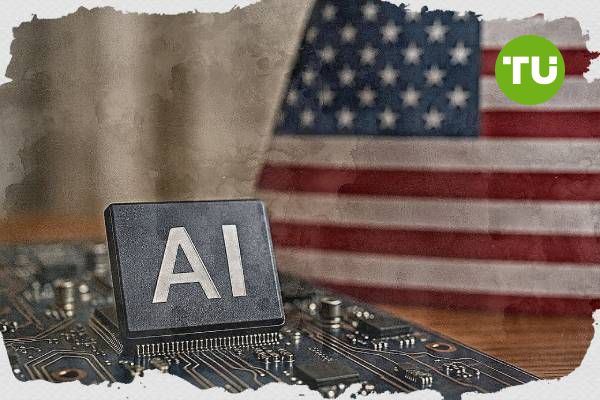
When U.S. President Donald Trump signs an executive order, it’s rarely just policy — it’s a statement. A challenge to predecessors, to established norms, and to the very concept of how governance should work. His new blueprint for the development of artificial intelligence falls squarely into that category.
At first glance, it’s a 23-page document focused on modernization, infrastructure, and U.S. leadership in AI. But behind these declarations lies something much more consequential. The plan introduced by the administration could radically reshape the landscape of American tech regulation — and not just that.
The central idea of the document is deregulation — quite literally. Every phrase about innovation is backed by direct pressure mechanisms: for instance, states that introduce “burdensome” restrictions on AI development risk losing federal funding. In other words, Washington isn’t just setting the direction — it’s compelling others to follow it.
“We also have to have a single federal standard, not 50 different states regulating this industry of the future. We need one common sense federal standard that supersedes all states, supersedes everybody,” Trump said on Wednesday.
At the procurement level, the administration introduces an ideological filter: federal agencies are instructed to contract only with developers whose language models are deemed free from bias. But in this context, “bias” refers to anything associated with the previous administration’s ethics. Systems are expected to omit mentions of climate change, diversity, misinformation — all themes linked to Biden-era policy. In effect, AI is not just a tool — it must be ideologically “safe.”
All of this marks a reset of the regulatory model built under former President Joe Biden. That model emphasized transparency, auditing, and formal risk disclosures. The new approach? No guardrails, maximum flexibility, and control concentrated entirely in the executive branch.
The administration’s new direction aligns perfectly with the interests of Silicon Valley. For years, major tech companies have opposed state-level attempts to regulate artificial intelligence. Now, the White House has effectively endorsed that position by cementing federal control over AI governance.
This is not just about deregulation in the abstract. The plan explicitly instructs federal agencies to identify which rules are hindering AI adoption — and consider eliminating them. It’s a direct institutionalization of industry priorities: reducing reporting requirements, accelerating model approvals, and removing safety testing obligations.
One of the most telling aspects is on the foreign policy front. While the blueprint officially calls for stronger export controls to contain China, the reality tells a different story. Just days before the plan’s release, the Department of Commerce gave Nvidia the green light to resume shipments of its H20 chips to China.
The only section of the plan that reads more like a strategy than ideology is the part about energy. The Trump administration openly acknowledges: without a robust energy infrastructure, the U.S. cannot sustain the explosive growth of the AI sector.
The document outlines measures to stabilize the national grid, expand nuclear and geothermal power generation, and accelerate data center construction. It also proposes reforms to the permitting process for energy projects to avoid delays in deploying critical infrastructure.
This is a practical response to a real constraint: today’s large language models consume as much electricity as a mid-sized American city. And if the U.S. truly aims to dominate the AI race, this issue is just as urgent as ethics or market access.
This plan isn’t just about setting a new pace — it’s a declaration that the old constraints no longer apply. There’s barely a mention of risks, no mechanisms for transparency, no discussion of copyright, labor impact, or the broader social consequences of AI deployment.
What it does contain are clear ideological signals, top-down executive control, and a wholesale disregard for the voices of scientists and civil society. In practice, it’s a full-speed bet on acceleration — even if that speed comes with collateral damage.
Trump’s blueprint for AI is a manifesto of aggressive modernization. At its core: deregulation, centralized authority, and an energy-driven foundation for the industry. It’s framed as a push for American leadership in technology, but one that sidesteps ethical and societal concerns.
Now the world faces a choice: compete with the U.S. on speed, or compete on a different model — one that balances progress with responsibility. Because America is done slowing down. And it’s prepared to go full throttle — no matter where the road leads.

 Afghanistan
 Albania
 Algeria
 Angola
 Argentina
 Armenia
 Australia
 Austria
 Azerbaijan
 Bahamas
 Bahrain
 Bangladesh
 Belarus
 Belgium
 Bolivia
 Botswana
 Brazil
 Brunei
 Bulgaria
 Cambodia
 Cameroon
 Canada
 Chile
Chile
 China
China
 Colombia
 Congo
Congo
 Costa Rica
 Cote d'Ivoire
 Croatia
 Cuba
Cuba
 Cyprus
 Czechia
 DR Congo
 Denmark
 Dominican Republic
 Ecuador
 Egypt
Egypt
 El Salvador
 Estonia
 Eswatini
 Ethiopia
 Finland
 France
 Georgia
 Germany
 Ghana
Ghana
 Greece
 Haiti
Haiti
 Hong Kong
 Hungary
 India
India
 Indonesia
 Iran, Islamic republic
 Iraq
Iraq
 Ireland
 Israel
 Italy
Italy
 Jamaica
 Japan
Japan
 Jordan
 Kazakhstan
 Kenya
Kenya
 Korea
Korea
 Kuwait
 Kyrgyzstan
 Laos
Laos
 Latvia
 Lebanon
 Lesotho
 Libya
Libya
 Lithuania
 Luxembourg
 Madagascar
 Malaysia
 Malta
Malta
 Mauritius
 Mexico
 Moldova
 Mongolia
 Montenegro
 Morocco
 Mozambique
 Myanmar
 Namibia
 Nepal
Nepal
 Netherlands
 New Zealand
 Nigeria
 North Macedonia
 Norway
 Oman
Oman
 Pakistan
 Palestine
 Panama
 Papua New Guinea
 Paraguay
 Peru
Peru
 Philippines
 Poland
 Portugal
 Puerto Rico
 Qatar
Qatar
 Reunion
 Romania
 Rwanda
 Saudi Arabia
 Serbia
 Singapore
 Slovakia
 Slovenia
 Somalia
 South Africa
 Spain
Spain
 Sri Lanka
 Sweden
 Switzerland
 Syria
Syria
 Taiwan
 Tajikistan
 Tanzania
 Thailand
 Trinidad and Tobago
 Tunisia
 Turkey
 UAE
UAE
 Uganda
 Ukraine
 United Kingdom
United States
United Kingdom
United States
 Uruguay
 Uzbekistan
 Venezuela
 Vietnam
 Yemen
Yemen
 Zambia
 Zimbabwe